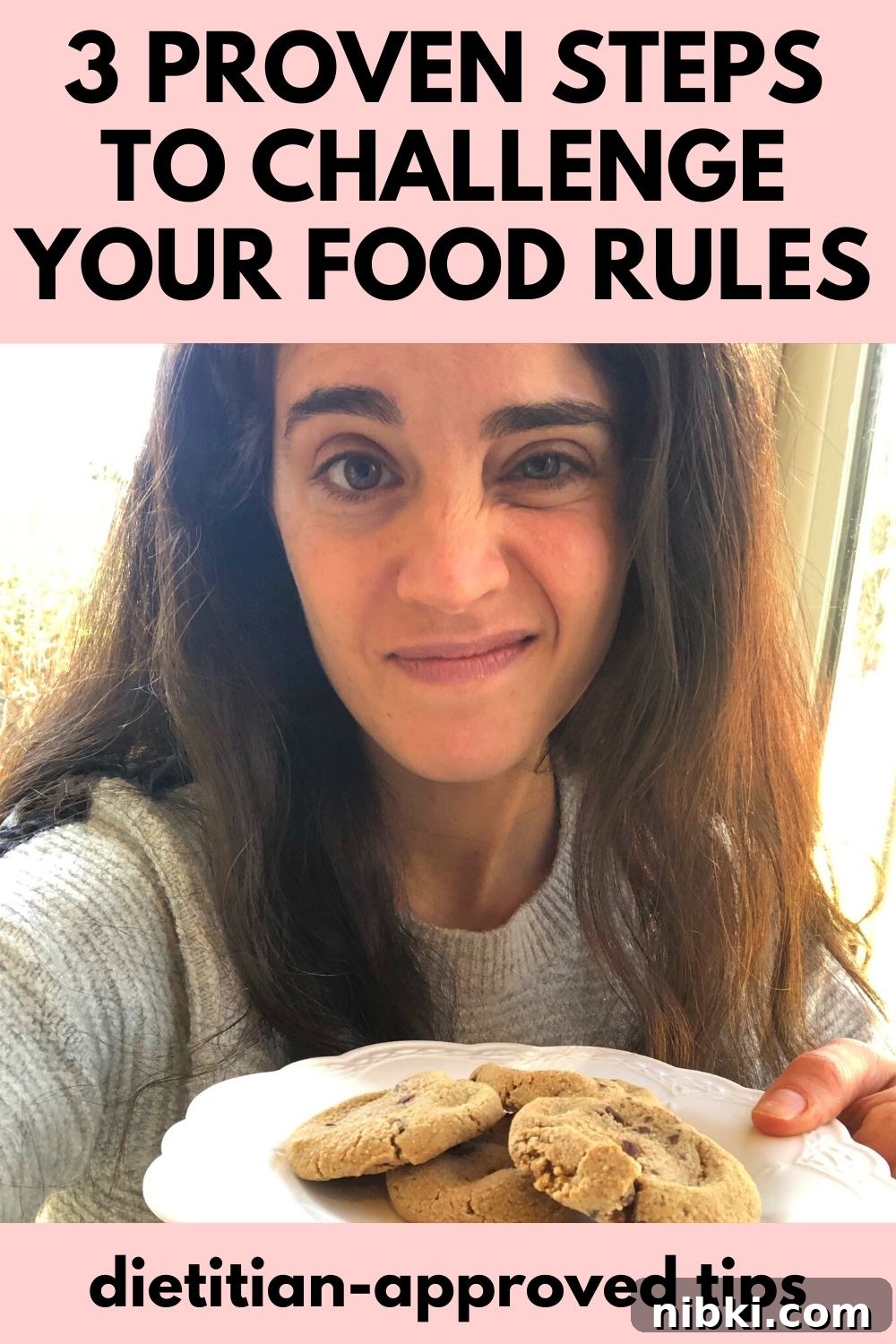
Holding on to rigid food rules, often without realizing it, can damage your relationship with food. Below I’ll explain how to spot the food rules you might be following unconsciously and share practical, reliable steps to loosen those rules and stop policing your eating.
One of the greatest freedoms I’ve found is living without strict food rules. Even amid a season where many parts of life feel paused, my relationship with food isn’t a source of stress—and it can be the same for you.
Recently I was reminded how important that freedom is.
A recent moment that showed the value of letting go of food rules
We met new neighbors (safely distanced) and took the kids to the playground. They offered to pick up bagels on the way. For years the old version of me would have found excuses not to eat one—telling myself bagels were “too many carbs,” blaming food allergies I don’t actually have in this situation, and otherwise declining the invitation to eat together.
Examples of food rules I used to follow in situations like this
- A bagel equals six slices of white bread and should be avoided.
- You shouldn’t eat carbs during the day.
- Carbs are bad.
- Save calories for dinner.
- If you want to be skinny, avoid carbs.
I could list many more, but the point is this: those rules used to limit not only what I ate, but how I showed up socially and emotionally.
What changes when you stop following food rules
By no longer subscribing to those rules, I could accept a bagel, enjoy the company, and connect with new friends. Yes, bagels are carb-heavy and may be low in protein or fat, but they’re also delicious and part of social rituals. Allowing myself to join in meant I felt included, less deprived, and less likely to overeat later.
For me, eating carbs throughout the day often supports better energy and satisfaction. The choice to allow a bagel was less about the food itself and more about sharing a moment—food can facilitate connection. If I’d clung to “no carbs” rules, that experience would have been missed.
This is what food freedom looks like
Being able to participate in life without constantly policing every bite—that’s food freedom. Letting go of rigid rules reduces guilt and shame around eating and helps you enjoy food while still nourishing your body.
Letting go of rules reduces guilt and shame around eating
Many people come to me feeling embarrassed for enjoying certain foods. Food is meant to nourish and to bring pleasure. When you allow satisfying foods into your life, it becomes easier to stop micromanaging every meal and move on with your day.
I understand this is hard work. A lot of clients begin with very black-and-white thinking about food.
Common black-and-white food thinking
This often looks like:
- Labeling foods as “good” or “bad.”
- Following arbitrary rules that aren’t evidence-based.
- Keeping a mental list of “off-limits” foods.
My first step with many clients is to gently question those rules. Below are three practical steps you can use to do that yourself.
Three practical steps to let go of food rules
1. Make a list of your food rules
Before you say “I don’t have any food rules,” take a moment to honestly reflect on your thoughts and behaviors around food. Do you allow yourself to eat anything at any time? If not, you likely have rules shaping your choices.
Write down those rules without judging yourself. Awareness is the first step toward change.
Examples of common food rules
- No eating after 7 p.m.
- No desserts on weekdays.
- Carbs are bad; avoid them.
- Only one starchy carb per day.
- Only one piece of fruit per day.
- Drink lemon water or apple cider vinegar every morning.
- Choose either bread or alcohol when dining out, not both.
- No added sugar ever.
- Only eat 0% yogurt.
Your rules may come from past diets, social messages, or family habits. Some feel so automatic that you may not notice them until you write them down.
2. Order your rules from easiest to hardest to break
Once you have your list, decide which rules feel easiest to test and which feel hardest. Working systematically and breaking one rule at a time prevents overwhelm and helps you build confidence.
For example, if your rules include “one starchy carb per day,” “no added sugar,” and “one fruit per day,” you might decide that adding another serving of fruit feels safer than intentionally increasing added sugar, depending on your beliefs and comfort level.
It’s okay to misjudge and start with a harder rule—just be gentle with yourself if that happens.
3. Challenge each food rule
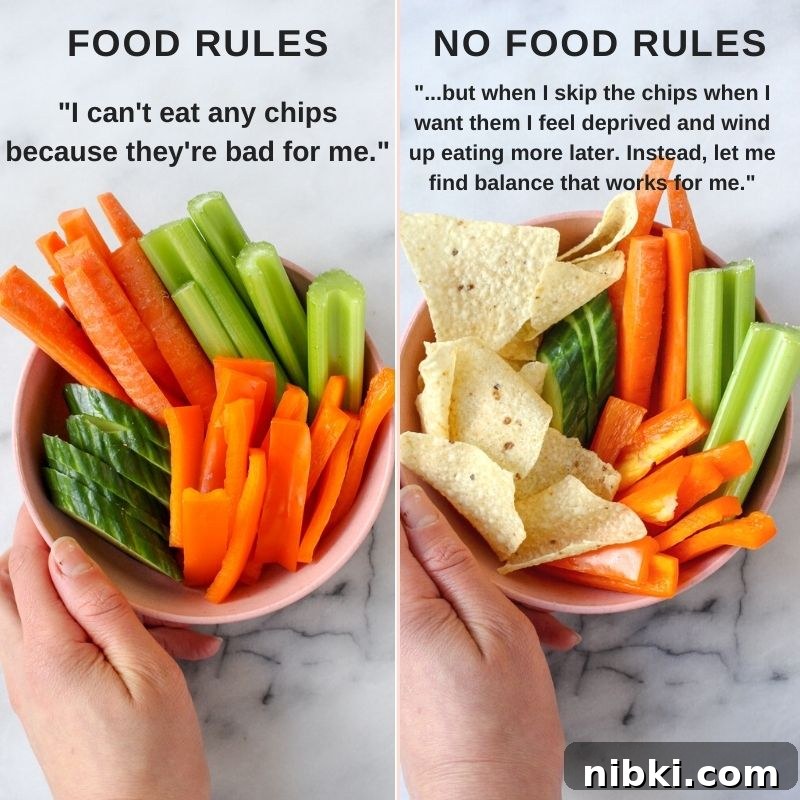
Now start testing your rules one by one. Question their accuracy and replace rigid thoughts with logical, evidence-based, and body-centered alternatives.
Ask these questions for every rule
- Is there scientific evidence supporting this rule?
- Is this rule realistic and sustainable for my life?
- Can I find logical reasons this rule might be unhelpful?
Then reframe the rule into a more balanced thought and, when possible, try a personal experiment to see how your body responds.
Example: “Only one starchy carb per day”
Ask yourself whether science or your own experience supports limiting starchy carbs to one serving daily. Try having more than one serving for a day or two and notice energy levels, cravings, and mood. You may find that more carbs improve energy and reduce late-night cravings, which would disprove the rule for you personally.
If challenging a rule feels difficult, working with a registered dietitian who understands eating behavior can help guide you safely and compassionately.
Expect some discomfort at first
It’s normal to feel uneasy or worried about losing control when you begin to allow previously restricted foods. That discomfort usually decreases over time. You might initially eat more of an off-limits food, but as you regularly permit it, cravings and urgency generally subside.
If you want support in letting go of food rules, help is available
If you’re ready for one-on-one support or an online program to help you move away from rigid eating rules, consider applying to work with a professional coach or dietitian who specializes in this area. Personalized guidance can make the process faster and gentler.
XO