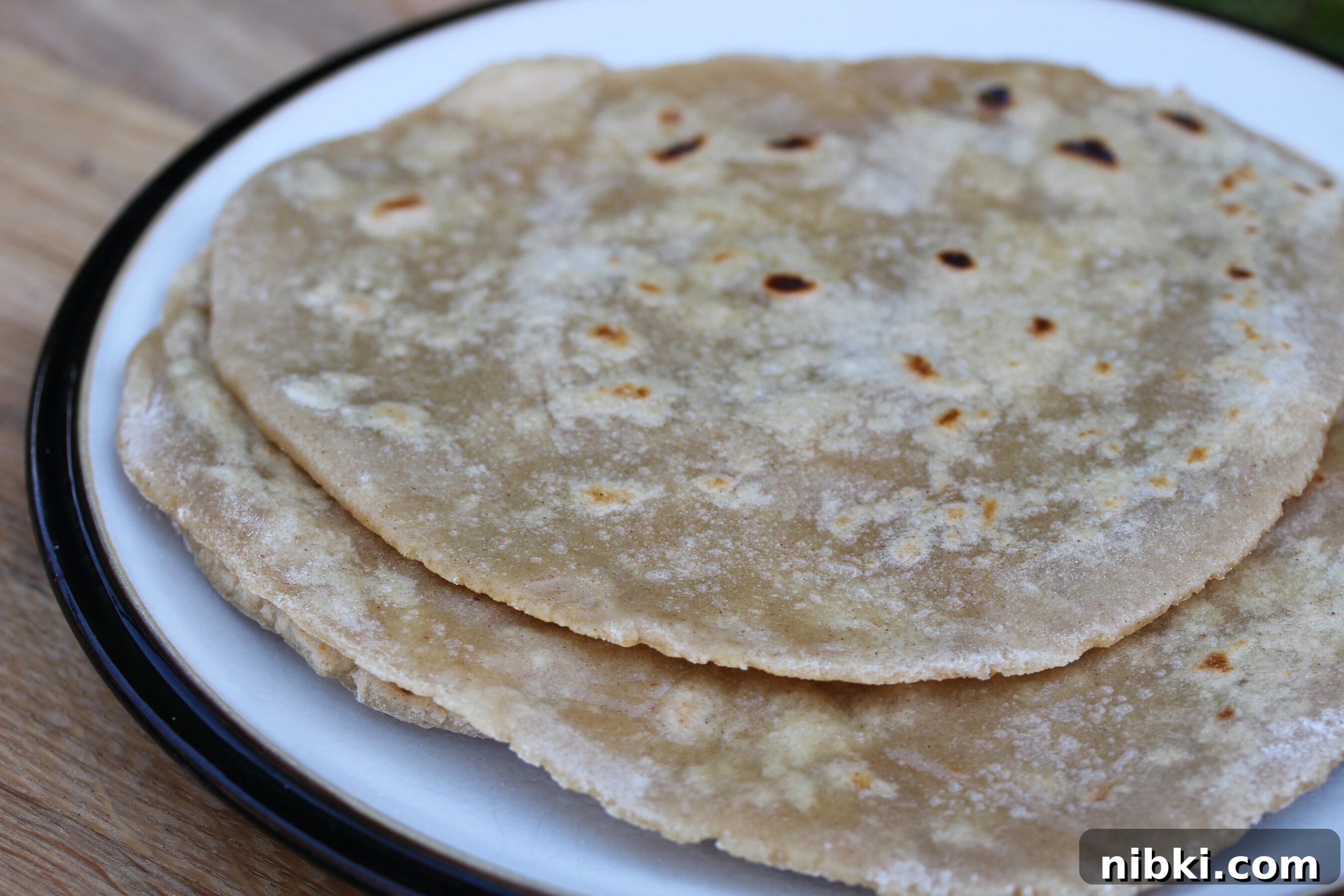
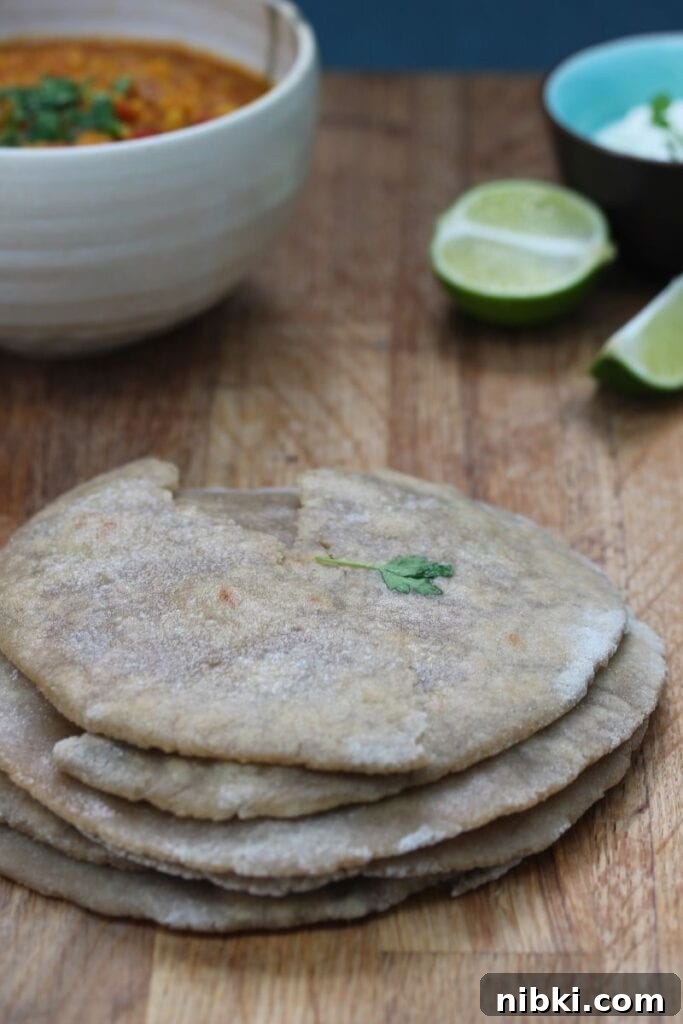
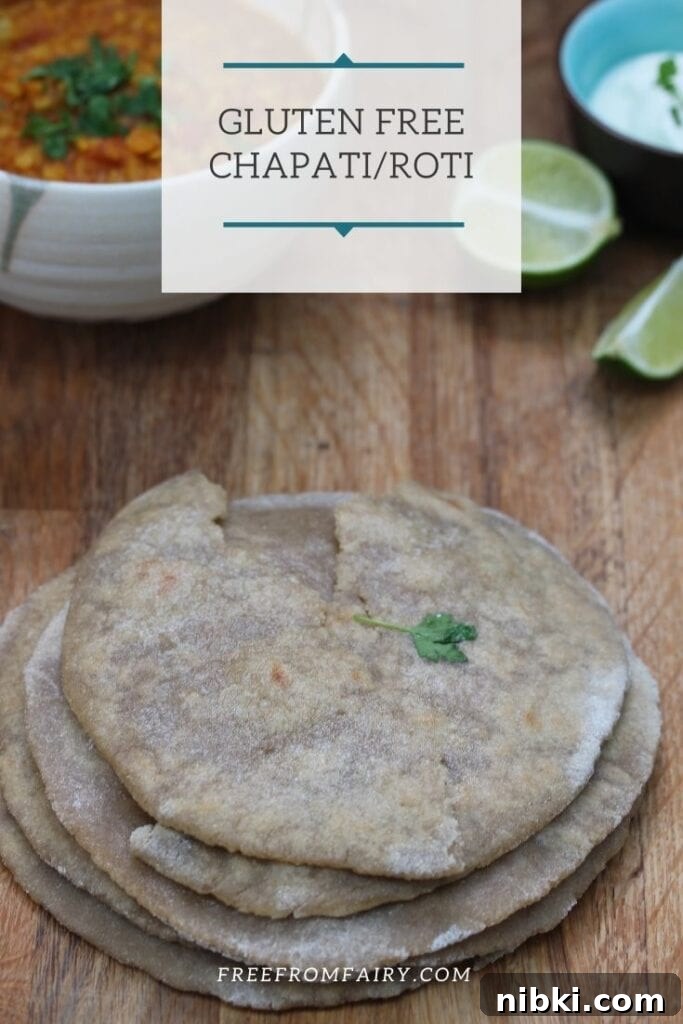
My simple recipe for gluten free roti, or chapati, is made with my wholegrain gluten free atta (or flour blend). They are made with just five ingredients.
This post contains affiliate links. As an Amazon Associate I earn from qualifying purchases.
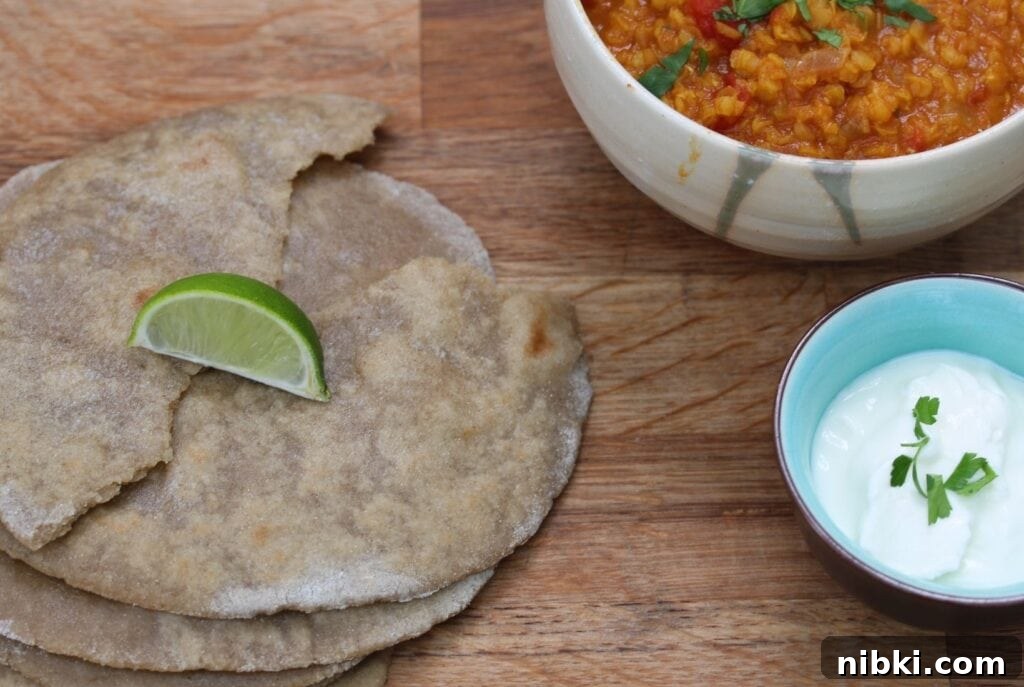
I’ve made these gluten free roti for many years but somehow never shared the recipe. They’re simple to prepare, forgiving in technique, and are a great option for anyone of Asian origin who needs to avoid gluten.
What is a roti or chapati?
I first discovered roti while travelling in India with my sixth form college. We visited an orphanage in Goa when I was 16 and then travelled around south India by public transport. The experience opened my eyes to the everyday beauty of Indian food — and to roti, a thin flatbread that I instantly loved.
Traditional roti is made with wholegrain wheat flour known as atta. My gluten free version uses a rice-free, wholegrain gluten free flour blend (a gluten free atta alternative) to replicate the texture and flavour of the real thing.
Roti dough is rolled very thinly, then cooked on a hot griddle or in a tandoor. Unlike naan, rotis are thin and flexible, perfect for scooping up curry or folding around fillings like cheese and avocado.
What is atta?
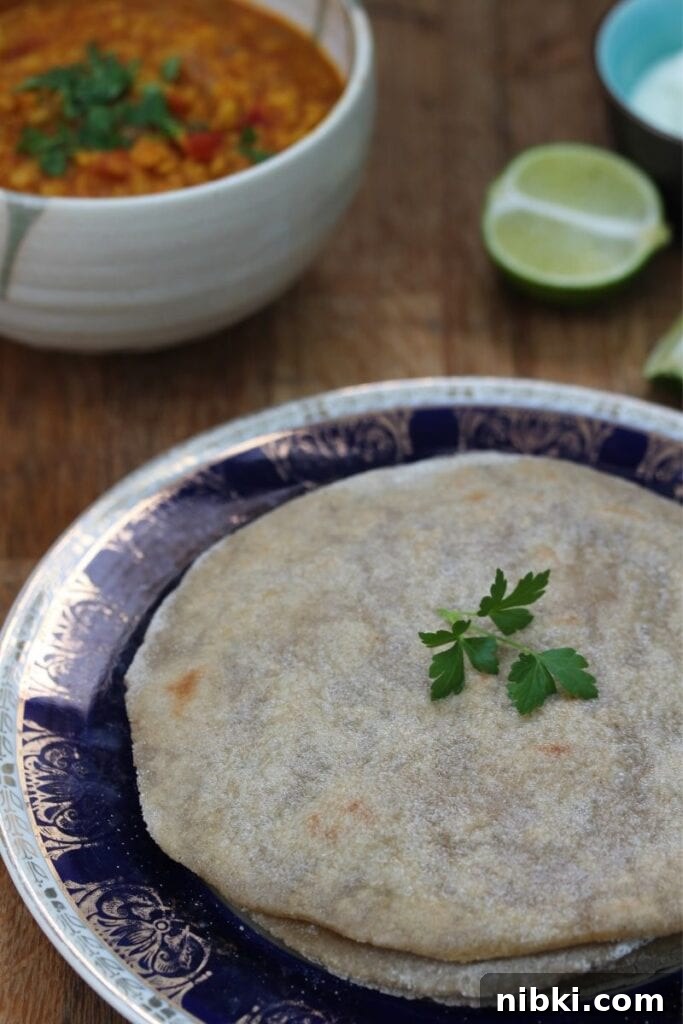
Atta is wholegrain wheat flour traditionally used across the Indian subcontinent to make rotis, chapatis, puri and paratha. For those avoiding gluten, an appropriate wholegrain gluten free flour blend can stand in as a gluten free atta. Using a balanced flour blend is important for successful gluten free baking and cooking because it recreates the structure and flavour that wheat flours provide.
How do you make gluten free roti or chapati?
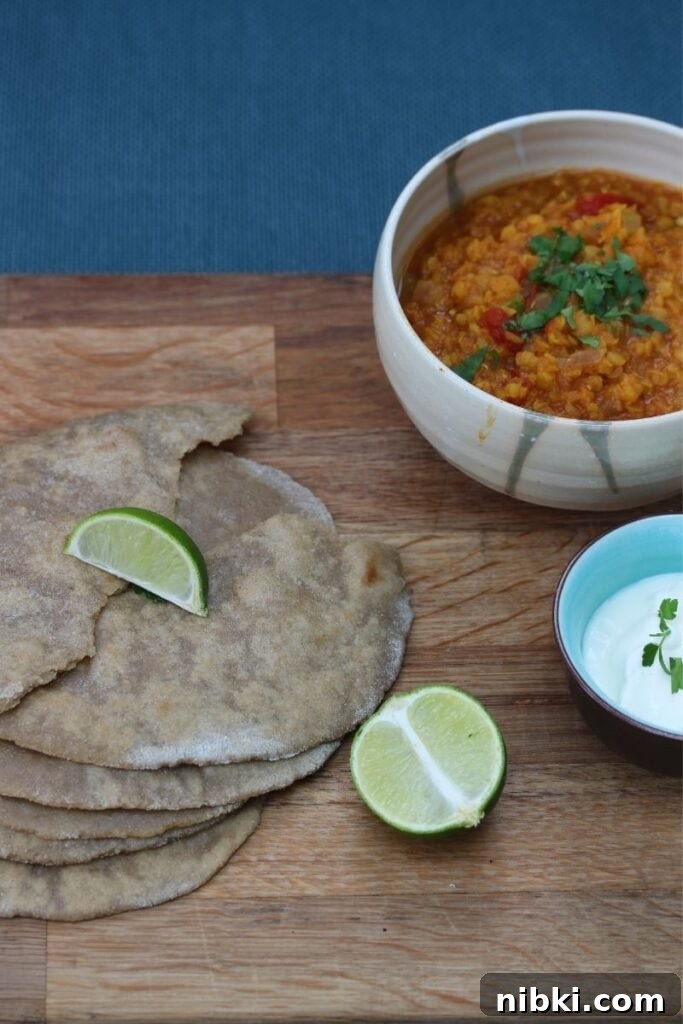
The terms roti and chapati are often used interchangeably. Traditionally, a roti may be cooked in a tandoor while a chapati is cooked on a tawa (flat griddle). I cook mine on a hot cast-iron griddle or heavy frying pan, which gives lovely colour and a little puff where pockets of air form.
These flatbreads need just a few simple ingredients and a little care when rolling. Psyllium husk powder is the secret ingredient that keeps the breads soft and flexible — without it gluten free flatbreads can be dry and brittle.
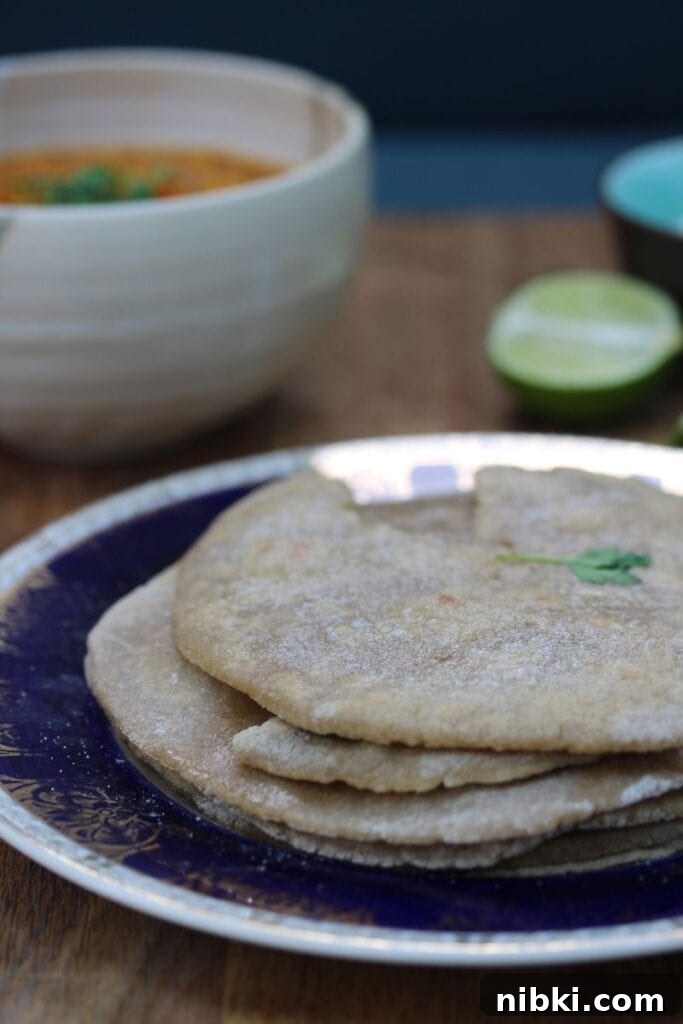
Gluten Free Roti (Chapati) & Gluten Free Atta
Summary: A simple, five-ingredient recipe for soft gluten free roti made with a wholegrain gluten free flour blend (gluten free atta).
Prep Time:
5 mins
Cook Time:
10 mins
Total Time:
15 mins
Servings:
6
Author:
Vicki Montague
Ingredients
- 200 g Free From Fairy gluten free plain flour (gluten free atta / wholegrain flour blend)
- 1/2 tsp psyllium husk powder
- 1/4 tsp salt (optional)
- 1 tbsp olive oil
- Water to form a dough
- Coconut oil for spreading on cooked breads (or butter / ghee if not dairy free)
Instructions
- Heat a heavy frying pan or cast-iron griddle over medium-high heat so it is hot when you begin to cook.
- Combine the gluten free flour and psyllium husk powder in a large mixing bowl.
- Add the salt, then the oil and enough water to form a sticky dough. Start with a little water and add more as needed.
- Knead the dough briefly until it becomes smooth and no longer sticky. The psyllium will absorb liquid as you work; if the dough becomes too wet, add a little more flour.
- Divide the dough into six equal balls. Keep the unused balls covered with a damp tea towel while you work.
- Lightly dust a ball of dough with flour, then roll it out on a floured surface into a circle about 15 cm (6 inches) in diameter. Gluten free dough can be delicate, so work gently and use just enough flour to prevent sticking.
- Carefully lift the rolled roti and place it in the hot pan. Cook until little bubbles appear on the surface.
- Flip and cook the underside until it just starts to colour. Flip once more, brush the surface with a little melted coconut oil (or butter/ghee) and press the edges down with the back of a spoon. Small air pockets may form and the bread may puff slightly; this is fine.
- Remove from the pan and keep warm in foil or wrapped in a clean tea towel while you cook the remaining rotis.
Tips for success
- Work with slightly sticky dough at first — it becomes more manageable as the psyllium absorbs liquid.
- Adjust water and flour amounts by feel rather than strict measurement: gluten free flours vary and absorption changes with humidity.
- Keep cooked rotis wrapped to retain steam and softness until serving.
Notes
Nutrition data below is approximate and does not include extra oil used while cooking the flatbreads.
Nutrition (Approx)
Calories: 146 kcal | Carbohydrates: 26 g | Protein: 3 g | Fat: 3 g | Saturated Fat: 1 g | Sodium: 97 mg | Potassium: 42 mg | Fiber: 2 g | Sugar: 1 g | Calcium: 4 mg | Iron: 0.6 mg
Where to buy and learn more
You can buy the plain gluten free flour blend (gluten free atta) on the author’s website. If you want to learn more about making gluten free flours and breads, consider signing up for online gluten free cookery courses or joining supportive cooking groups for tips and troubleshooting.