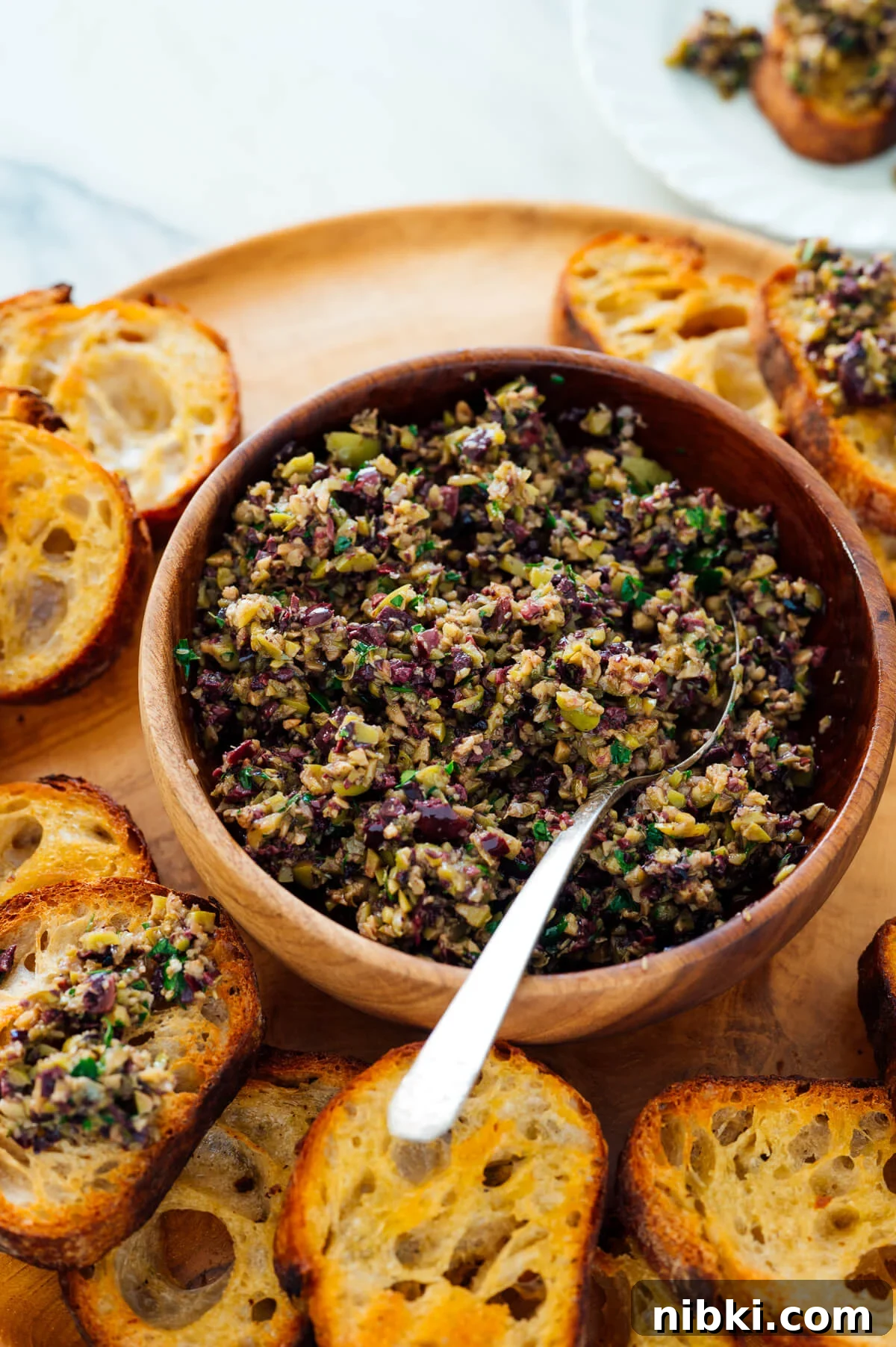
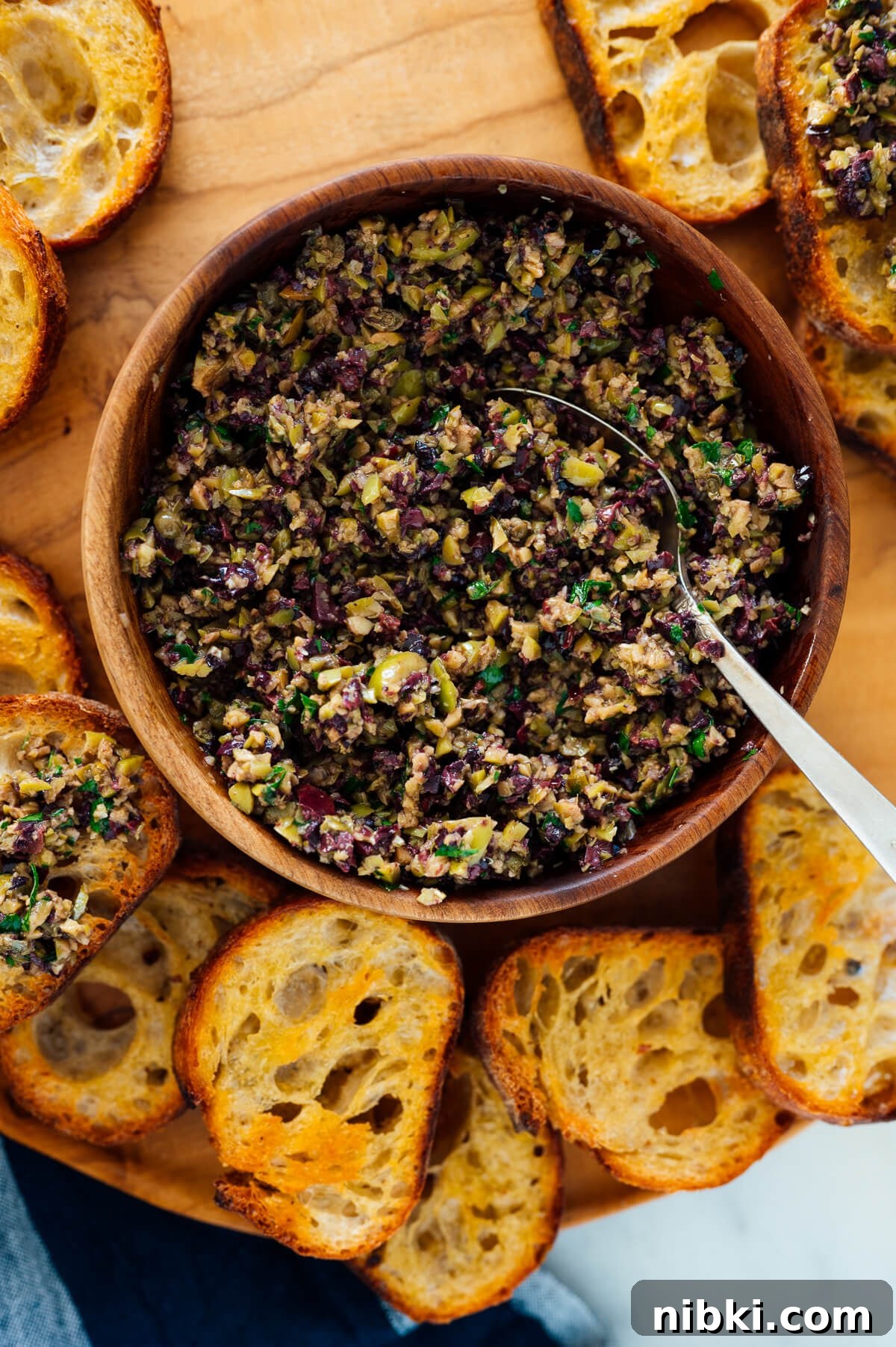
Olive lovers, this tapenade is for you. Tapenade is a classic olive spread from Provence, France, known for its bold, briny, and slightly tangy flavor. This version balances salty, savory, and bright notes without being overpowering. It’s quick to make and versatile to serve.
Serve tapenade with crostini, crackers, or a selection of cheeses as a lively appetizer. It also pairs well with creamy dips, making a nice contrast to hummus or spinach artichoke dip. Use it as a sandwich spread, a flavorful salad topper, or stirred into vinaigrette for instant Mediterranean flair. Stored in an airtight container, tapenade keeps in the refrigerator for up to two weeks, so you can enjoy it in multiple meals.
Tapenade takes its name from the Provençal word for capers: tapenas. Historically, capers were a defining ingredient, though modern versions often emphasize olives as the star. In this recipe, capers add a bright, saline counterpoint to the olives rather than dominating the flavor. This recipe omits anchovies to keep it vegetarian and vegan-friendly, but still delivers complex, savory depth.
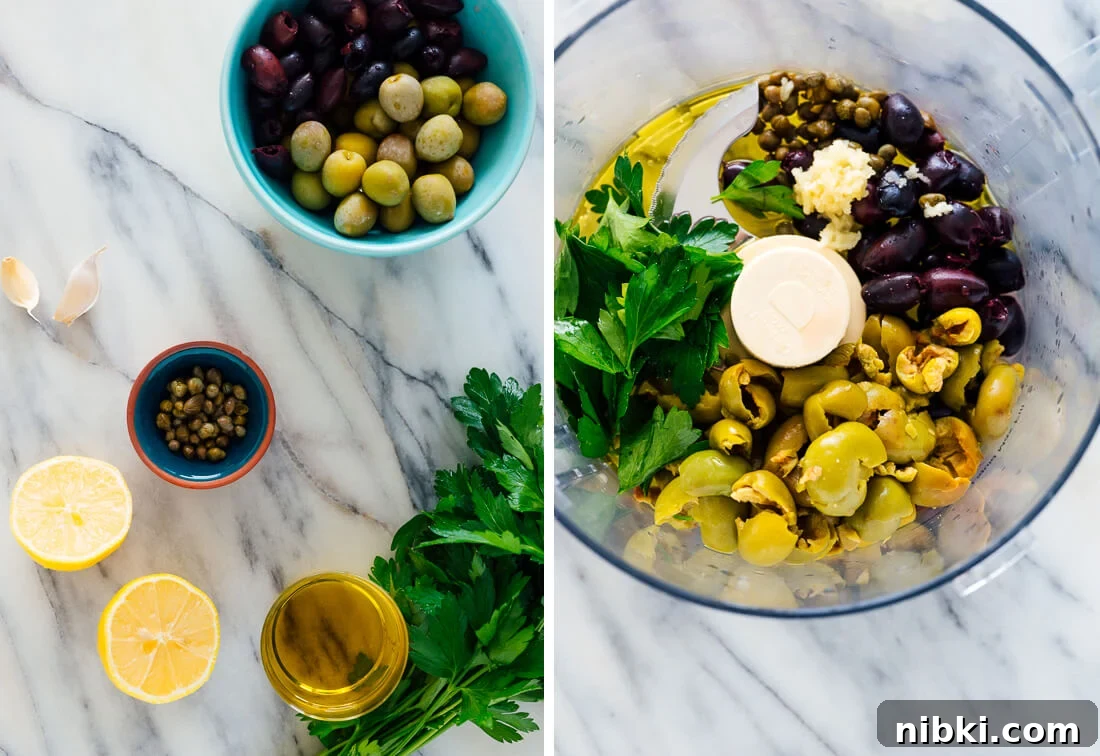
This easy tapenade requires just a few pantry staples and a food processor. In about ten minutes you’ll have a flavorful spread using Castelvetrano and Kalamata (or Niçoise) olives, fresh parsley, capers, extra-virgin olive oil, garlic, and lemon juice. If you don’t have a food processor, finely chopping the ingredients by hand will work, too.
The Best Olives for Tapenade
Traditional tapenades may use only black olives, only green olives, or a mix. For the most balanced flavor and texture, use a combination: Castelvetrano (green) and Kalamata or Niçoise (black). Castelvetrano olives are buttery, mild, and meaty; Kalamata bring a deeper, briny note. Using about twice as many green olives as black helps keep the spread rich and less salty. Add a tablespoon of drained capers for an accent rather than a punch. Keeping salt under control makes the tapenade more enjoyable and versatile.
The Easiest Way to Pit Olives
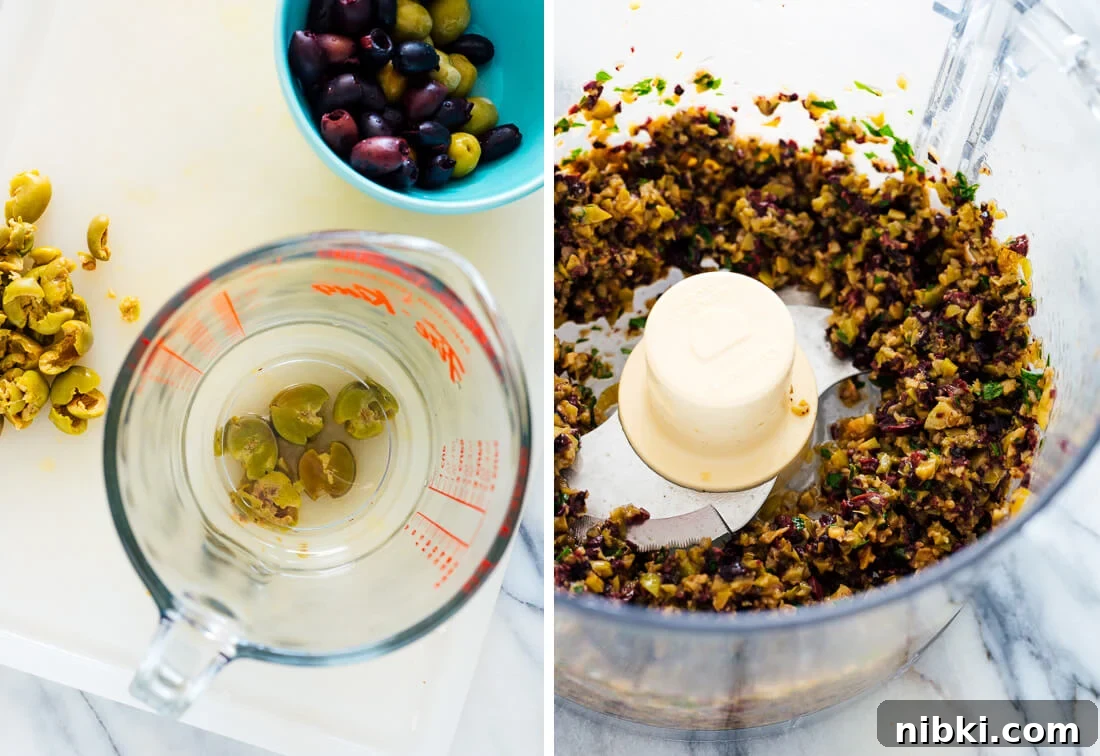
Here’s a simple, reliable method to pit olives quickly: place a handful of olives on a cutting board and press the wide, flat base of a sturdy liquid measuring cup or jar down over them. The olives will split, making the pits easy to remove by hand. This technique is faster and cleaner than trying to extract pits individually with a small knife.
Pitted Olive Safety Note
Even when using pre-pitted olives, check each one before processing. Pits sometimes slip through and can damage teeth or food processors if they get ground up. Remove any remaining pits first.
How to Serve Tapenade
Tapenade is an elegant appetizer that complements a variety of beverages—from a crisp rosé or sauvignon blanc to classic cocktails. It’s also extremely versatile in the kitchen. Consider these serving ideas:
- Cheese plates: Offer tapenade alongside cheeses and charcuterie, or use it in place of whole olives for a spreadable option.
- Salads and dressings: Whisk a spoonful into vinaigrette or dollop it over fresh tomato salad for savory richness.
- Sandwiches: Use tapenade as a spread for sandwiches with creamy cheeses, avocado, tomatoes, or cucumber.
- Egg dishes: Spoon a bit over scrambled or fried eggs, and finish with herbs and a soft cheese like goat cheese or feta.
- Simple snack: Serve with crostini, crusty bread, or crackers for an easy starter or snack.
I’d love to hear how you use this tapenade. If you try the recipe, share your serving ideas and any tweaks you made.

Easy Tapenade
- Author: Kathryne Taylor
- Prep Time: 10 minutes
- Total Time: 10 minutes
- Yield: 1 1/2 cups
- Diet: Vegan
This tapenade is bright, savory, and quick to prepare. It makes a flavorful addition to appetizers, sandwiches, and salads. Recipe yields about 1½ cups.
Ingredients
- 1 cup Castelvetrano olives, pitted*
- ½ cup Niçoise or Kalamata olives, pitted*
- ¼ cup lightly packed fresh flat-leaf parsley (thin stems are fine)
- 1 tablespoon drained capers
- ¼ cup extra-virgin olive oil
- 2 medium garlic cloves, pressed or minced
- 1 tablespoon lemon juice
Instructions
- In the bowl of a food processor, combine the pitted olives, parsley, capers, olive oil, garlic, and lemon juice. Pulse about 10 times, then scrape down the sides of the bowl.
- Pulse 5 to 10 more times until the mixture is well chopped but not pureed. Stop when you reach your preferred texture. Serve immediately or refrigerate in an airtight container for up to two weeks.
Notes
*How to pit olives: Even with pre-pitted olives, inspect them to ensure no pits remain. To pit fresh olives easily, place several on a cutting board and press a wide, sturdy jar or measuring cup over them to split the flesh; remove the pits by hand.
No food processor? Finely chop the olives, capers, garlic, and parsley by hand and mix with the oil and lemon juice until well combined.
Nutrition
Nutritional information is an estimate and should be used as a guideline only.
- Category: Appetizer
- Method: Food processor (or knife)
- Cuisine: French-style / Mediterranean