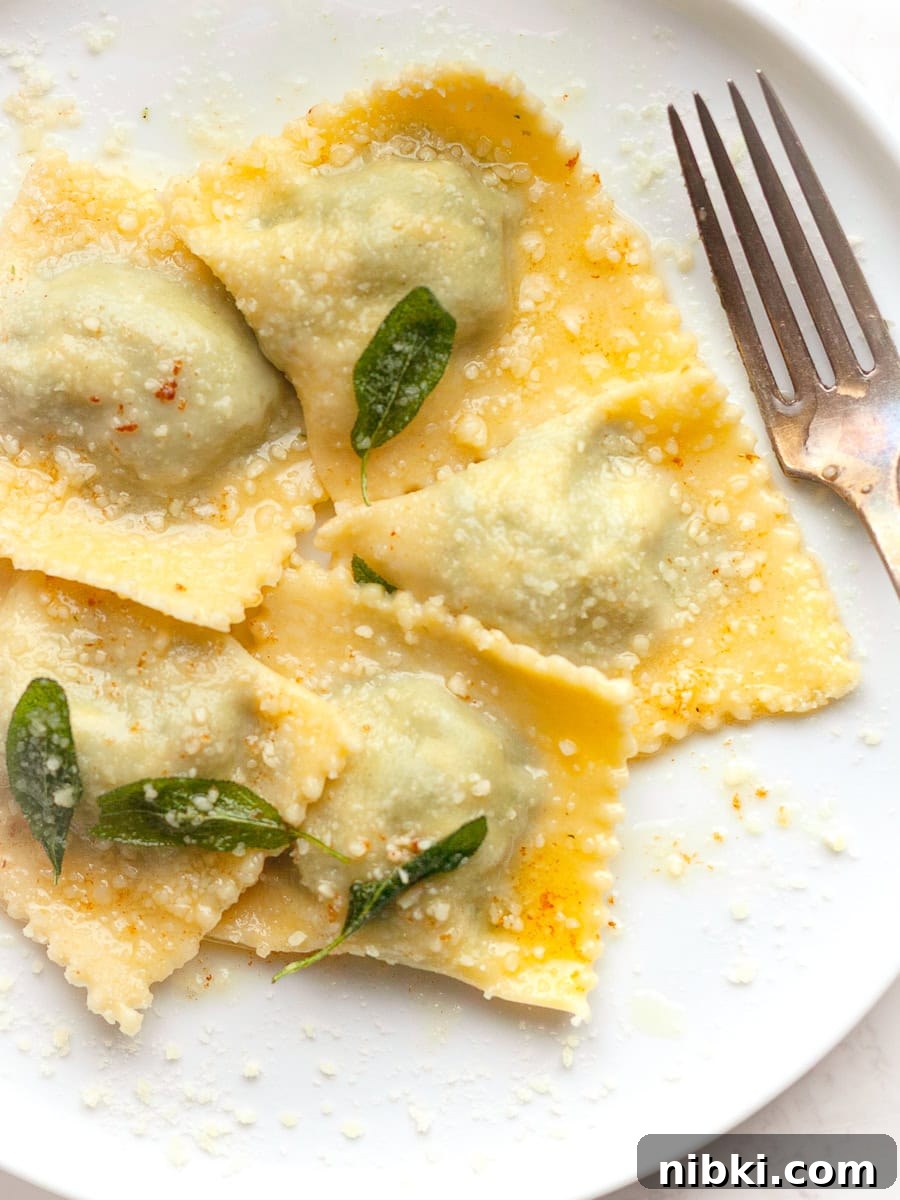
If you’ve wanted to make homemade ravioli at home, this Gluten Free Spinach Ricotta Ravioli recipe is an excellent place to begin. Delicate gluten free pasta is filled with a creamy spinach and ricotta mixture, formed into tidy squares and cooked in just a few minutes for a tender, flavorful result.
This guide explains how to make gluten free ravioli from scratch: preparing the dough, making the filling, rolling and cutting the sheets, shaping the ravioli, and the best methods for cooking and serving them. The directions are approachable and reliable whether you’re new to gluten free fresh pasta or perfecting your process.
[feast_advanced_jump_to]
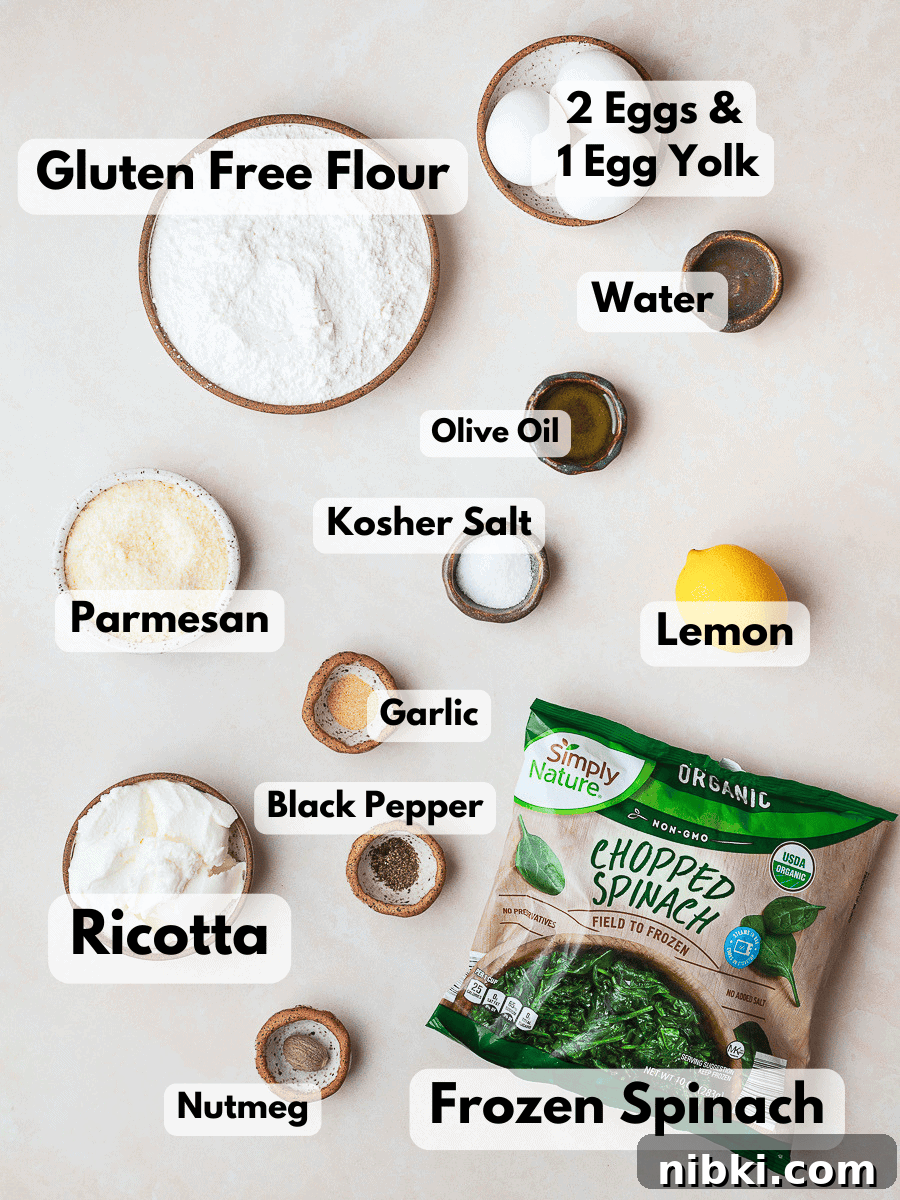
Recipe Ingredient Notes
Gluten free flour: Use a balanced measure-for-measure gluten free blend. A blend that includes rice and tapioca flours and a binder like xanthan gum works well to produce a dough that rolls smoothly and holds together during shaping and cooking.
Eggs: Fresh eggs give pasta structure, color, and elasticity. This recipe uses two whole eggs plus one additional yolk. The yolk adds richness and helps keep the dough pliable.
Frozen spinach: Frozen chopped spinach gives concentrated flavor and consistent texture. Thaw thoroughly and squeeze out as much liquid as possible to avoid a watery filling.
Ricotta: Whole-milk ricotta produces a creamy, mild base for the filling. Drain any excess liquid before combining so the filling remains thick and easy to handle.
Parmesan: Finely grated Parmesan adds savory depth and a pleasant salty note that balances the ricotta.
Lemon juice & zest: A little lemon brightens the filling and prevents the mixture from feeling too heavy. Zest for aroma, juice for a subtle tang.
Seasonings: Kosher salt, freshly ground black pepper, a touch of granulated garlic, and a small pinch of nutmeg complement the spinach and ricotta and round out the flavors. Adjust seasoning to taste.
Recommended Tools
Most of the tools needed are common kitchen items. A pasta roller or sheeter and a pastry wheel cutter make the process faster and neater, but you can use a rolling pin and a sharp knife if needed.
Food processor: A food processor makes the dough and the filling quickly and evenly, producing a smooth dough that’s easier to roll.
Mixing bowl: Useful if you make the dough by hand.
Rolling pin: Helpful for flattening dough before feeding it through a roller and for smoothing sheets when a roller isn’t available.
Pasta roller or sheeter: Produces even, thin sheets that are ideal for ravioli. If you have a hand-cranked machine or a KitchenAid sheeter attachment, use the manufacturer’s recommended settings.
Pastry wheel cutter: For clean, uniform ravioli edges. A knife works in a pinch but yields less consistent results.
Also have a digital kitchen scale, sheet trays and parchment paper handy for resting and staging the pasta.
Gluten Free Ravioli Dough
Making the dough in a food processor gives even hydration and a smooth, cohesive texture. If you prefer, you can make this dough by hand—just combine, mix, and knead until smooth.
You can make the dough up to two days ahead. Lightly oil it, wrap tightly in plastic, and keep it sealed so it does not dry out.
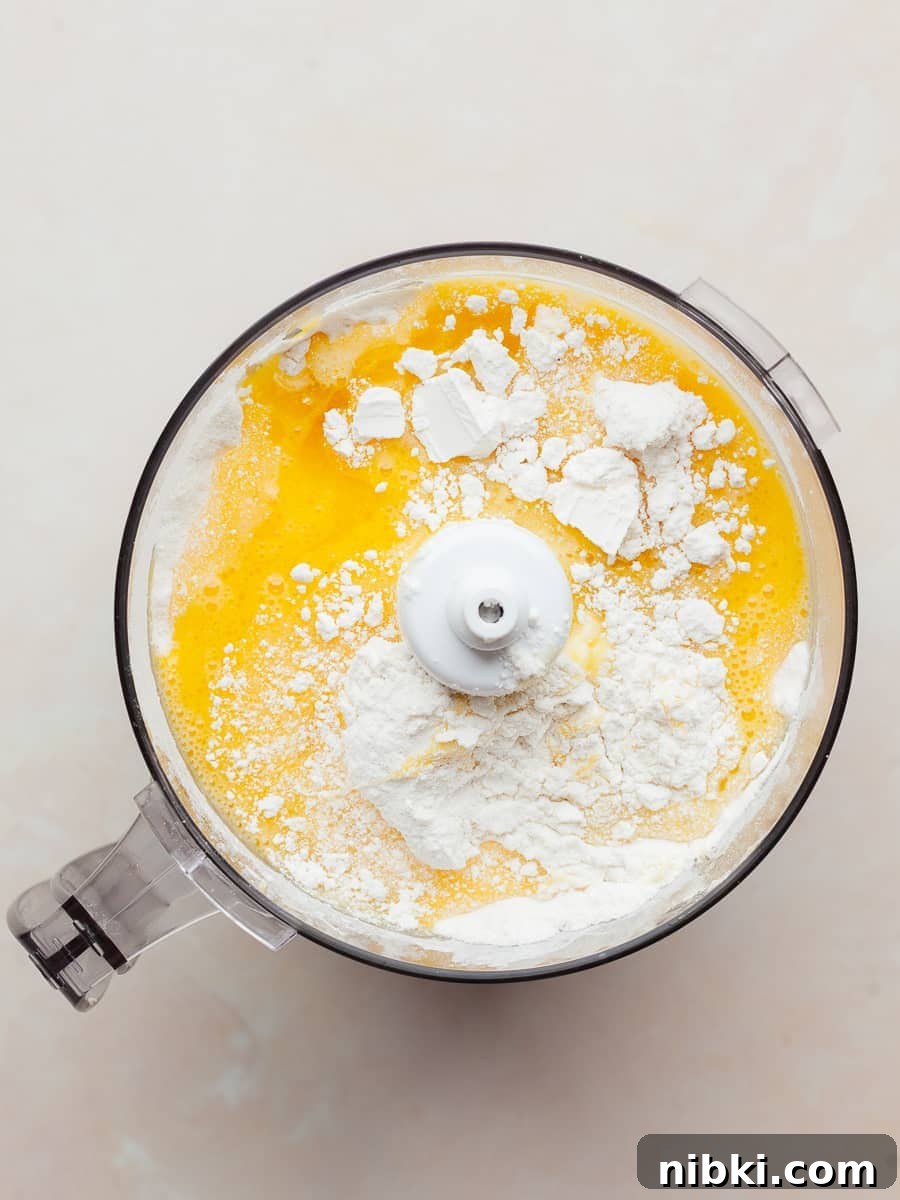
- Step 1: Place gluten free flour and kosher salt in a food processor fitted with the blade attachment. Pulse to combine.
- Step 2: Whisk together two whole eggs, one extra yolk, olive oil, and a teaspoon of water until smooth.
- Step 3: Add the wet mixture to the food processor and pulse to combine.
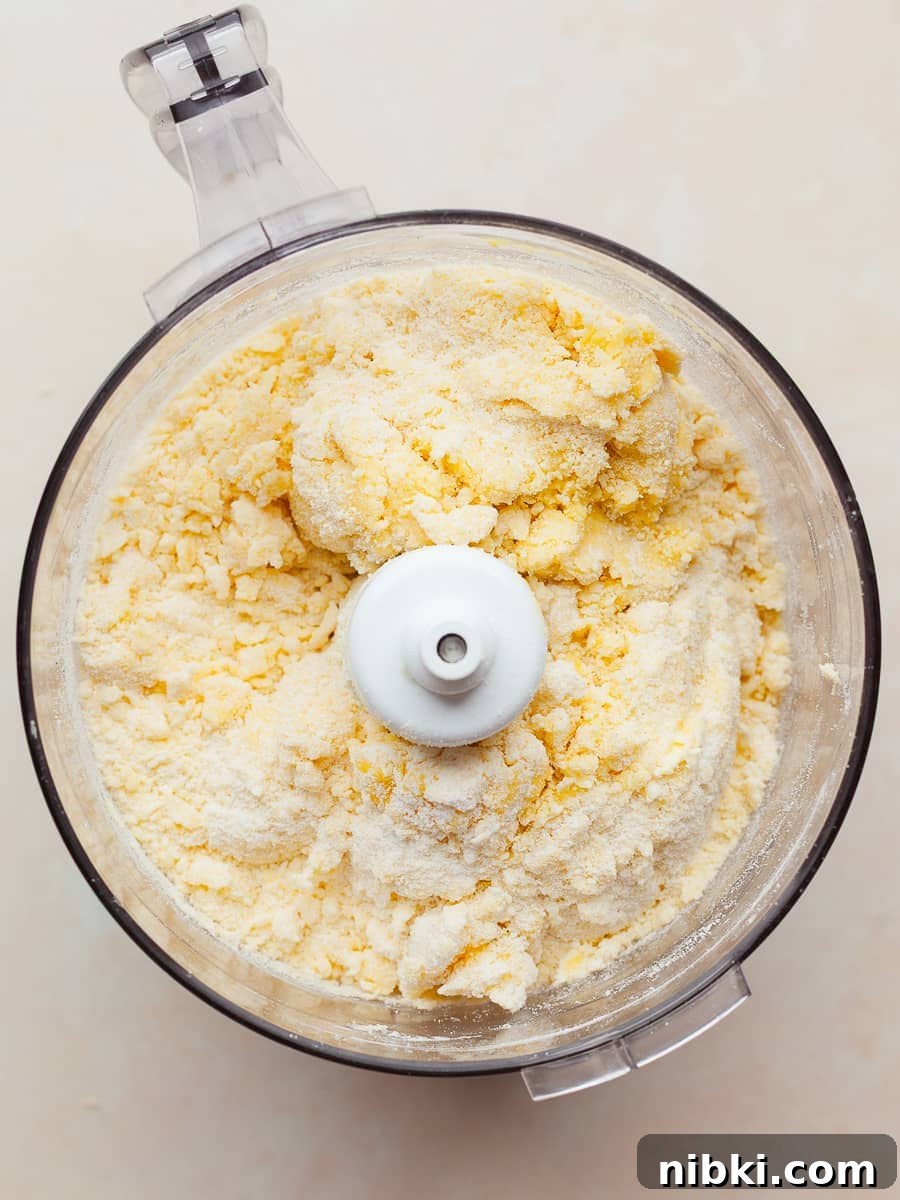
- Step 4: Process until the mixture forms small clumps, then continue until it comes together into a firm, slightly tacky dough.
- Step 5: Turn the dough onto a lightly floured surface and knead briefly—about one minute—until smooth and cohesive.
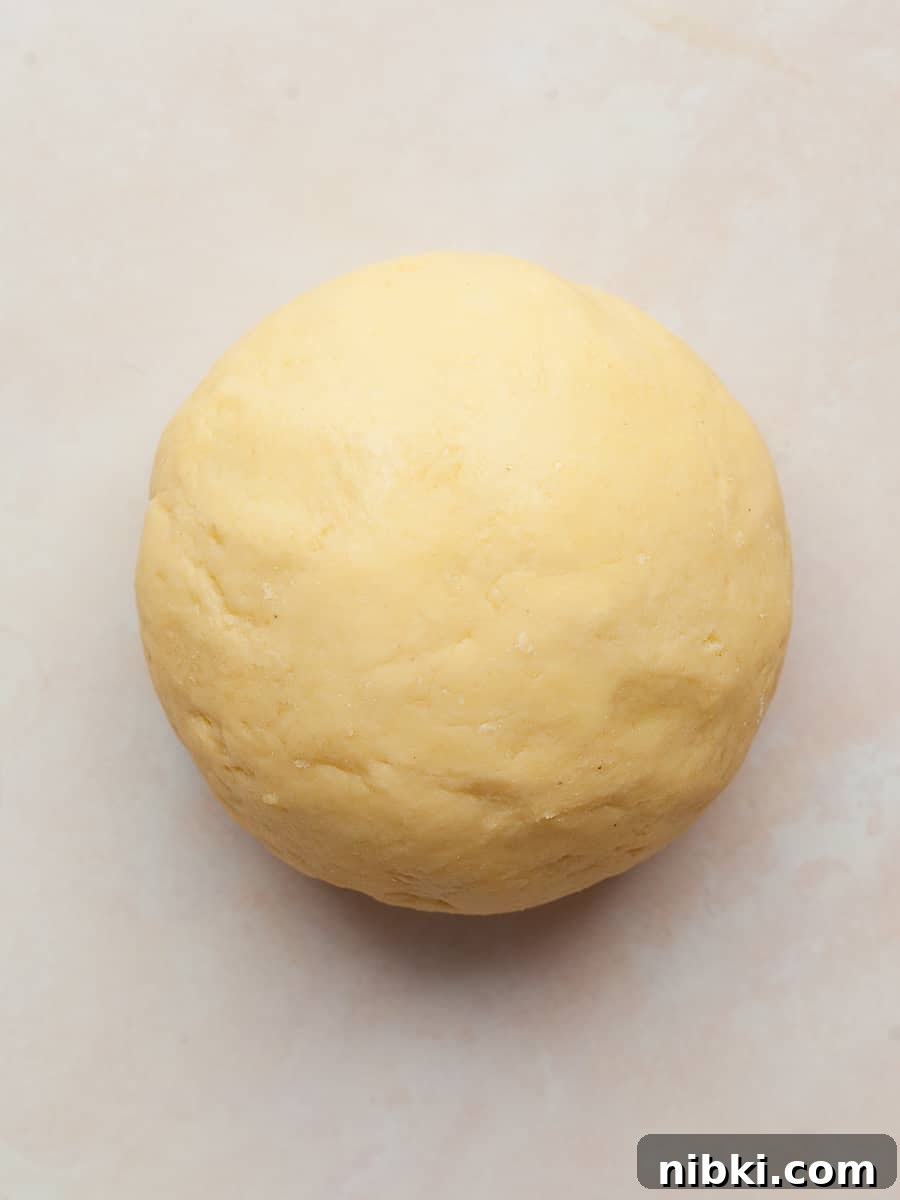
- Step 6: Lightly coat the dough with oil, wrap tightly in plastic, and chill for at least 30 minutes to fully hydrate and relax.
Spinach Ricotta Ravioli Filling
The filling comes together quickly in a food processor and makes a smooth, well-seasoned mixture that’s easy to portion into ravioli.
You can make the filling up to two days ahead and keep it refrigerated in an airtight container.
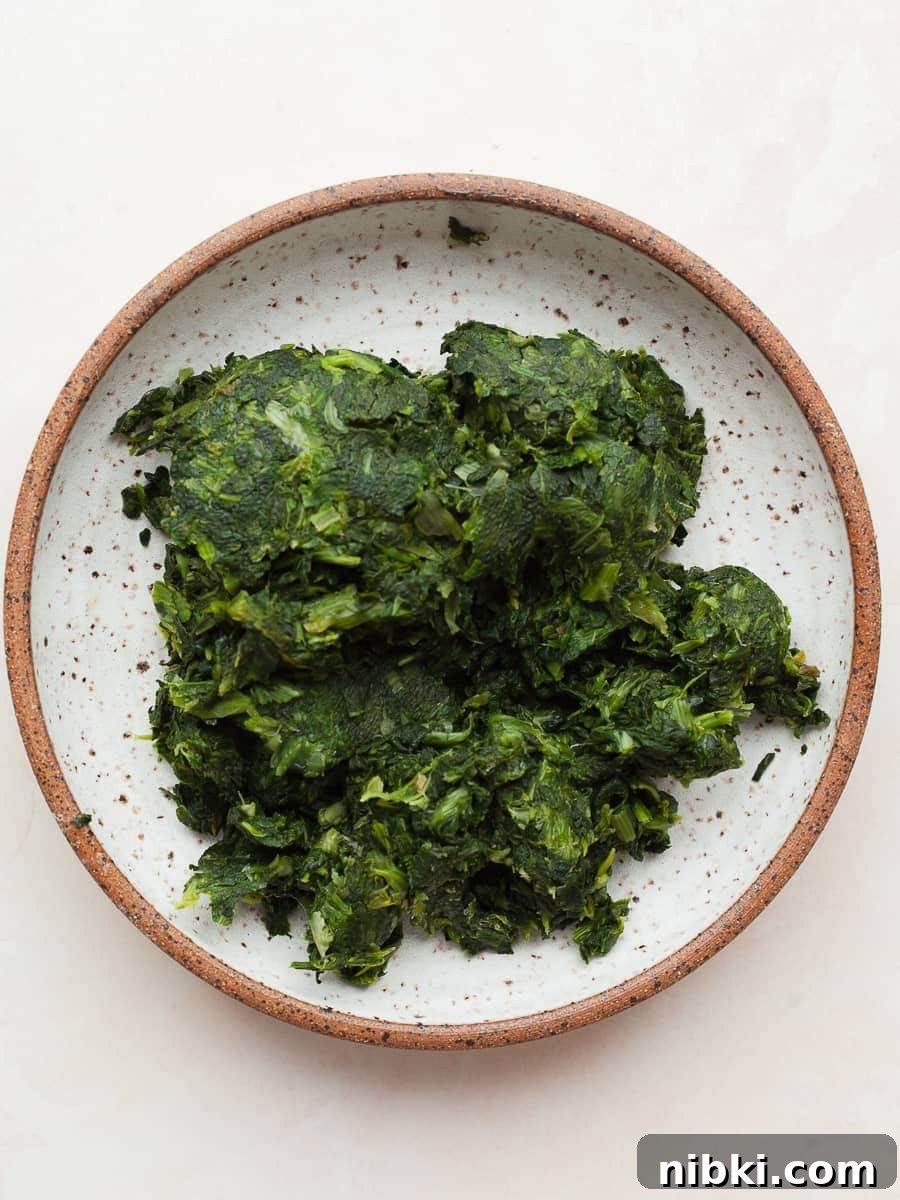
- Step 1: Thaw frozen chopped spinach and squeeze it dry in a clean kitchen towel until most moisture is removed.
- Step 2: Combine the squeezed spinach with whole-milk ricotta, grated Parmesan, lemon zest and juice, kosher salt, black pepper, a pinch of granulated garlic, and a little nutmeg in a food processor.
- Step 3: Process until smooth, scraping down the bowl as needed. Taste and adjust seasoning.
- Step 4: Refrigerate the filling in an airtight container until ready to assemble the ravioli.
Rolling out Gluten Free Pasta for Ravioli
Whether you use a sheeter attachment or a hand-cranked pasta machine, work in small portions to keep the dough manageable. Prepare a parchment-lined tray for the rolled sheets and separate layers with parchment to prevent sticking.
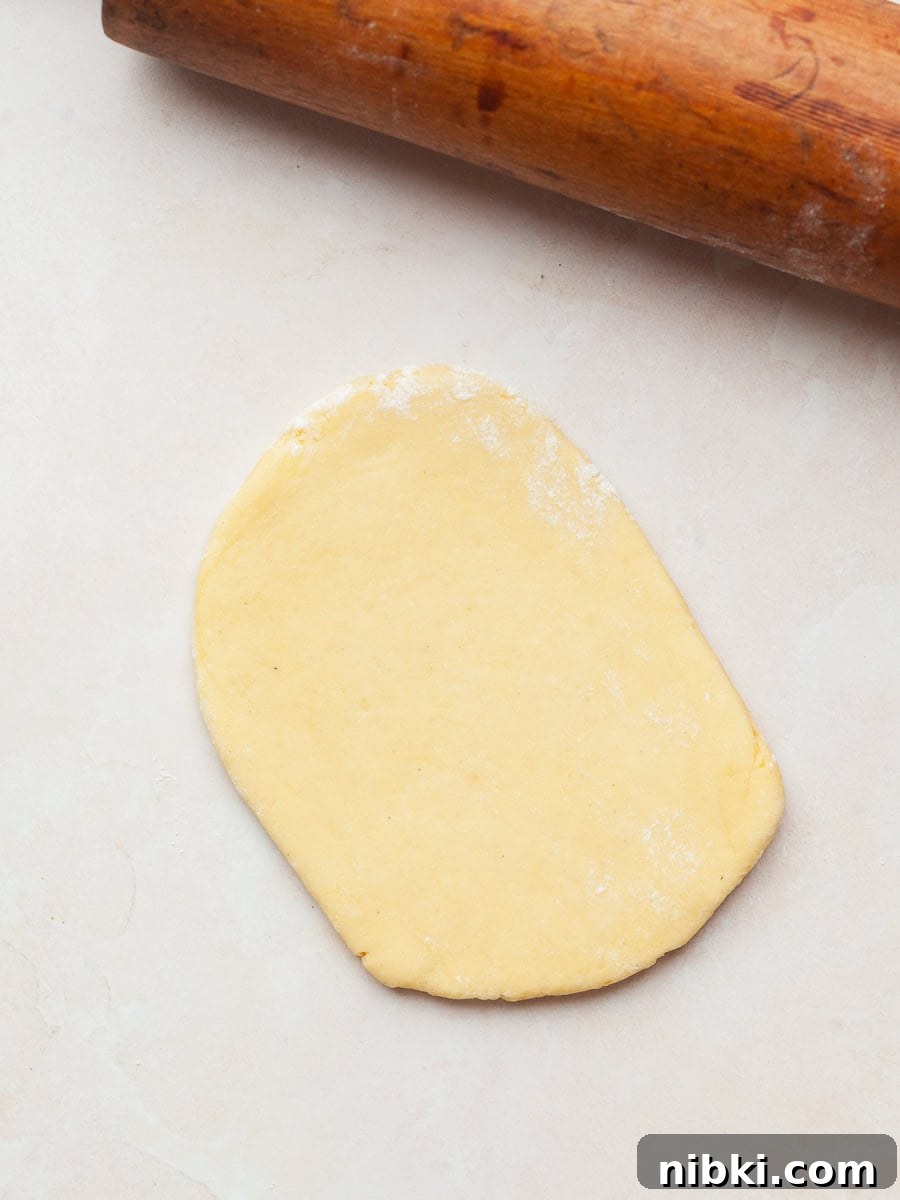
- Step 1: Lightly flour your surface. Divide dough into 4–6 pieces to make rolling easier and keep unused portions wrapped.
- Step 2: Use a rolling pin to flatten a portion into a rough rectangle about 1/4 inch thick before passing it through the roller on the widest setting.
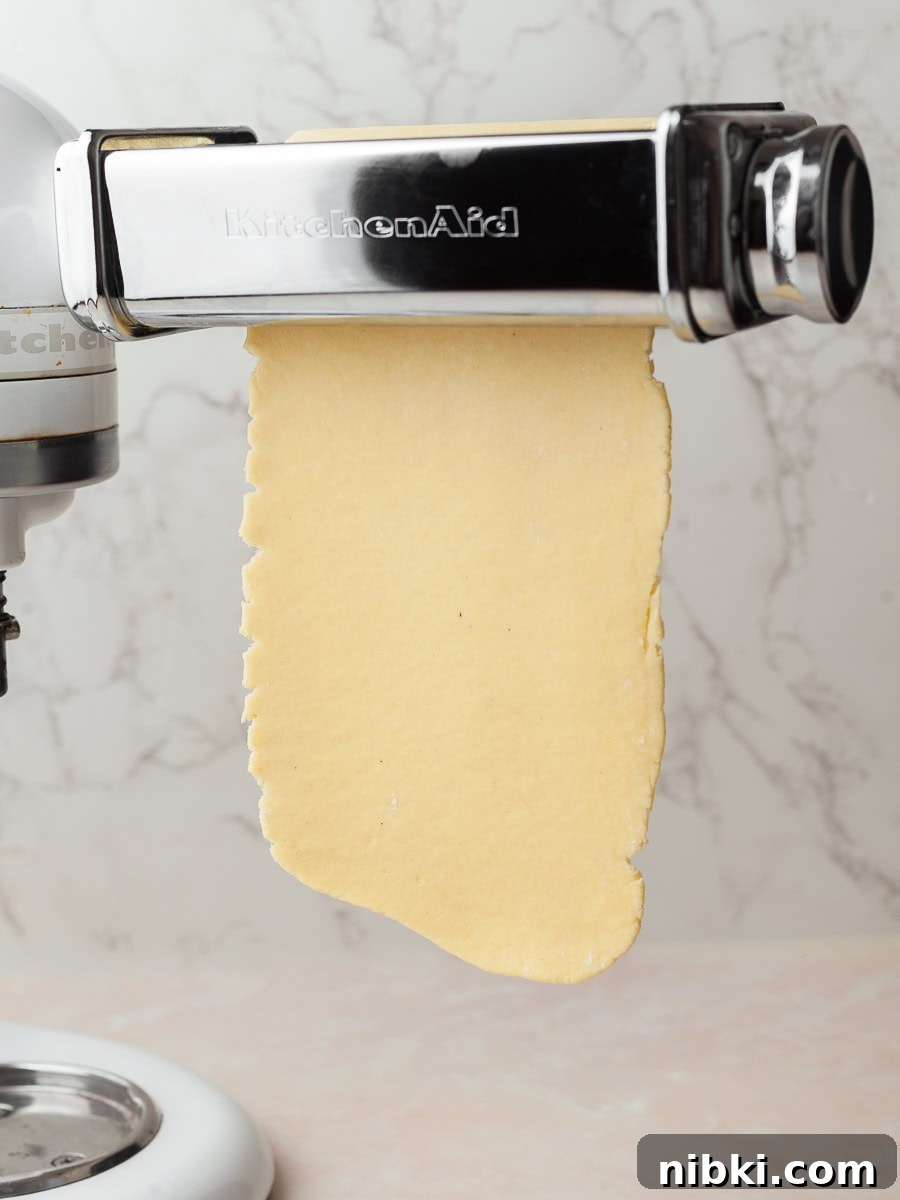
- Step 3: Fold the sheet into thirds and roll a few times to even the texture, then gradually reduce the roller setting until you reach a thin, flexible sheet. Fresh pasta will firm slightly during cooking.
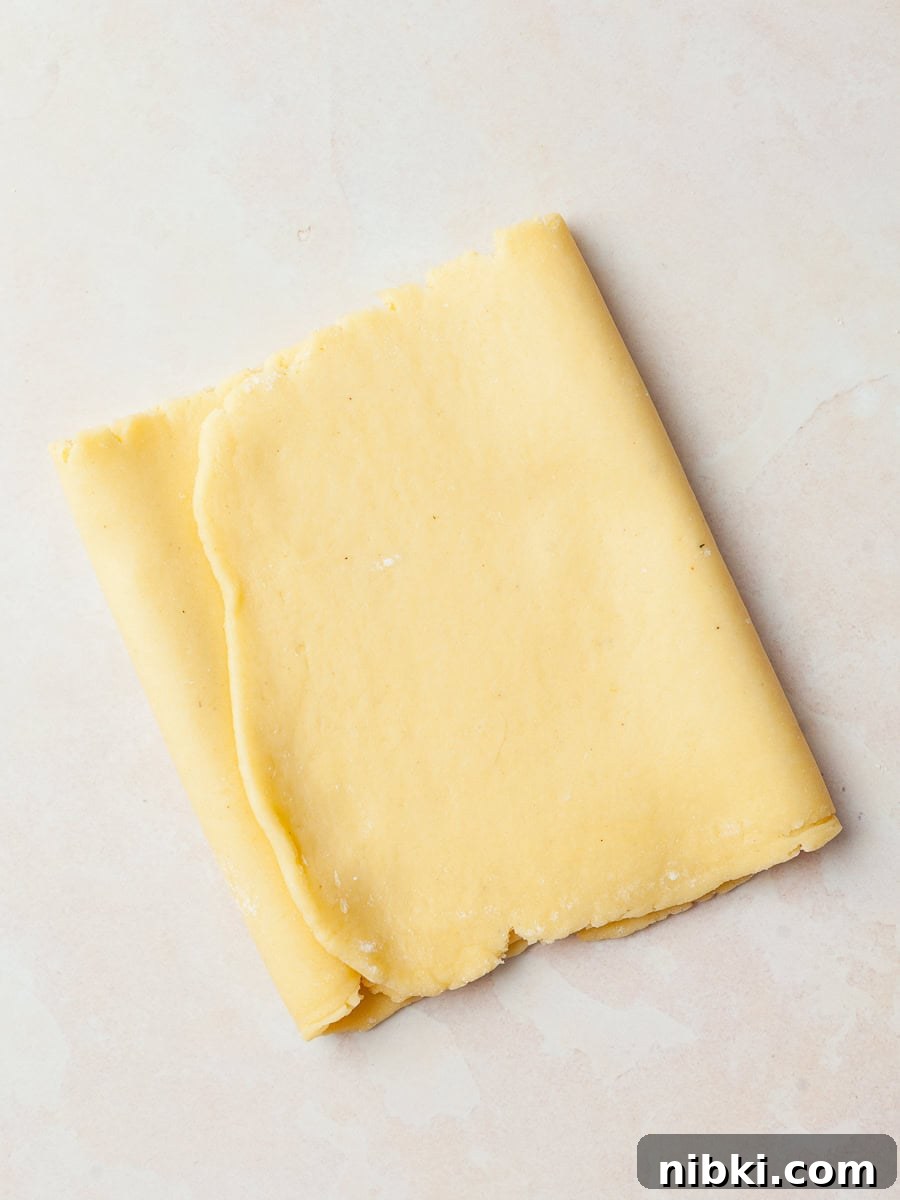
- Step 4: Place finished sheets on a lightly floured tray and cover lightly while you finish rolling the rest.
Filling & Shaping Spinach Ricotta Ravioli
This square-fold method minimizes scraps and is straightforward. Any leftover dough freezes well, and leftover filling keeps a few days in the fridge.
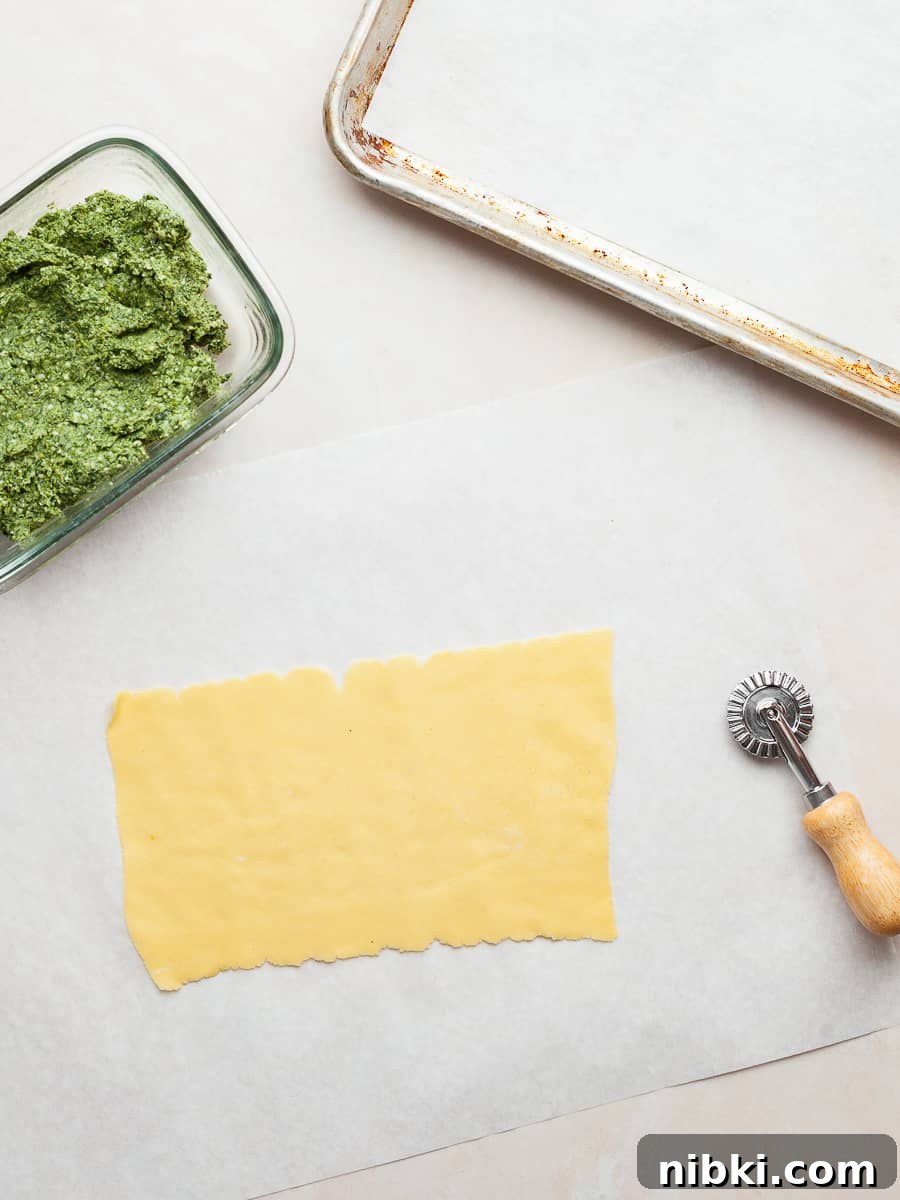
- Step 1: Set up your station with pasta sheets, filling, a parchment-lined tray, a towel, and a cutter.
- Step 2: Fold a sheet in half lengthwise to make a crease, then unfold; the crease will guide spacing for portions.
- Step 3: Spoon small mounds of filling onto one half of the sheet, leaving about 1 inch between mounds and around the edges.
- Step 4: Fold the empty side over the filling, pressing gently around each mound to remove air and seal the layers.
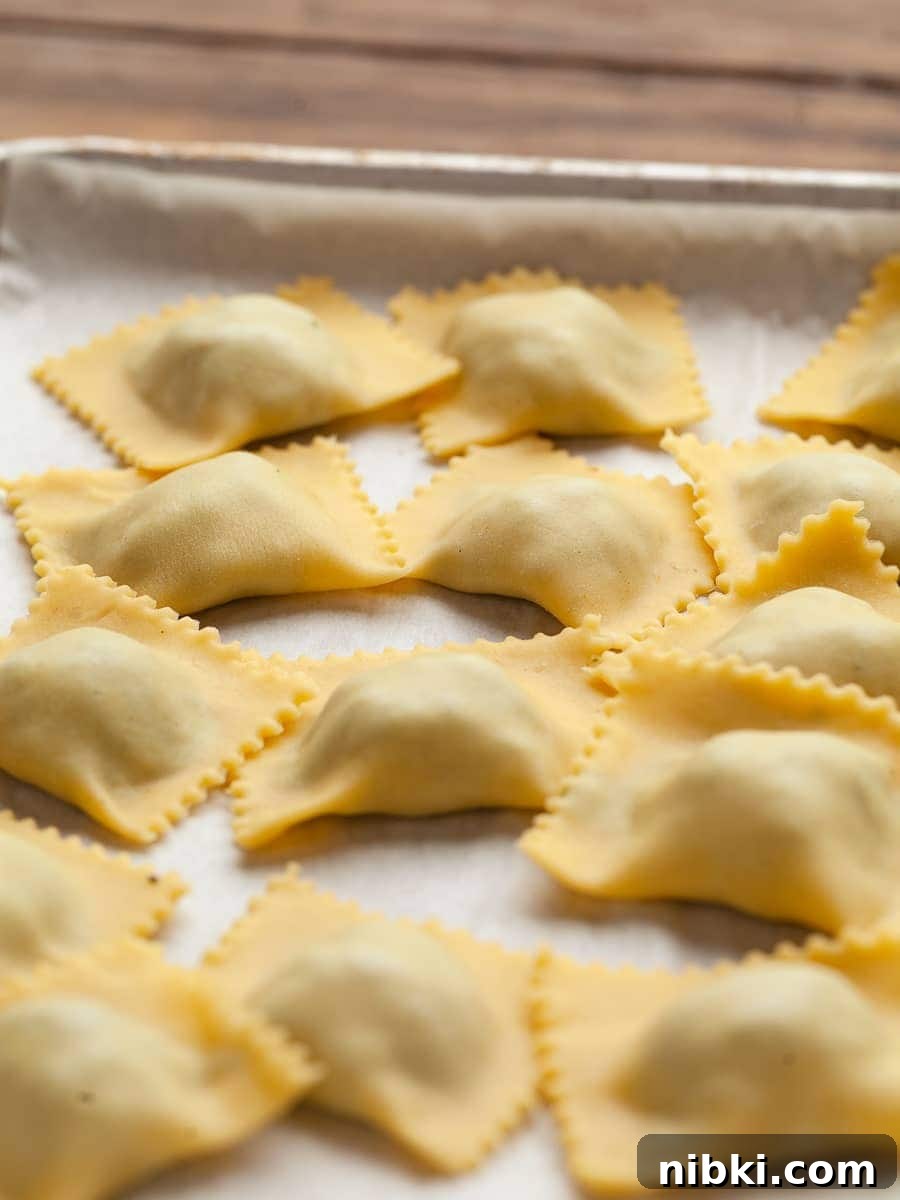
- Step 5: Cut into squares with a pastry wheel, taking care not to cut through the folded edge so each raviolo stays enclosed.
- Step 6: Arrange finished ravioli on the prepared tray and cover lightly to prevent drying while you finish the batch.
Video: How to fill Gluten Free Ravioli
Short demonstrations can be helpful: look for a concise video that shows folding, filling, and sealing techniques if you prefer visual guidance.
Pasta Dough Scraps
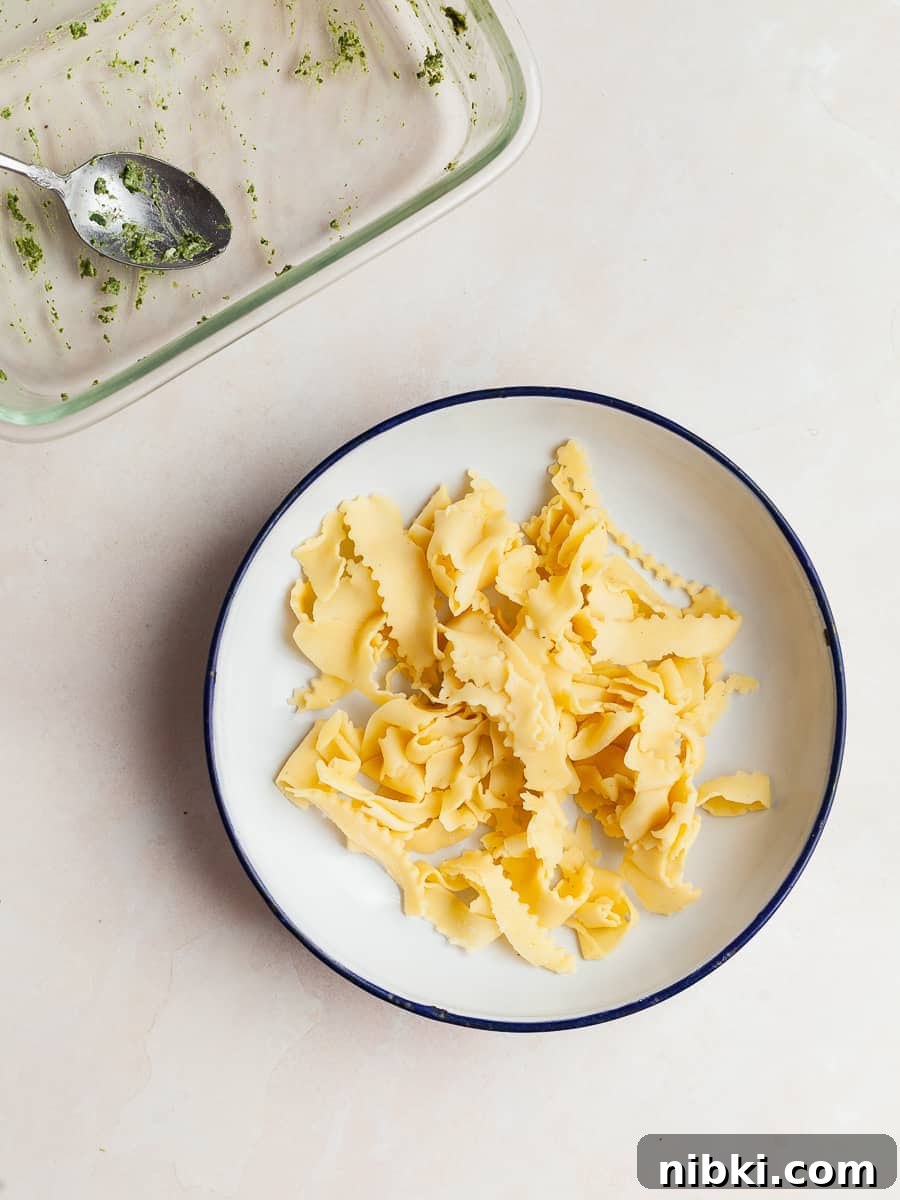
Making square ravioli leaves very little scrap dough. You can reroll scraps if you have extra filling, or freeze scraps for later. Leftover filling will keep 2–3 days and makes a great spread for crackers.
How to Cook and Serve Gluten Free Spinach Ricotta Ravioli
- Bring a large pot of well-salted water to a gentle boil, then reduce to a simmer before adding ravioli. Cook in batches so they don’t crowd the pot.
- The ravioli are done when they float and the pasta is tender, usually 3–5 minutes for fresh sheets. Test one to confirm doneness before removing the whole batch.
- Remove with a slotted spoon and transfer to a lightly oiled plate or directly into your sauce.
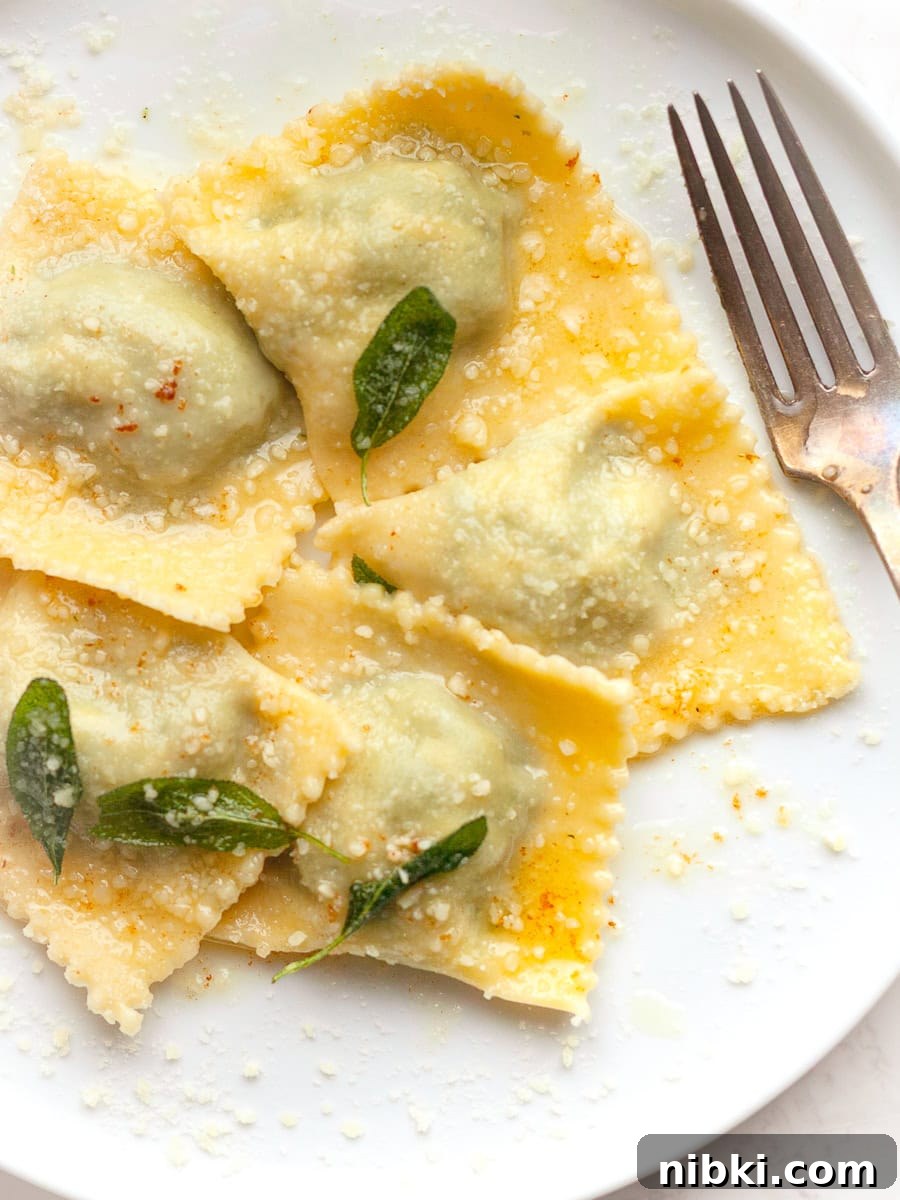
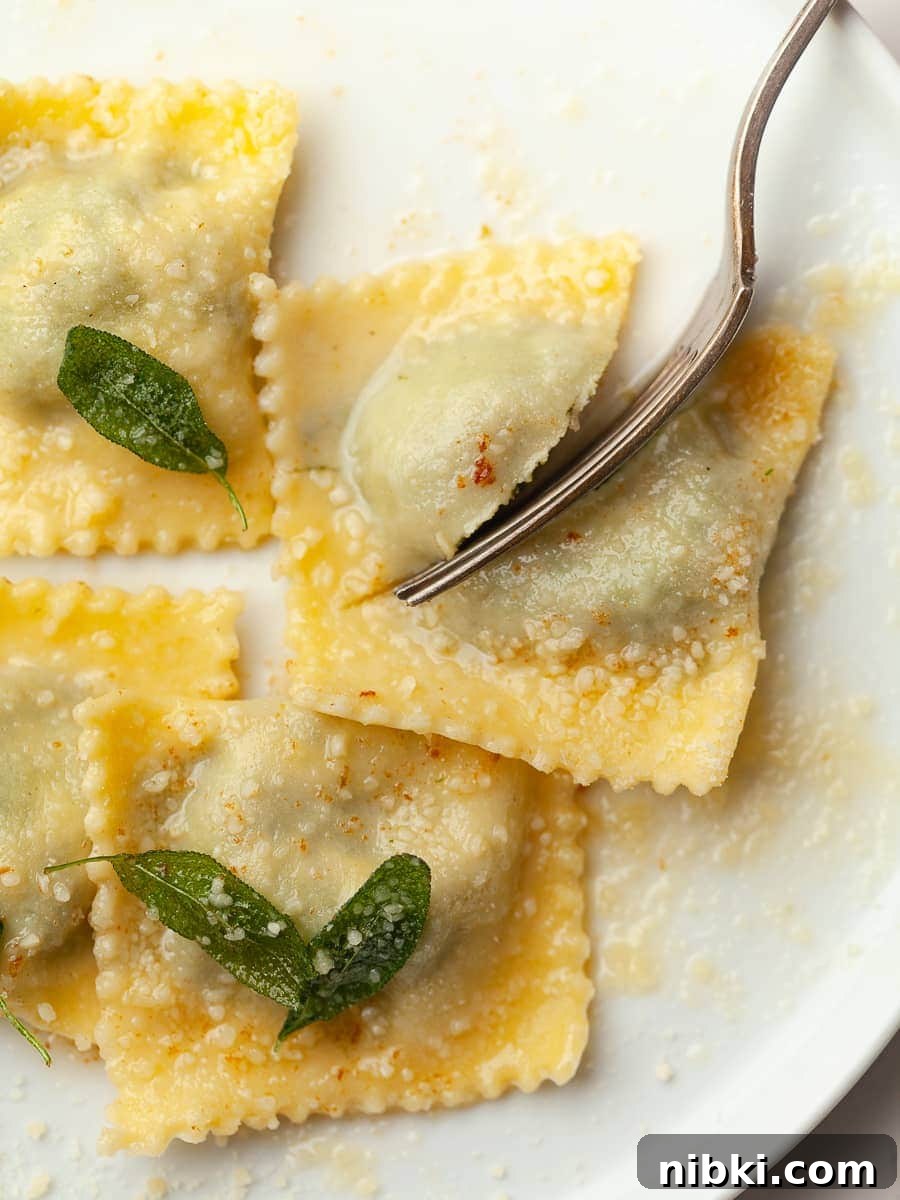
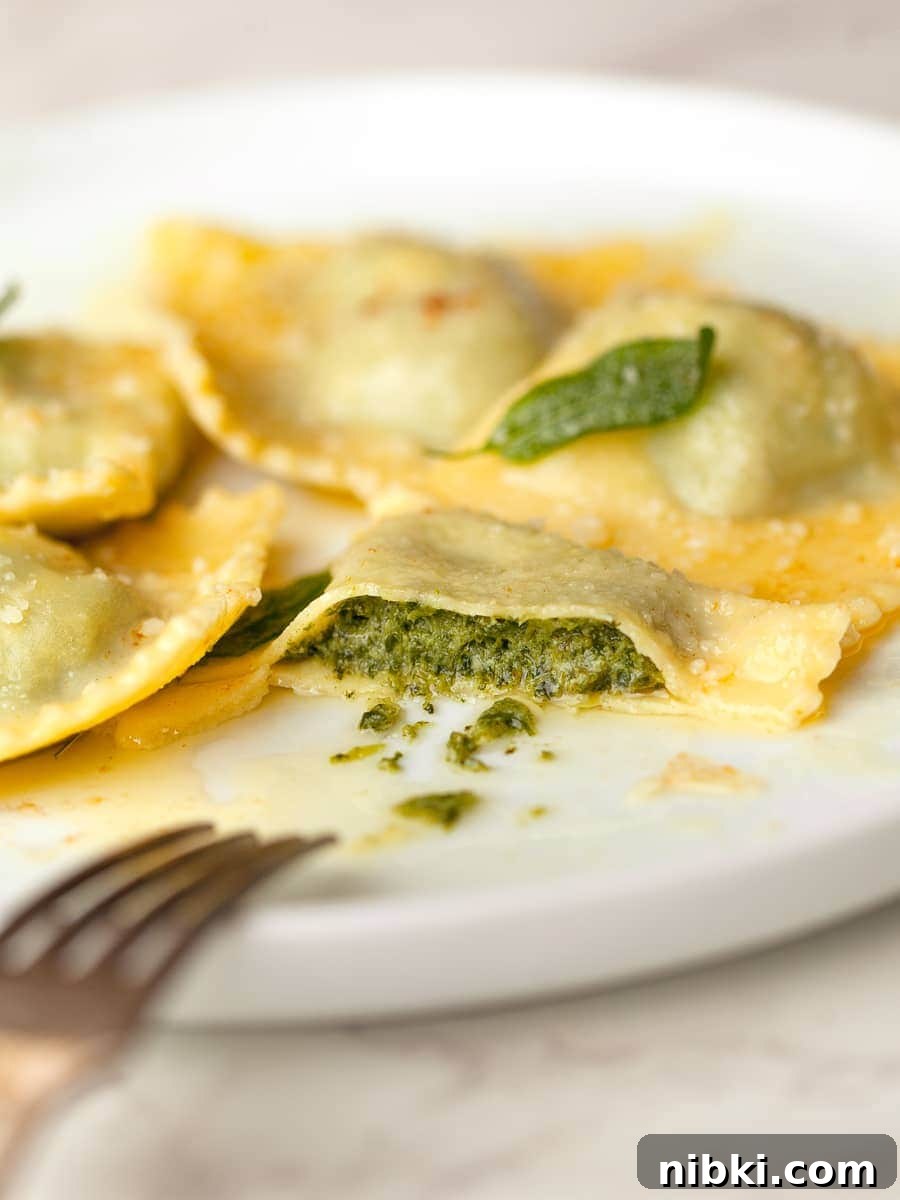
- Classic serving suggestions include brown butter with crispy sage, a light marinara, garlic butter, or simply a drizzle of good olive oil with freshly grated Parmesan.
How to make a Brown Butter Sage Sauce
- Melt butter in a skillet over medium heat and cook until it turns golden brown and smells nutty, about 3–5 minutes—watch closely to avoid burning.
- Add sage leaves and sauté briefly until crisp.
- Toss in the cooked ravioli gently to coat and finish with salt, pepper, and grated Parmesan. Serve immediately.
Storing & Freezing Gluten Free Spinach Ricotta Ravioli
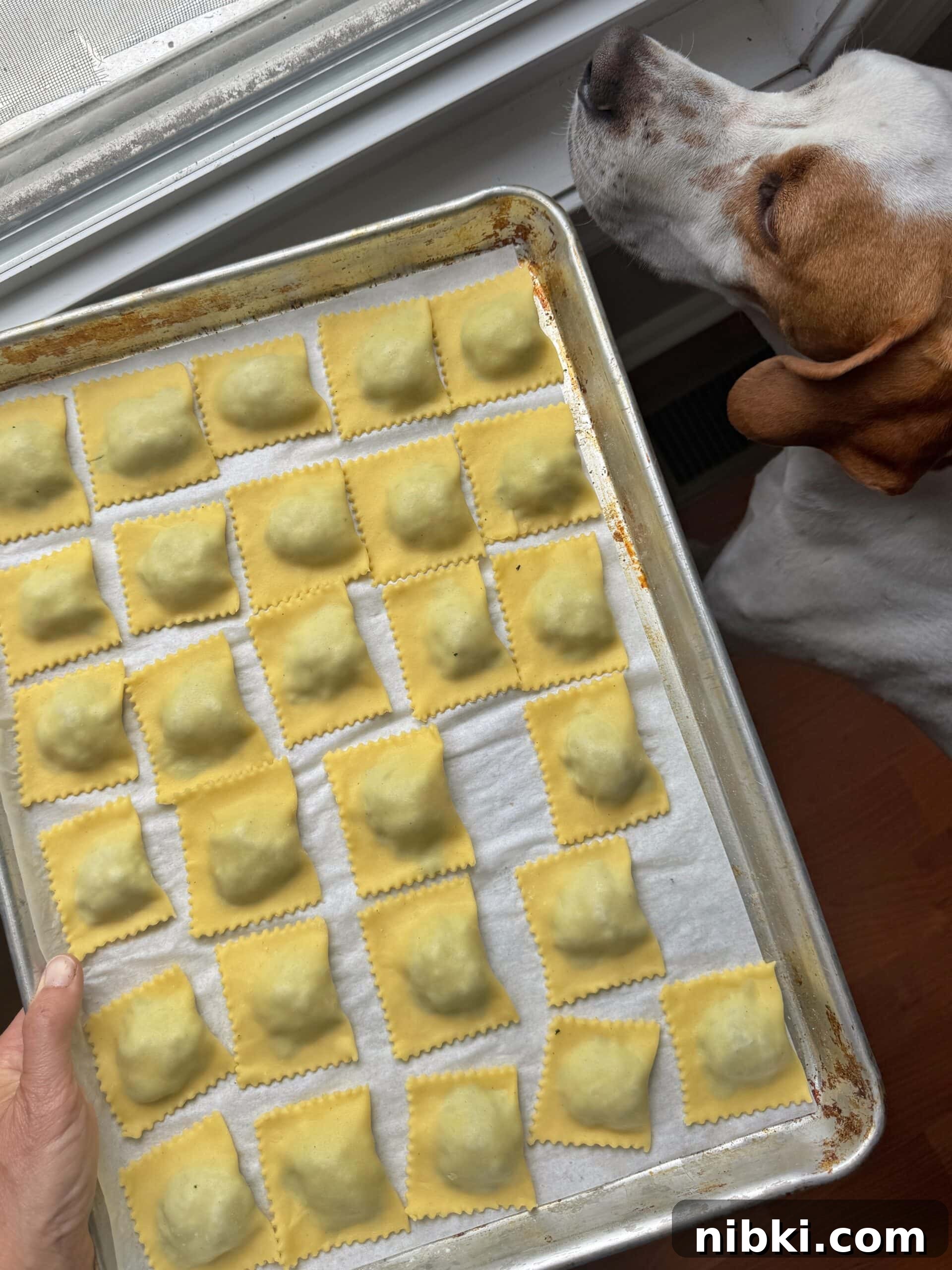
For short-term storage, place uncooked ravioli in a single layer on a parchment-lined sheet tray and cover tightly with plastic wrap. Keep refrigerated and cook within two days.
To freeze, arrange uncooked or briefly blanched and cooled ravioli in a single layer on a parchment-lined tray and freeze until solid (1–2 hours). Transfer frozen ravioli to a freezer-safe container or bag and store up to one month.
Cook from frozen in gently simmering, well-salted water; do not thaw first. Stir gently and cook until they float and are tender, typically 4–6 minutes depending on thickness.
FAQ about Gluten Free Spinach Ricotta Ravioli
Remove as much moisture as possible from the thawed spinach by squeezing it tightly in a clean towel. Also drain any excess liquid from the ricotta before combining. These steps prevent a runny filling and reduce the risk of splitting while cooking.
A measure-for-measure gluten free blend that includes rice and tapioca flours plus a binder works well. Choose a blend formulated for baking and pasta so the dough rolls evenly and remains flexible.
Cook ravioli in gently simmering water rather than a vigorous boil. A high boil can jostle delicate filled pasta and cause tearing. Reduce the heat to a gentle simmer before adding the ravioli and cook until they float and the pasta is tender.
Note about Salt in my Recipes
The type and grain size of salt affects perceived saltiness. Adjust amounts if you use a different kosher salt or fine table salt. Taste the filling before assembling and adjust seasoning as needed.
Baking in grams
Baking and pasta work are more consistent by weight. A digital kitchen scale is a helpful investment for accurate measurements and repeatable results.
Note about Ovens and Oven Temperatures
Recipes are tested in conventional ovens with racks positioned in the middle. If you use convection, reduce temperature as required and monitor closely, as convection can brown quickly.
Substitutions and Modifications
Substituting ingredients, especially flours, will change the dough’s behavior. If you modify this recipe, expect differences in texture and handling. Adjust hydration and rest times accordingly.
More Gluten Free Savory Recipes to try
-
Gluten Free Spinach Ricotta Ravioli
-
Gluten Free Kartoffelpuffer (Austrian Potato Pancakes)
-
Gluten Free Cooked Sauerkraut
-
Gluten Free Frittatensuppe (Austrian Pancake Soup)
Gluten Free Spinach Ricotta Ravioli
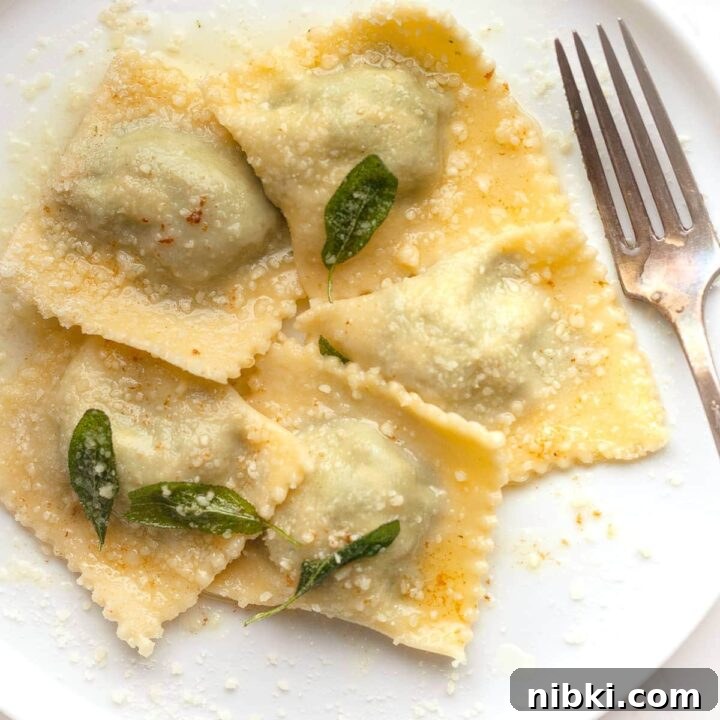
Make gluten free spinach ricotta ravioli from scratch with fresh pasta dough and a creamy ricotta and spinach filling. Follow the steps above for best results.
30 minutes
5 minutes
1 hour 15 minutes
1 hour 50 minutes
Ingredients
Gluten Free Fresh Pasta Dough
- 225 grams gluten free flour blend
- ½ teaspoon kosher salt
- 2 large eggs
- 1 large egg yolk
- 15 grams olive oil
- 5–10 grams water (1–2 teaspoons), as needed
Spinach Ricotta Ravioli Filling
- 283 grams (10 oz) frozen chopped spinach, thawed and drained
- 200 grams whole-milk ricotta
- 50 grams finely grated Parmesan
- Juice and zest of one small lemon
- ½ teaspoon kosher salt, to taste
- ¼ teaspoon ground black pepper
- ¼ teaspoon granulated garlic
- ⅛ teaspoon grated nutmeg
For serving
- Brown butter and crispy sage, marinara, garlic butter, or olive oil and Parmesan
Instructions (Summary)
- Make dough: Combine dry ingredients, add eggs, oil, and a touch of water; process or mix until a cohesive dough forms. Knead briefly, oil, wrap, and chill 30 minutes.
- Make filling: Squeeze thawed spinach dry, combine with ricotta, Parmesan, lemon, and seasonings; process until smooth and chill.
- Roll sheets: Divide dough, flatten, and pass through a pasta roller, gradually thinning to the desired setting. Keep sheets lightly floured and covered.
- Assemble ravioli: Fold sheets, portion filling, fold over, press out air, cut into squares, and transfer to a lined tray.
- Cook: Simmer gently in well-salted water until ravioli float and are tender, about 3–5 minutes for fresh; toss with sauce and serve.
Notes
Tip: Read the full post above for step-by-step photos and troubleshooting tips. Start with minimal added water when making dough; add slowly if needed.