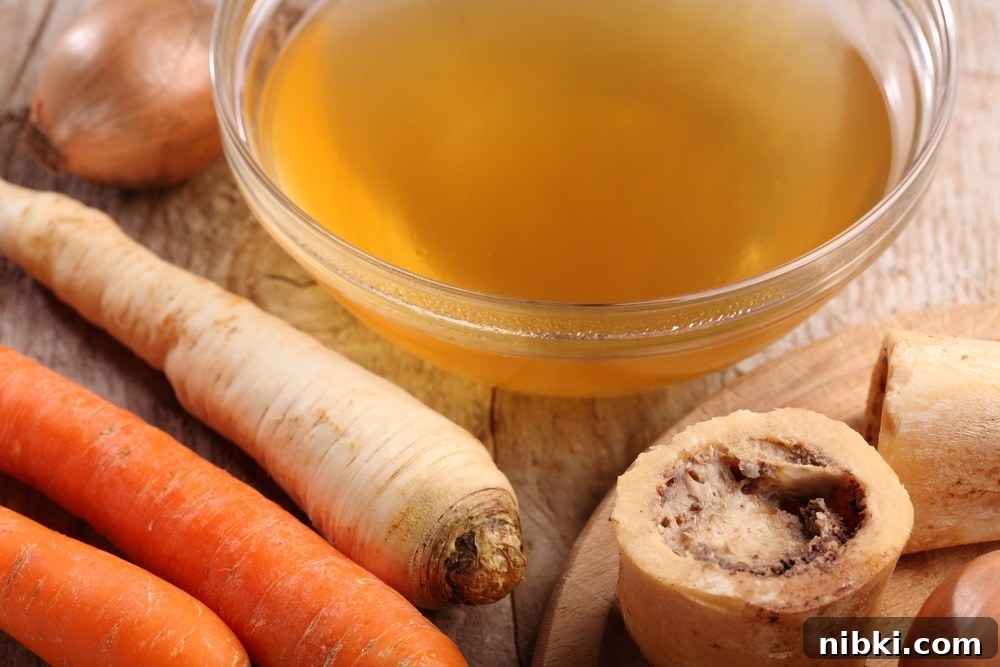
Easy Bone Broth Recipe
Store-bought bone broth can be expensive, but homemade bone broth is easy, inexpensive, and rewarding. This simple recipe uses a few basic ingredients and mostly hands-off cooking time to produce a rich, flavorful broth that you can sip or use as a base for soups and sauces.
Servings: 8 cups
Prep Time: 5 mins
Cook Time: 12–24 hrs
Total Time: About 1 day
Ingredients
- 2 lb chicken or beef bones (leftover roasted bones, raw bones with some marrow, or a mix)
- 1 onion, peeled and quartered
- 2 carrots, roughly chopped
- 2 stalks celery, roughly chopped
- 12 cups water (enough to cover bones)
- 2 bay leaves
- 1/2 teaspoon salt, or to taste
- 1 tablespoon whole black peppercorns
- 2 tablespoons apple cider vinegar (helps draw minerals from the bones)
Instructions
- Preheat the oven to 400°F (200°C). Arrange the bones, onion, carrots, and celery on a large roasting pan and roast for about 30 minutes, turning once, until the bones and vegetables are nicely browned. Roasting deepens the flavor of the finished broth.
- Transfer the roasted bones and vegetables, along with any pan juices, into a large stockpot or a slow cooker. Add the water, bay leaves, salt, peppercorns, and apple cider vinegar. The vinegar helps extract nutrients from the bones; allow the mixture to sit for 20–30 minutes before heating if you have time.
- If using the stovetop, bring the pot to a gentle boil, then reduce the heat to maintain a low simmer. Cover and simmer for 12–24 hours. For safety and convenience, you can simmer in a few long sessions (for example, 4–8 hours at a time), refrigerating between sessions and resuming the next day until you reach the desired total time. If using a slow cooker, cook on low for the same 12–24 hour window.
- When the broth has simmered long enough, remove from heat and strain through a fine-mesh sieve or cheesecloth into heatproof containers. Discard the solids (bones and vegetables). Allow the broth to cool to room temperature, then refrigerate until the fat rises and solidifies on top. Skim off the fat if you prefer a leaner broth.
- Reheat and use the broth as a warm drink, a base for soups and stews, or for cooking grains and sauces. The longer the broth cooks, the richer and more gelatinous it will become as collagen breaks down into gelatin.
Tips and Variations
- Bone choice: Use leftover roasted bones, marrow bones, knuckles, necks, or a mix of beef and chicken bones for a complex flavor. If you don’t have roasted bones, you can roast raw bones briefly to brown them before simmering.
- Cooking methods: A slow cooker or electric pressure cooker (Instant Pot) can be used. In an electric pressure cooker, cook for a shorter time under high pressure (check your device’s guidelines), then release and strain.
- Flavor additions: Fresh herbs (parsley, thyme), garlic, or a splash of soy sauce can be added near the end of cooking for extra flavor. Add delicate herbs only in the last hour so their flavors remain bright.
- Gelatin and texture: Gelatinous broth that becomes jelly-like in the fridge indicates good collagen extraction. If your broth is thin, try cooking longer or using more connective-tissue-rich bones next time.
- Storage: Cool completely before refrigerating. Use within several days or freeze portions for longer storage. Freeze in ice cube trays or airtight containers for convenient portions.
Tried this recipe?
Please let us know how it turned out in the comments.