
The best Christmas cookie frosting for decorating cut-out sugar cookies, plus practical tips for tinting the frosting in perfect holiday shades.
Psst — this frosting is ideal for decorating the 5 EASY Christmas cookies for kids in my cut-out cookie post.

Why I love this Christmas cookie frosting
- Five simple ingredients: powdered sugar, unsalted butter, vanilla, optional almond extract, and a pinch of salt — nothing fussy.
- Great for piping or spreading: the texture is smooth enough to spread with a knife or offset spatula, yet firm enough to pipe simple shapes and details.
- Sets with a light crust: this buttercream forms a soft crust so you can carefully stack cookies for short-term transport.
- Delicious flavor: vanilla with a touch of almond (optional) makes this frosting taste rich and bakery-quality, a perfect match for sugar cookies.
Gift idea: a quality rolling pin makes a thoughtful present for cookie bakers — it elevates the whole cookie-making experience.
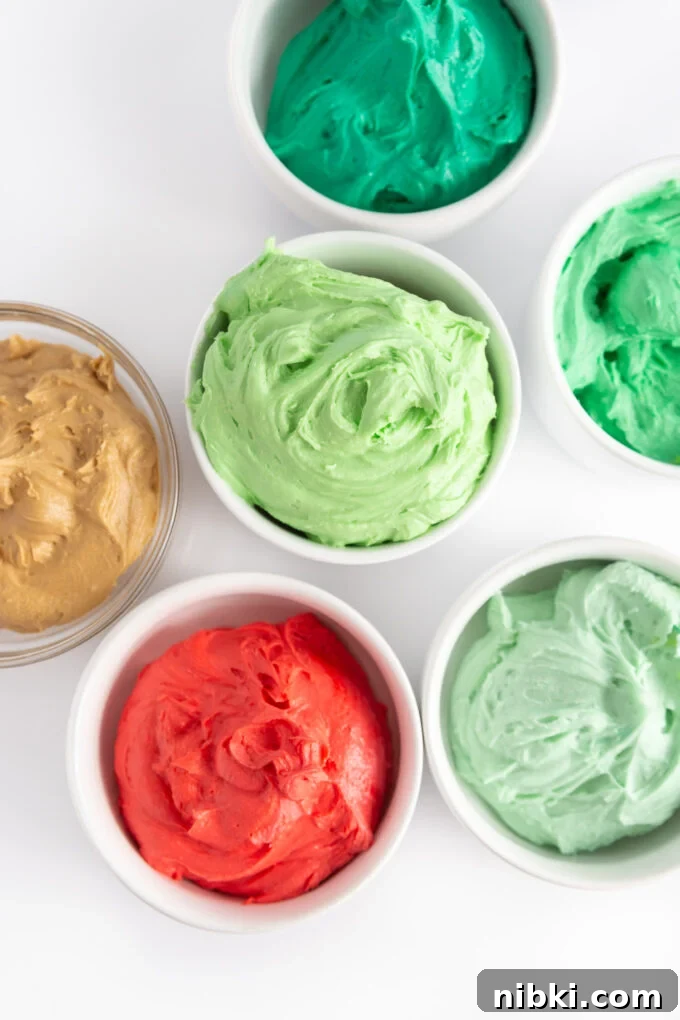
Tips & tricks for perfect frosting and decorating
- Butter temperature: use room-temperature butter for the creamiest, most stable frosting.
- Spreading: this frosting spreads beautifully with a butter knife or offset spatula for clean, even coverage.
- Piping: for simple piping, use medium round tips (such as Wilton Round #5 or #10) or a small star tip for texture. If you don’t have tips, trim the corner off a plastic bag and pipe with that.
- Food coloring: gel food coloring gives richer, truer hues without thinning the frosting. Start with small amounts and add more until you reach the desired shade.
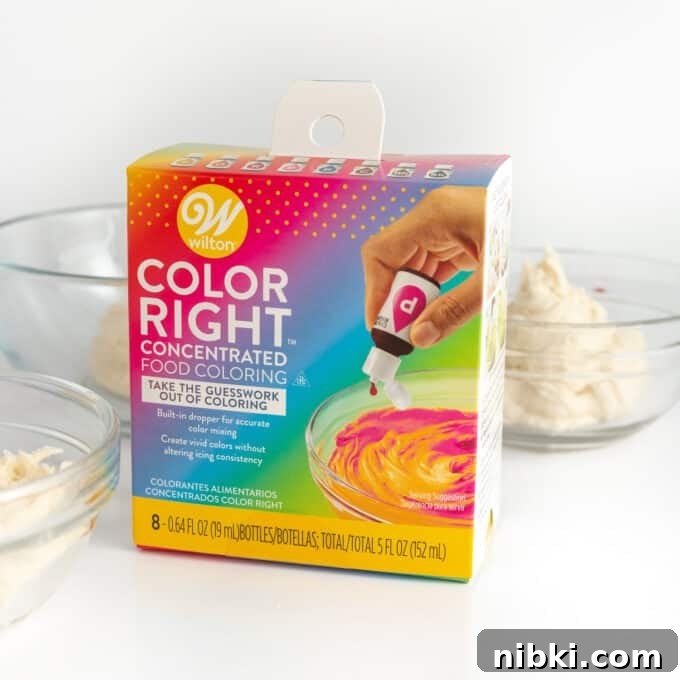
How to mix perfect Christmas frosting colors
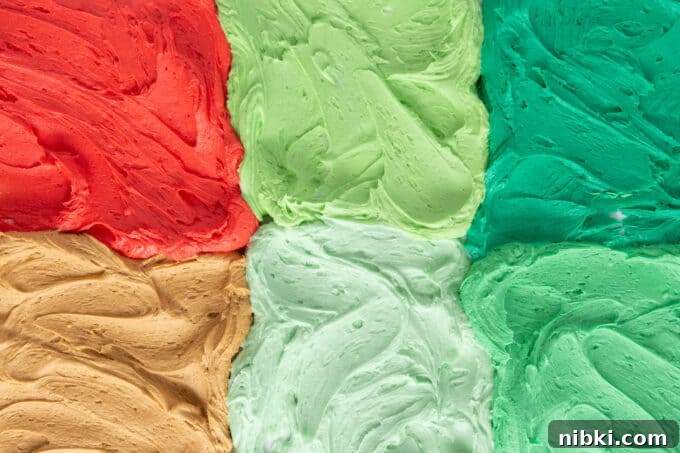
Mixing color can be the trickiest part of cookie decorating. Below are easy formulas to tint one cup of frosting into common holiday shades. These are starting points — add tiny amounts at a time until you reach the exact tone you want. Since the recipe makes about 2 cups total, double the amounts if you want to color the entire batch.
Yield: roughly 2 cups of frosting, enough to decorate about 24 cut-out cookies depending on size.
White frosting: leave it uncolored for snowflakes, candy-cane bases, snowmen, and details; finish with sprinkles or sanding sugar for sparkle.
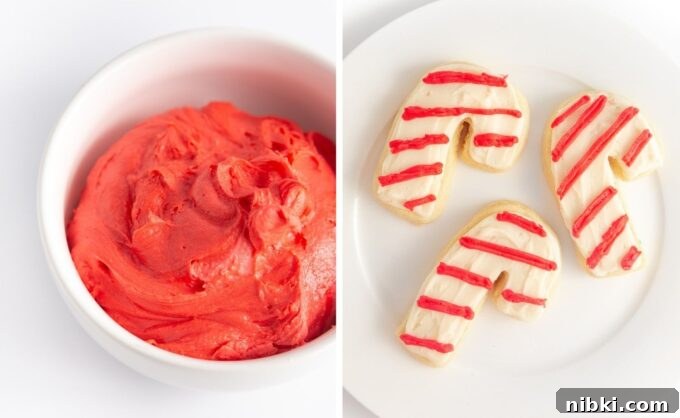
How to make Christmas red frosting
Red often requires more coloring than other shades. To avoid a metallic or chemical taste, use concentrated gel colors and add a little at a time.
- Per 1 cup frosting: about 4 drops crimson + 2 drops red (adjust to achieve the intensity you want).
- Best for: stockings, Santa details, candy-cane stripes, mittens, ornaments, and reindeer noses.
How to make emerald green frosting
- Per 1 cup frosting: about 3 drops blue + 2 drops yellow to reach an emerald tone (adjust slightly for depth).
- Best for: Christmas trees, wreaths, ornaments, and light garlands.
Tip: for darker greens, add more blue or use a tiny pinch of black gel sparingly to deepen the shade.
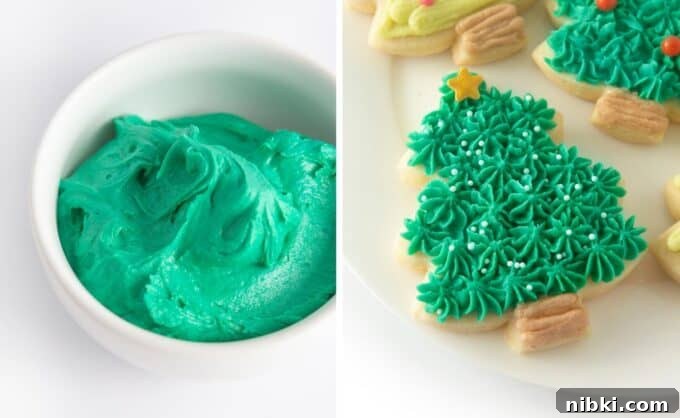
How to make classic green frosting
- Per 1 cup frosting: 1 drop blue + 1 drop yellow for a standard green.
- Green is great for: trees, wreaths, and garlands.
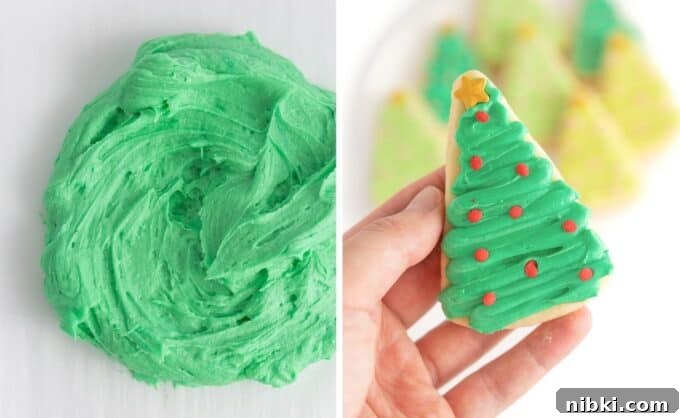
How to make lime green frosting
- Per 1 cup frosting: 1 drop yellow + a tiny swipe of blue on a toothpick (dip the tip and touch the frosting; mix to check the color).
- Best for: bright trees, playful ornaments, or festive accents.
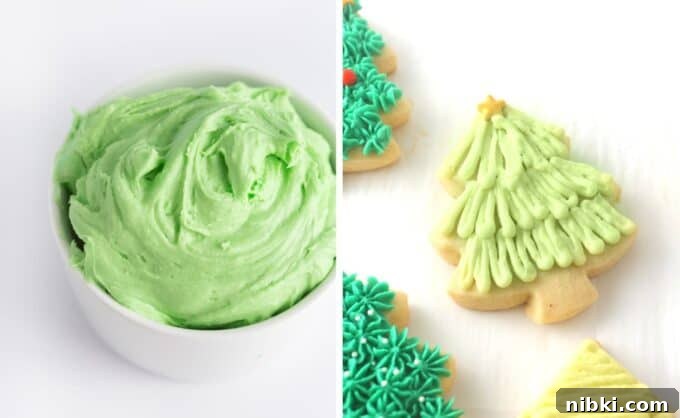
How to make mint green frosting
- Per 1 cup frosting: one tiny toothpick swipe of yellow + one tiny toothpick swipe of blue, mixed gently until you reach a pale mint.
- Best for: snowflakes, soft trees, stars, and delicate accents.
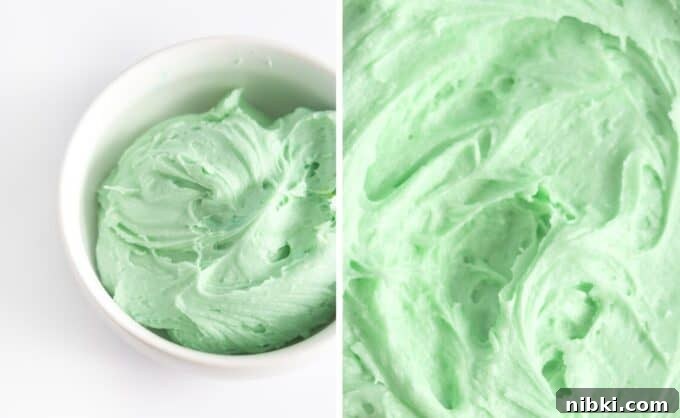
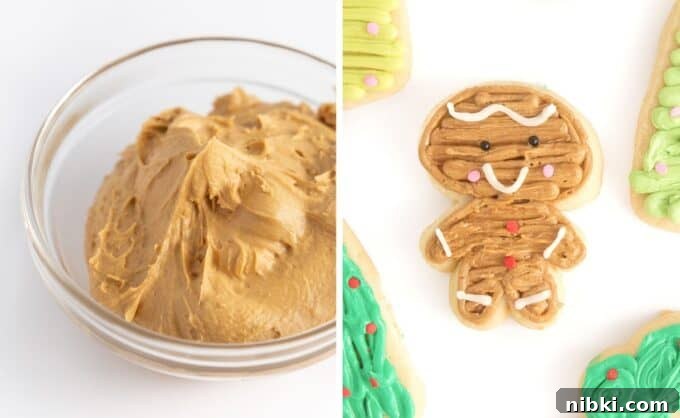
How to make gingerbread frosting
- Per 1 cup frosting: 2 drops brown + 1 drop yellow to warm the tone.
- Best for: gingerbread men, tree trunks, and reindeer bodies.
Easy Christmas cookie decorating ideas
- Christmas trees: use emerald, lime, or mint green and add white sanding sugar or pearl sprinkles for lights and snow.
- Candy canes: pipe a smooth white base and add thin red stripes for classic candy-cane cookies.
- Gingerbread: cover in brown frosting and pipe white details for faces and buttons; tiny pearls or chocolate chips work for eyes.
- Snowflakes: use white or mint frosting and finish with sugar pearls or sanding sugar.
- Mittens: decorate with red or lime frosting and add contrasting cuffs, dots, or candy buttons.
- Snowmen: coat in white frosting, add sanding sugar for texture, and use small candies or mini chips for eyes and buttons.

Frequently asked questions
Because this frosting is made with butter and powdered sugar (no milk), you can leave it at room temperature for 2–3 days in a cool kitchen. If you won’t use it right away, store it airtight in the refrigerator. When ready, bring it to room temperature and re-beat it briefly to restore a fluffy texture. In hot climates, store the frosting in the refrigerator until you are ready to use it.
Yes — frosted cookies can be frozen for up to two months in an airtight container. Over longer periods the frosting may crystallize and flavor can suffer. Thaw on the counter for 1–2 hours before serving.
Yes. Freeze frosting in an airtight container (press plastic wrap directly on the surface for extra protection). Freeze up to two months. Thaw to room temperature and re-beat with a mixer to return it to a fluffy consistency.
Absolutely. Almond extract enhances the flavor but is optional. For nut-allergic households or a more straightforward vanilla flavor, omit the almond and increase the vanilla slightly to taste.
Yes. Try a few drops of peppermint, lemon, strawberry, or coconut extract to vary the flavor. Start with small amounts and adjust to taste — a little goes a long way with concentrated extracts.
Other sugar cookie icing options
If you prefer a different finish, here are two common alternatives:
- Quick glaze icing: a simple glaze dries relatively fast and works well for single-color designs, though it won’t crust as firmly as royal icing.
- Royal icing: if you need smooth, hard-drying icing for intricate designs or stacking, royal icing is the best choice. It requires more time and practice but gives a polished, durable finish.
Christmas Cookie Frosting
Makes: 2 cups frosting (enough to decorate about 24 cookies)
Prep time: 10 minutes
Total time: 10 minutes
Ingredients
- 1 cup unsalted butter, at room temperature
- 2 teaspoons vanilla extract
- 1–1½ teaspoons almond extract (optional)
- ¼ teaspoon salt
- 3 cups powdered sugar
- Food coloring, as desired
Instructions
- In a large bowl, beat the softened butter with the vanilla, almond extract (if using), and salt on medium speed until combined, about 30 seconds.
- With the mixer on low, add the powdered sugar in ½-cup increments until incorporated.
- Increase the mixer speed to high and beat 2–3 minutes until light and fluffy. Divide into bowls for multiple colors and add food coloring a little at a time.
- Spread the frosting on cooled cookies with a knife or spatula, or transfer to a piping bag for piped details. Store leftover frosting airtight in the fridge or freezer (see FAQs above).
Makes approximately 2 cups frosting — enough to frost about 24 two-and-a-half inch cookies.
Notes
Read the article above for tips on coloring formulas, piping recommendations, and storage advice.

Nutrition (approx.)
Per cookie (based on 24 servings): about 128 kcal, 15 g carbs, 8 g fat, 1 g protein. These are estimates and will vary by portion size and ingredient brands.
Did you make this?
I’d love to see your cookies — leave a review and upload a photo, and tag @DesignEatRepeat or use #DesignEatRepeat on Instagram to share your creations.