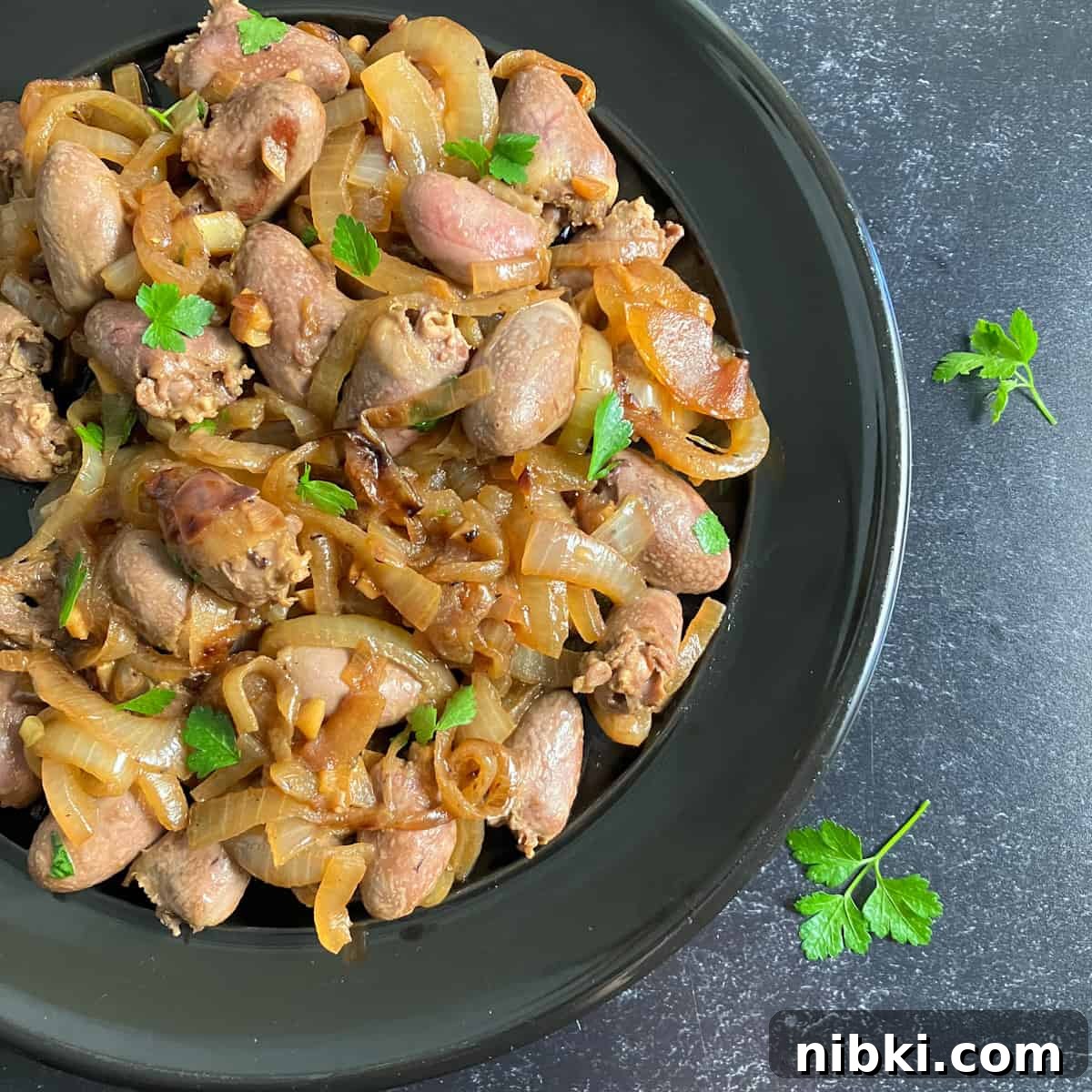
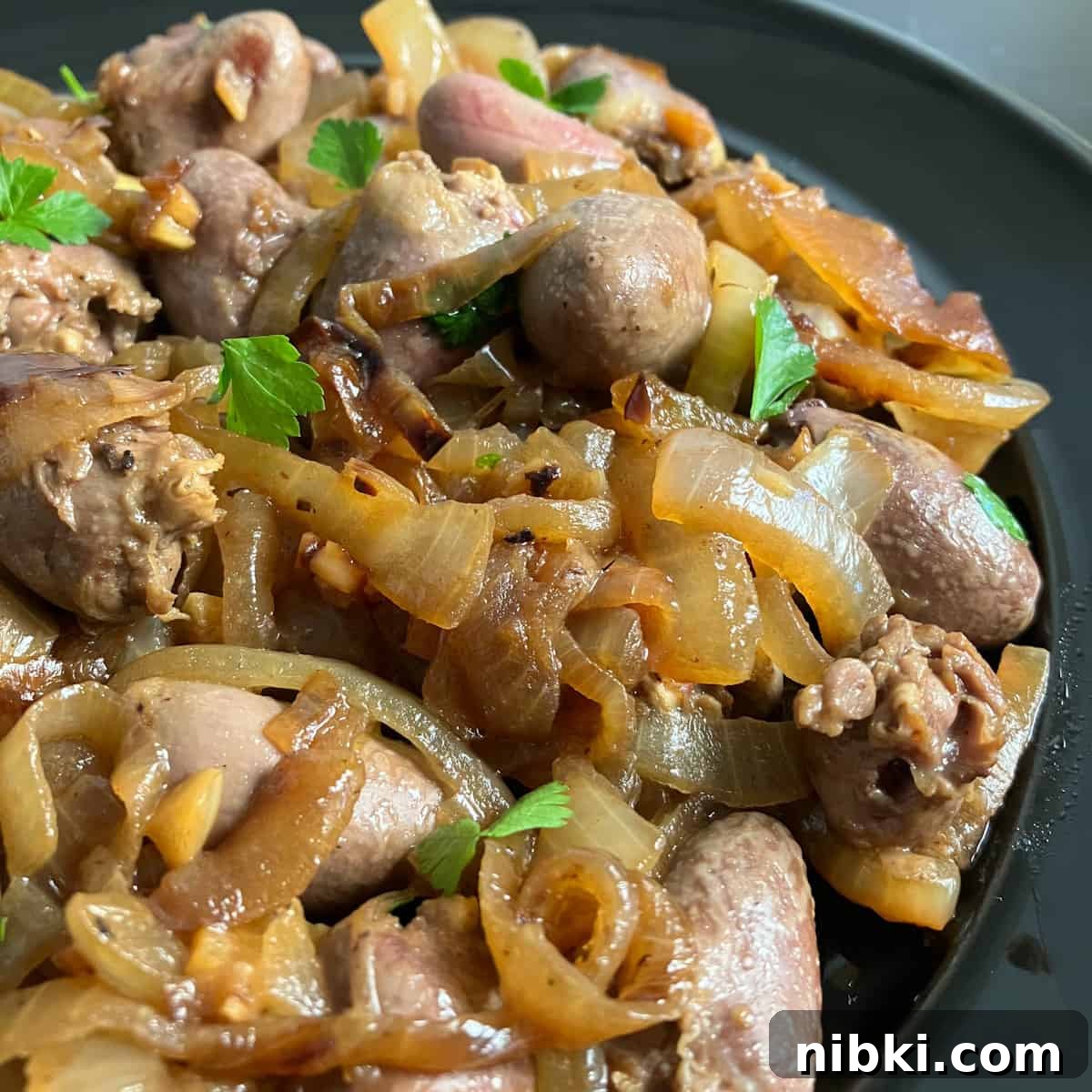
Make the best chicken hearts recipe with this simple pan-fried method. These pan-fried chicken hearts come out tender and flavorful when cooked with onions and garlic. Sauteed chicken hearts work well as an appetizer, snack, or a satisfying main dish. This recipe is naturally low carb, keto-friendly, Paleo, and gluten free. Read on for where to buy raw chicken hearts, nutrition highlights, how to clean and cook them, storage tips, and serving ideas.
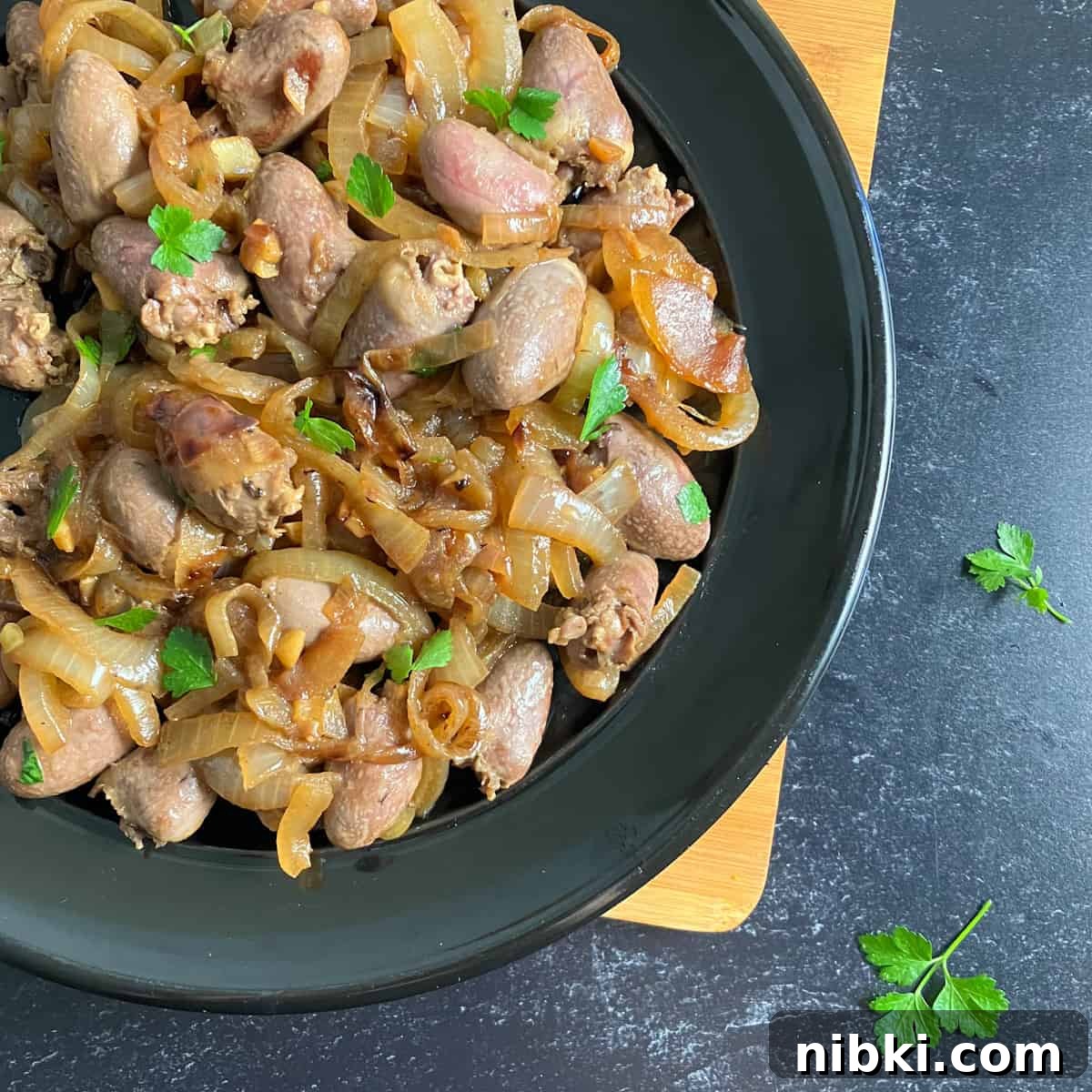
Chicken hearts – a favorite part of the chicken.
– Sigrid
What do chicken hearts taste like?
Chicken hearts are muscle meat and have a mild, meaty flavor closer to dark chicken meat like thighs than to strongly flavored organs such as liver. If you shy away from intense organ tastes, chicken hearts are a good introduction: they’re rich and slightly beefy, but not overpowering.
They aren’t widely available in all grocery stores in the U.S., though you may see them at specialty markets, ethnic grocery stores, farmer’s markets, or at butcher counters. Because they’re nutrient-dense and economical, they’re worth seeking out if you enjoy exploring offal in the kitchen.
This recipe keeps things simple: sautéed in oil with onions and garlic for a balanced, savory dish. Feel free to experiment with other fats like ghee or lard, or add herbs, mushrooms, or leeks for variation.
Where to buy chicken hearts
Look for chicken hearts at East Asian markets, Hispanic grocery stores, and some butcher shops or farmers’ markets. Larger grocery chains with full-service meat counters may also order them on request. If local options are limited, ask your butcher or local poultry producer — many small farms sell organ meats directly.
Chicken hearts nutrition
Chicken hearts are a nutrient-dense food, rich in protein and several B vitamins as well as iron and zinc. Below are approximate nutrients for 4 ounces (113 grams), based on common nutrition databases:
- Calories: 174
- Carbs: 1 g
- Fat: 11 g
- Protein: 18 g
- Vitamin B12: very high (over 100% DV)
- Iron: high (a substantial portion of daily needs)
- Zinc, riboflavin, niacin, B6, folate and phosphorus: good sources
Because organ meats are concentrated sources of certain nutrients, they can be a valuable addition to a balanced diet. Chicken hearts also contain cholesterol, similar to other nutritious foods like eggs and shrimp; managing saturated fat intake has more effect on blood cholesterol than dietary cholesterol for most people.
Benefits and dietary notes
Chicken hearts fit many dietary patterns: they are low in carbohydrates and naturally gluten free, making them suitable for keto and Paleo menus. They are also an affordable way to add variety and reduce food waste by using more of the animal.
Chicken hearts ingredients
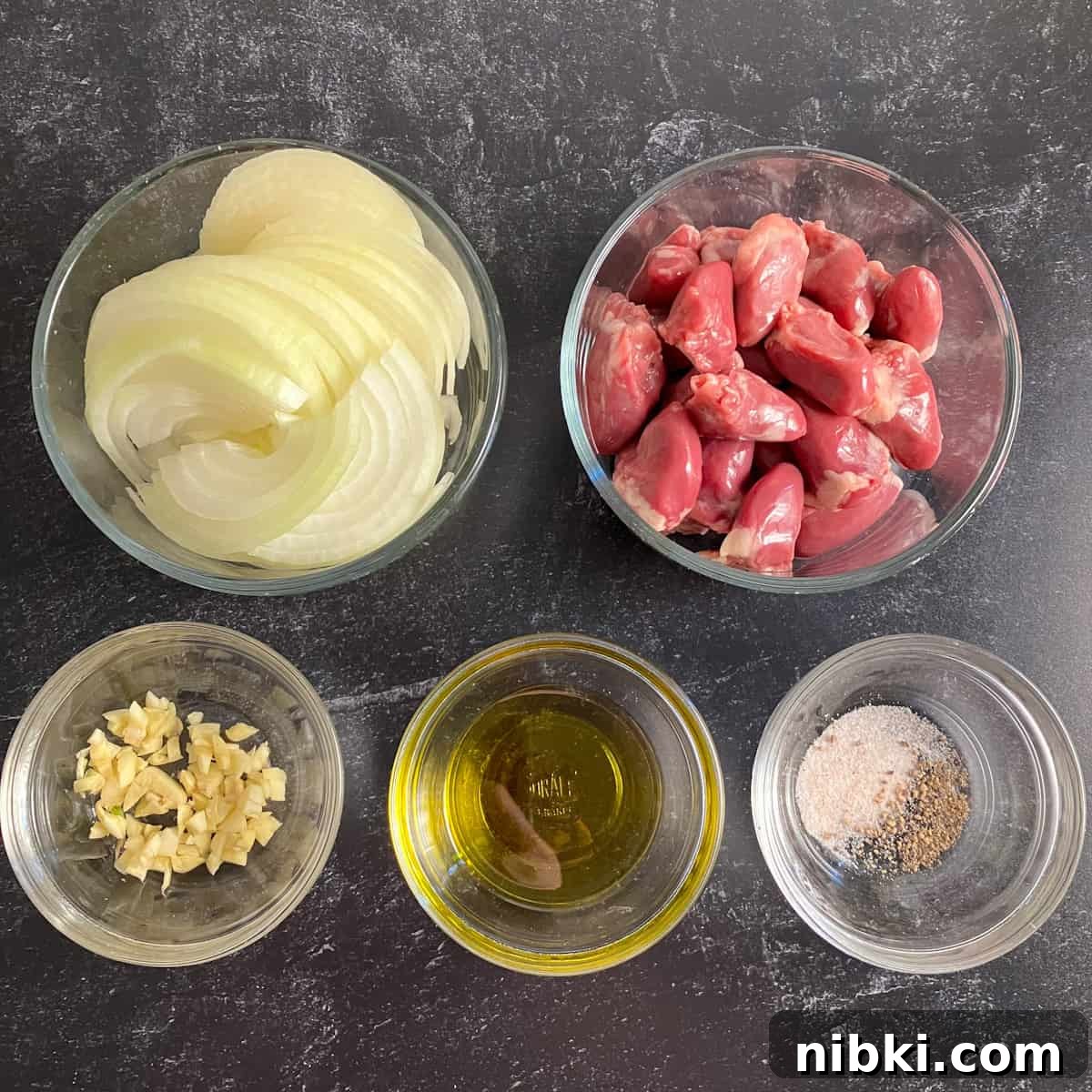
Simple ingredients are all you need:
- 8 ounces fresh chicken hearts (227 g), or thawed if frozen
- 1 tablespoon olive oil (or other cooking oil)
- 8 ounces thinly sliced onion (227 g; about ½–1 onion)
- 2 garlic cloves, minced
- Salt and pepper, to taste
To thaw frozen chicken hearts, place them in the refrigerator for 24–48 hours.
Equipment
- Sharp knife
- Small enameled or ceramic-coated cast iron Dutch oven or skillet
- Meat thermometer (recommended to check internal temperature)
How to clean chicken hearts
The USDA does not recommend rinsing raw poultry before cooking because rinsing can spread bacteria around the kitchen. Instead, remove any visible fat or connective tissue if desired and trim away any discolored pieces, then cook promptly. Proper cooking kills harmful bacteria.
How to cook chicken hearts (pan-fried)
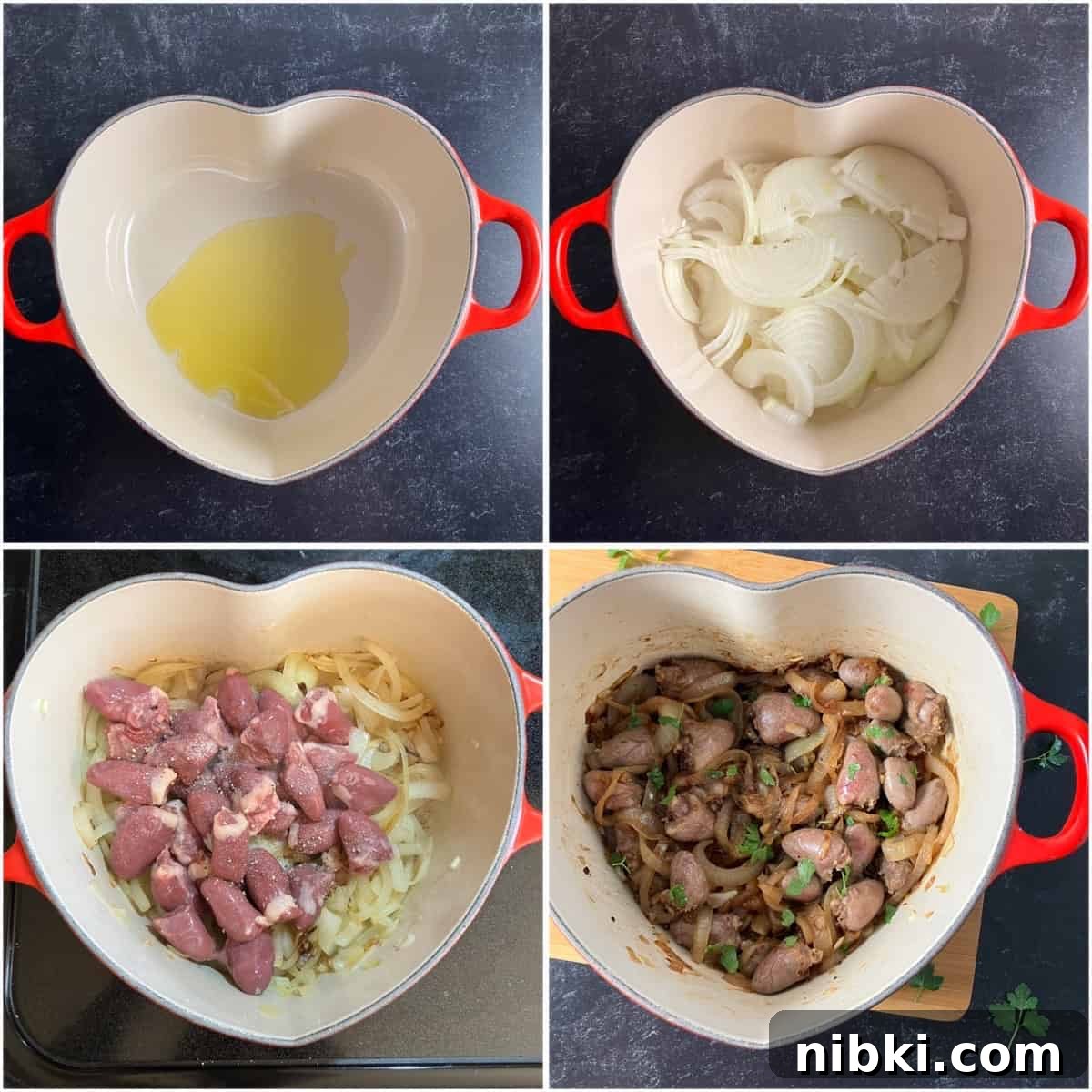
- Slice the peeled onion in half and cut into thin half-moons. Mince the garlic.
- Heat the oil in a small Dutch oven or skillet over medium-high heat. Add the onions and garlic and cook 5–10 minutes until softened, stirring occasionally.
- Reduce heat to medium. Add the chicken hearts, season with salt and pepper, and cook 5–8 minutes more, stirring frequently, until cooked through.
- Check doneness with a meat thermometer: chicken hearts should reach 165°F (74°C). Avoid overcooking, which can make them tough and rubbery. Garnish with parsley if desired and serve.
Optional additions: cook with mushrooms or leeks, or finish with a splash of lemon juice, a pat of butter, or a sprinkle of fresh herbs for brightness.
When are chicken hearts done?
Use a meat thermometer to confirm an internal temperature of 165°F (74°C). The interior color alone is not a reliable indicator, so measuring temperature ensures food safety while preventing overcooking.
How long to boil chicken hearts
If you prefer to simmer or boil chicken hearts, cook them in water or broth for about 30 minutes, or longer until tender. Always verify an internal temperature of 165°F (74°C) before serving.
Storage
Store cooked chicken hearts in a covered container in the refrigerator for 3–4 days. Both raw and cooked chicken hearts freeze well; for best long-term quality, vacuum-seal or use airtight freezer bags and label with the date.
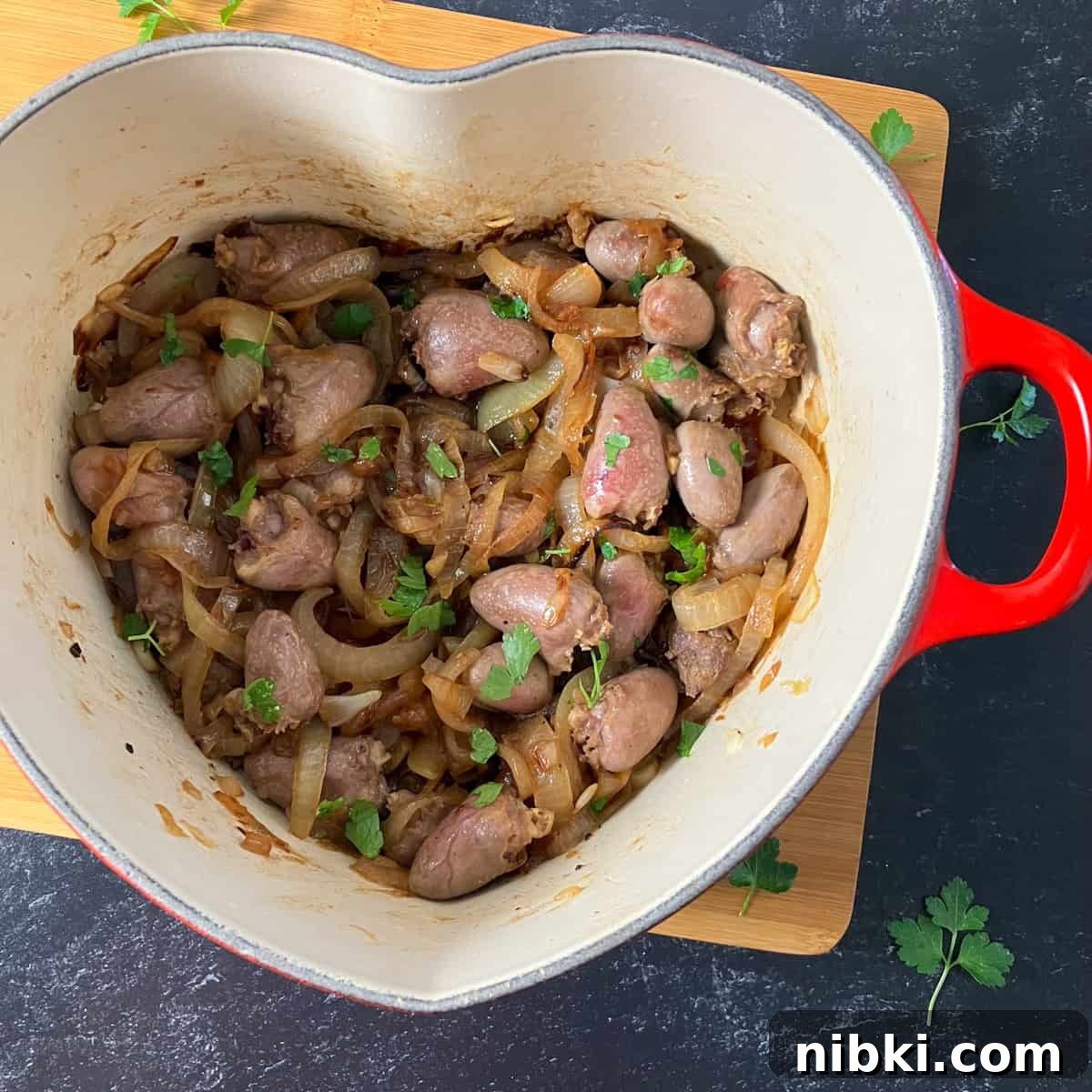
Chicken Hearts (Pan-Fried Chicken Hearts)
Author: Summer Yule
Servings: 2 • Cook time: 15 mins • Calories per serving: ~280 kcal
Make pan-fried chicken hearts that are tender and savory with onions and garlic.
Ingredients
- 8 ounces chicken hearts (227 g)
- 1 tablespoon olive oil
- 8 ounces onion, thinly sliced (about ½–1 onion)
- 2 cloves garlic, minced
- Salt and pepper, to taste
Instructions
- Cut the peeled onion in half and slice into thin half-moons. Mince the garlic.
- Heat oil in a small Dutch oven or skillet over medium-high heat. Add onions and garlic and cook 5–10 minutes until soft, stirring occasionally.
- Reduce heat to medium. Add chicken hearts, season with salt and pepper, and cook 5–8 minutes, stirring frequently.
- Confirm the internal temperature reaches 165°F (74°C). Add extra cooking time if needed. Serve warm.
Equipment
- Sharp knife
- Small Dutch oven or skillet
- Kitchen thermometer
Notes
Chicken hearts are rich in B vitamins, iron, and zinc. They are higher in fat than very lean cuts like skinless chicken breast, so they provide more calories by weight but also a more satisfying texture and flavor. If you’re new to offal, start with a small portion to see how you like the taste and texture.
How to serve chicken hearts
Chicken hearts work well as a snack, appetizer, or main. Serve with:
- Cauliflower rice or white rice
- Mashed potatoes
- Sautéed or air-fried green beans
- A simple spinach salad or mixed greens
Calories
Raw chicken hearts contain about 174 calories per 4 ounces (113 g). This pan-fried recipe yields roughly 280 calories per serving, with about 18–19 g protein and moderate fat from the hearts and cooking oil.
FAQs
How to make deep-fried chicken hearts?
For deep frying, batter the hearts and heat oil to 350°F (177°C). Fry for 3–4 minutes or until they reach a safe internal temperature of 165°F (74°C).
How to make air fryer chicken hearts?
Preheat an air fryer to 400°F (200°C) and air fry for 15–20 minutes, shaking or stirring every 5 minutes. Verify they reach 165°F (74°C).
How to cook chicken hearts in an Instant Pot?
Pressure cook on high for about 20 minutes, then let the pressure release naturally for 10 minutes. Cooking times may vary if combining hearts with gizzards; cook in broth and follow your appliance’s fill guidelines.
How long to roast chicken hearts in the oven?
Roast at 400°F (200°C) for 20–25 minutes, checking that the internal temperature reaches 165°F (74°C).
Other recipe ideas
Use chicken hearts in curries, chop them finely to add to meatloaf or ground meat mixes, or pair them with strongly flavored sauces where their meaty texture can shine.
Tip: Start with a small batch when trying chicken hearts for the first time. Cooked briefly with onions and garlic, they offer a pleasant, rich experience that may change your view of organ meats.