
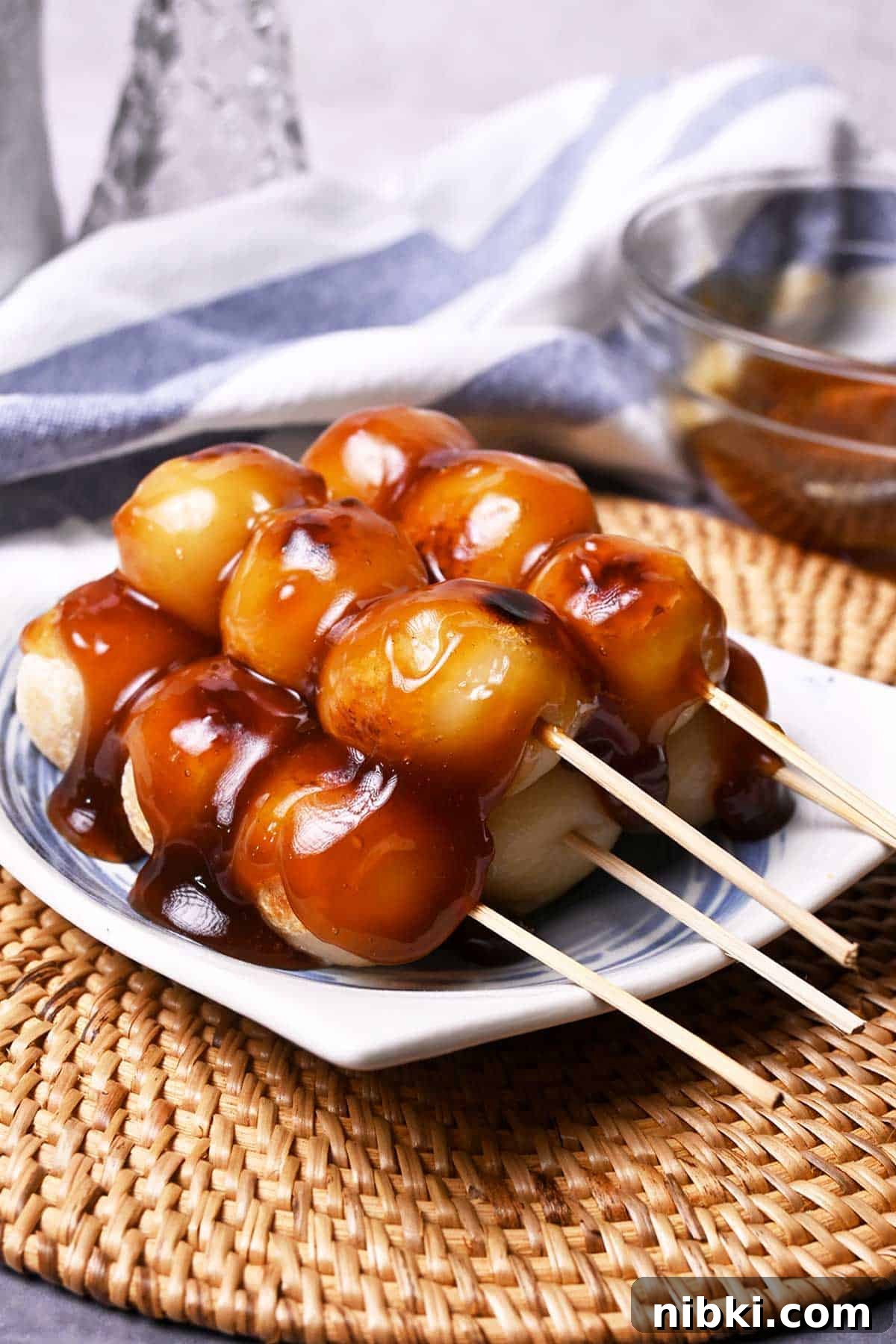
Soft, chewy Japanese tofu mitarashi dango: rice dumplings threaded on a skewer, grilled until lightly charred, and glazed with a sticky sweet-and-salty soy sauce. This version uses silken tofu in the dough for an extra-tender texture and is naturally suitable for vegans when using a vegan mirin or omitting it.
During a trip to Kyoto years ago, I tasted mitarashi dango for the first time. Warm and tender with a slight char, each bite balanced sweetness and savory soy in a way that lingered long after the snack was finished. That memory inspired this recipe, which aims to recreate that soft, chewy texture at home using a simple trick: silken tofu in the dough.
I’ve tested many dango variations and found this combination closest to what I remember. You won’t need specialized equipment or complicated steps—just a few ingredients and a little patience. Below you’ll find what mitarashi dango is, how it differs from mochi, the key ingredient that keeps these dumplings soft, and clear instructions for making and glazing them.
What Is Mitarashi Dango?
Mitarashi dango is a classic Japanese sweet of small rice dumplings skewered together, grilled lightly for a hint of char, and coated in a thick sweet soy glaze. The dumplings themselves are fairly neutral in flavor, with their appeal coming from the chewy texture and the contrast of the glossy, savory-sweet sauce.
You’ll see mitarashi dango year-round in Japan—sold by street vendors, in tea houses, confectionery shops, and convenience stores—but it’s especially popular during festival and spring seasons. It’s a simple snack with satisfying textures and flavors.

What Is the Difference Between Dango and Mochi?
Dango and mochi share a similar rice-based chewiness, but they are made differently and served in distinct ways. Dango is typically made from rice flours—often a combination of glutinous rice flour types—mixed with liquid, rolled into small balls, boiled, then skewered. Mochi starts from steamed glutinous rice that is pounded into a smooth, sticky dough.
Because of these differences, dango tends to be smaller and firmer, served as several bite-sized balls on a stick and often coated in sauces. Mochi is usually softer, larger, and frequently filled. Both are delicious, but dango is the format used for mitarashi.

Secret Ingredient for Soft and Chewy Dango
The secret to an exceptionally tender dango is silken tofu. Replacing some or all of the water with silken tofu when combining the rice flour yields a softer, more elastic dumpling. The tofu adds moisture and a silkier mouthfeel without changing the basic flavor.
Dango Ingredients
Traditional dango is often made from glutinous rice flours such as shiratamako or mochiko. For a texture that stays soft and slightly elastic, the recommended ingredients for this tofu mitarashi dango are:
- Shiratamako (sweet rice flour) — a type of finely milled glutinous rice flour commonly used for dango and wagashi. If you can’t find shiratamako, regular glutinous rice flour (mochiko) can be used, though texture and elasticity may vary.
- Silken tofu — acts as the liquid binding agent and gives the dango a tender, chewy texture.
Mitarashi Glaze Ingredients
- Soy sauce — provides savory umami and saltiness for the glaze.
- Granulated sugar — balances the soy sauce with sweetness; adjust to taste.
- Mirin — a sweet rice cooking wine that adds depth and a mild tang; optional if unavailable.
- Water — to adjust the glaze consistency.
- Starch (cornstarch or potato starch) — mixed with water to thicken the glaze into a glossy, clingy sauce.
How to Grill Dango
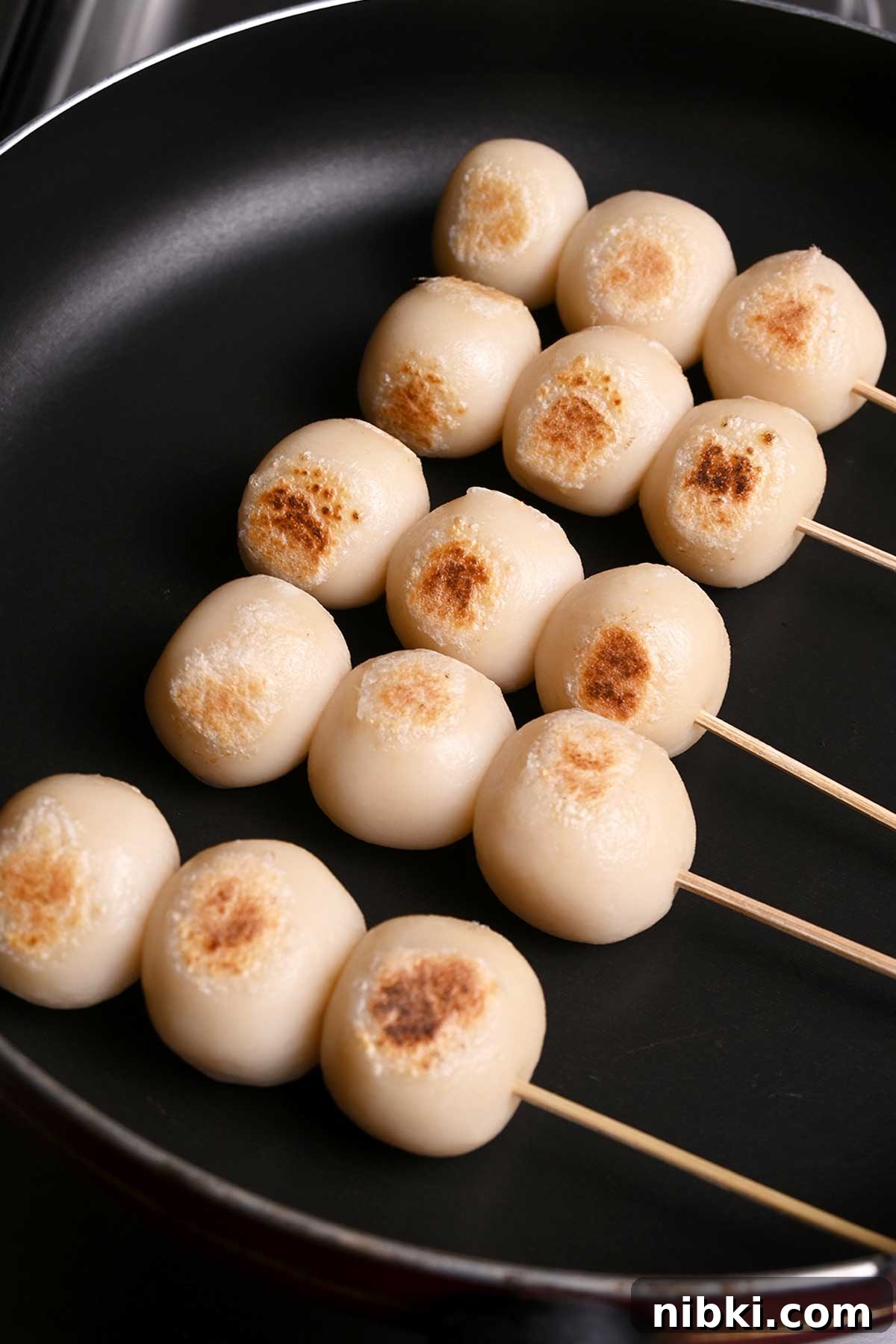
A light char adds flavor and aroma to mitarashi dango. You can achieve this with several common tools:
- Non-stick frying pan: Pan-fry over low to medium heat with no oil, turning regularly until sides are lightly browned.
- Charcoal or outdoor grill: Ideal for a smoky finish; oil the rack lightly to prevent sticking.
- Culinary torch: A quick, controlled way to develop surface char without overcooking the interior.
How to Serve
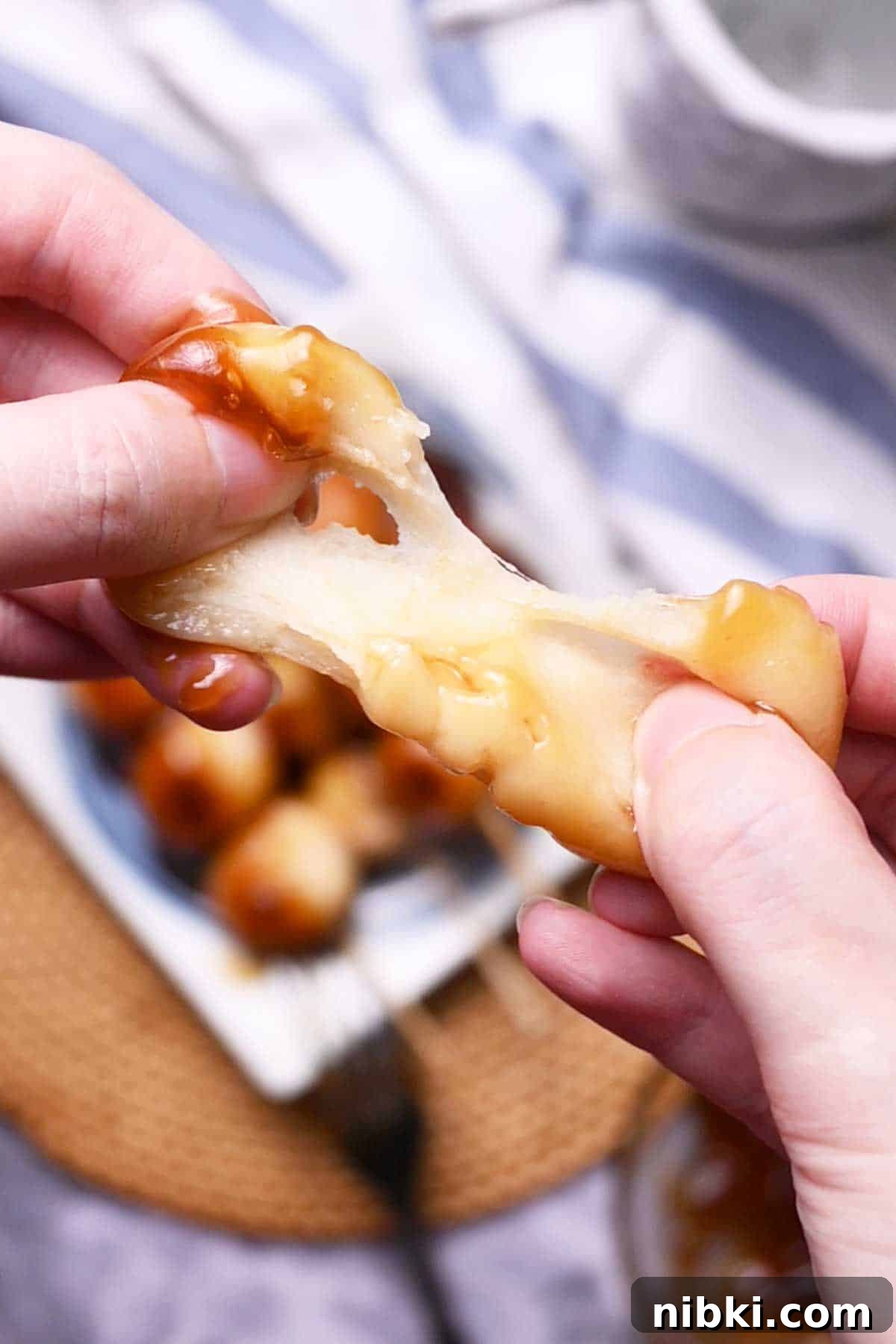
Mitarashi dango can be enjoyed warm or at room temperature. For the best contrast of textures and flavors, serve them soon after grilling so the glaze is glossy and the exterior is slightly crisp. As the dumplings cool, they will firm up and become chewier.
More Japanese Recipes
- Eggless Matcha Tiramisu Cake
- Matcha Shortbread Cookies
- Curry Bread
- Beef Croquettes
- Gyutandon (Beef Tongue Rice Bowl)
- Salmon Rice Balls
Tofu Mitarashi Dango
Soft, chewy tofu mitarashi dango: small rice-flour dumplings made with silken tofu, skewered and glazed with a sticky sweet soy sauce. Easy to prepare and vegan-friendly when using a vegan mirin or omitting it.
Author: Jaja Bakes
Course: Snack | Cuisine: Japanese
Servings: 5 skewers
Prep Time: 15 minutes | Cook Time: 20 minutes | Total Time: 35 minutes
Ingredients
Dango
- 100 g shiratamako (sweet glutinous rice flour)
- 150 g silken tofu
Sweet Soy Sauce Glaze
- 2 tbsp granulated sugar
- 1 tbsp cornstarch or potato starch
- 1 tbsp soy sauce
- 1 tbsp mirin (optional)
- 80 ml water
Instructions
Dango
- In a large bowl, combine the shiratamako and silken tofu. Knead with your hands until a smooth dough forms. If the dough feels too dry, add a touch more tofu; if too sticky, sprinkle a little more flour.
- Divide the dough and roll into roughly 1-inch (2.5 cm) balls. You should get about 15 balls.
- Bring a large pot of water to a boil. Add the dango balls and cook until they float to the surface, indicating they are cooked through.
- Using a slotted spoon, transfer the cooked balls directly into a bowl of ice water to cool rapidly and firm their texture.
- Remove from the ice water and pat dry on a clean kitchen towel.
Sweet Soy Sauce Glaze
- In a small saucepan, combine sugar, soy sauce, mirin (if using), and water. Whisk in the starch dissolved in a little cold water to prevent lumps.
- Heat over low to medium heat, stirring constantly until the mixture thickens into a glossy, syrupy glaze. Remove from heat and let cool slightly.
Assemble
- Thread three dango balls onto each skewer to make about five skewers.
- Grill or pan-fry the skewers over low-medium heat until surfaces are lightly charred. Flip as needed to color evenly.
- Brush or roll the grilled skewers in the sweet soy glaze, or spoon the glaze over each skewer before serving.
Nutrition
Serving: 1 skewer • Calories: 122 kcal • Carbohydrates: 25 g • Protein: 3 g • Fat: 1 g • Sodium: 233 mg • Sugar: 6 g
I love hearing how these recipes turn out. Leave a comment below to share your experience or a photo of your mitarashi dango.