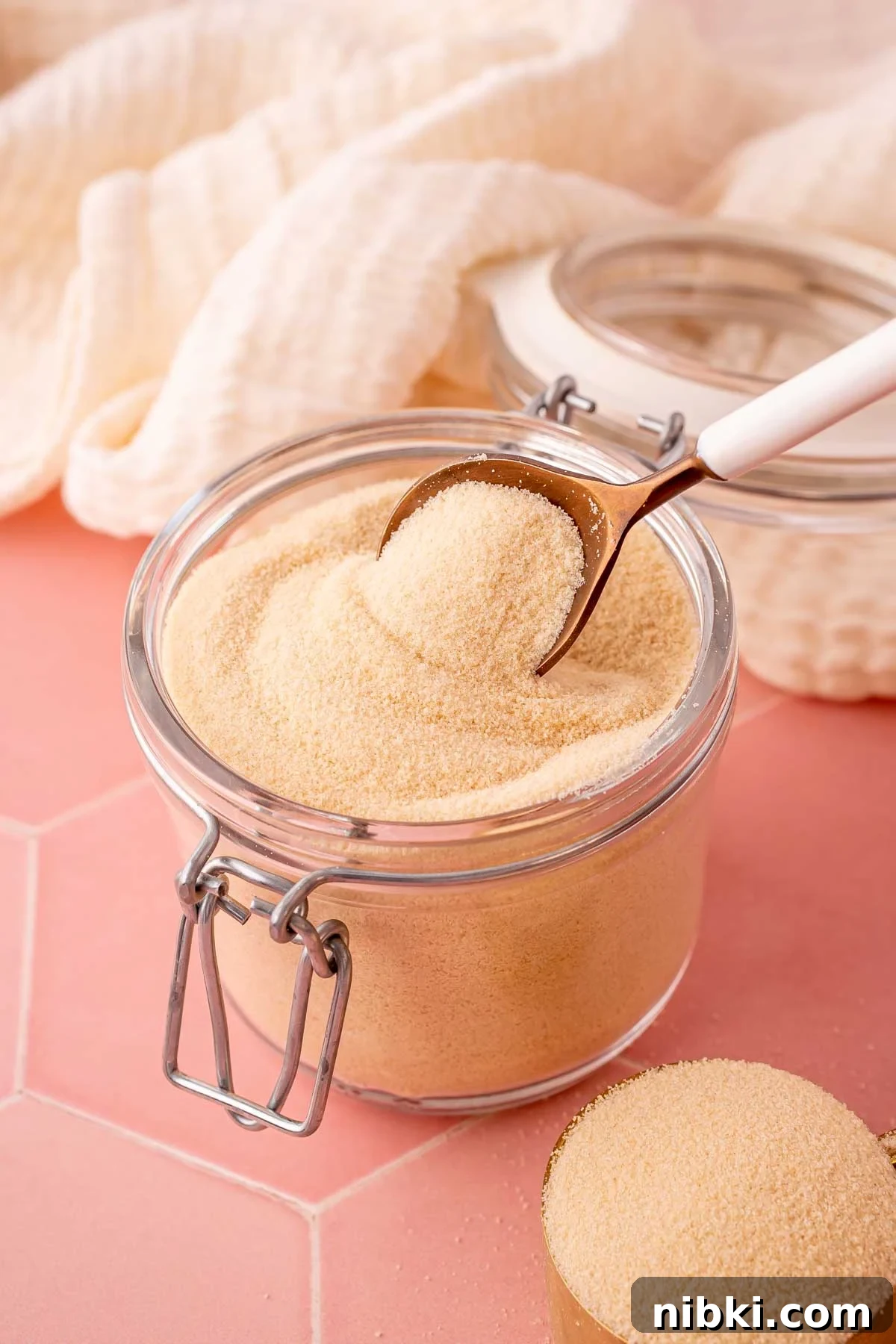
Toasted Sugar adds a deep, caramel-like flavor to everyday baked goods. By gently baking plain granulated sugar at a low temperature, the crystals develop a toasty, complex note that enhances cookies, cakes, coffee, and more.
Making toasted sugar is straightforward, but it requires time and patience. I like to toast a full 4-pound bag at once and store the finished sugar in an airtight container in the pantry for easy use. Once prepared, toasted sugar is a convenient way to layer caramel flavor into recipes without specialty ingredients.
We often use toasted sugar in cookies, to dust churros mixed with cinnamon, or even stirred into coffee for a richer sweetness. This method gives home bakers an inexpensive way to introduce sophisticated flavor into familiar recipes.
Sugar Doesn’t Melt — It Caramelizes
Contrary to what many expect, granulated sugar does not simply melt in the oven. At high temperatures it undergoes thermal decomposition, but when toasted gently at lower heat it slowly caramelizes. That slow process produces a beige-to-golden color and a distinct caramel flavor while the granulated texture remains unchanged.
This technique is different from making brown sugar (which combines granulated sugar and molasses) and from raw sugars like turbinado or demerara. Toasted sugar starts as white granulated sugar that has been evenly heated to encourage Maillard-like reactions and flavor development without changing its crystalline structure. It works well as a one-to-one substitute for granulated sugar in many baked goods.
How To Make Toasted Sugar (step-by-step)
Use ceramic or glass baking dishes rather than metal; metal can heat too quickly and scorch the sugar at the edges. Splitting the sugar between two dishes makes stirring easier and encourages more even toasting.
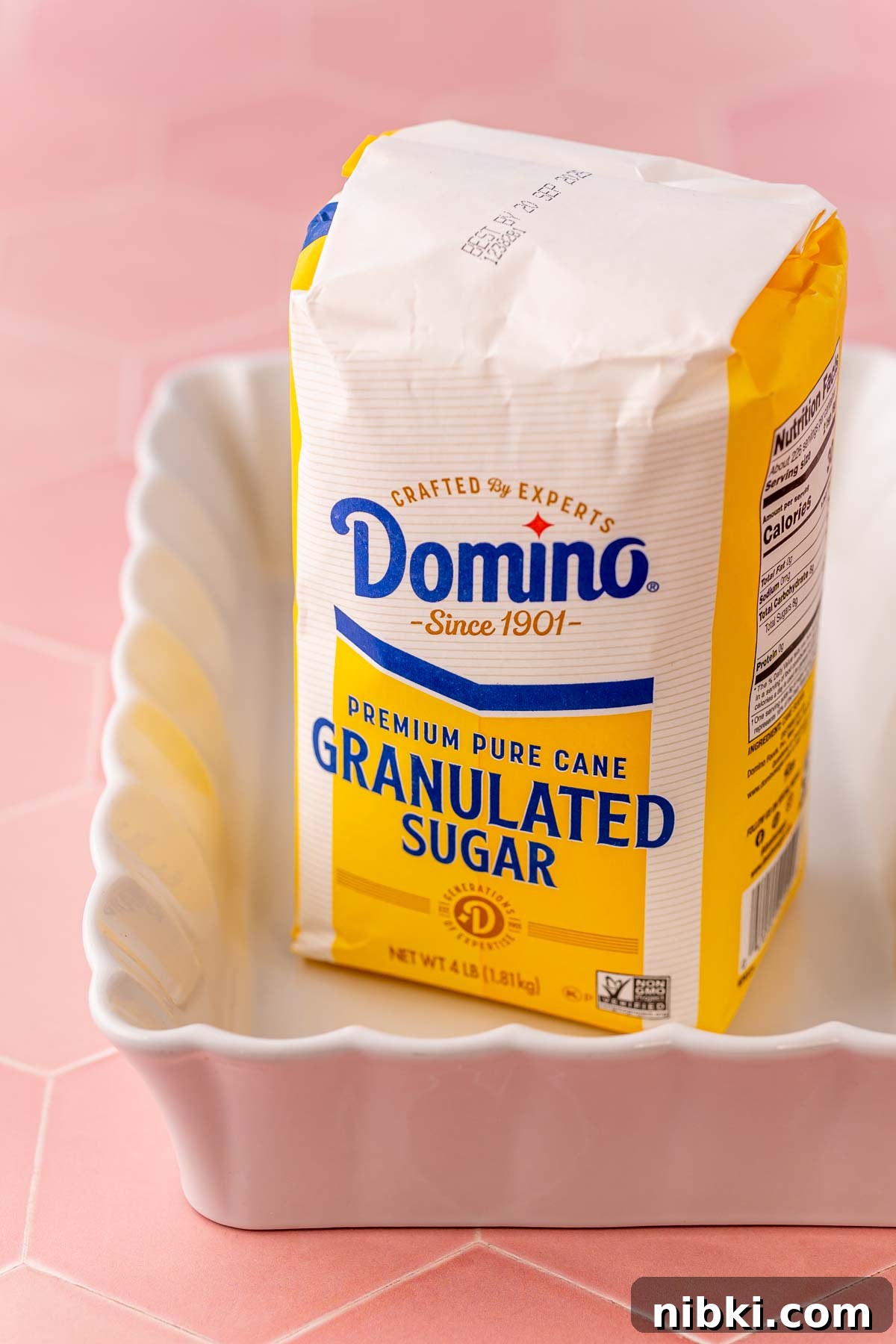
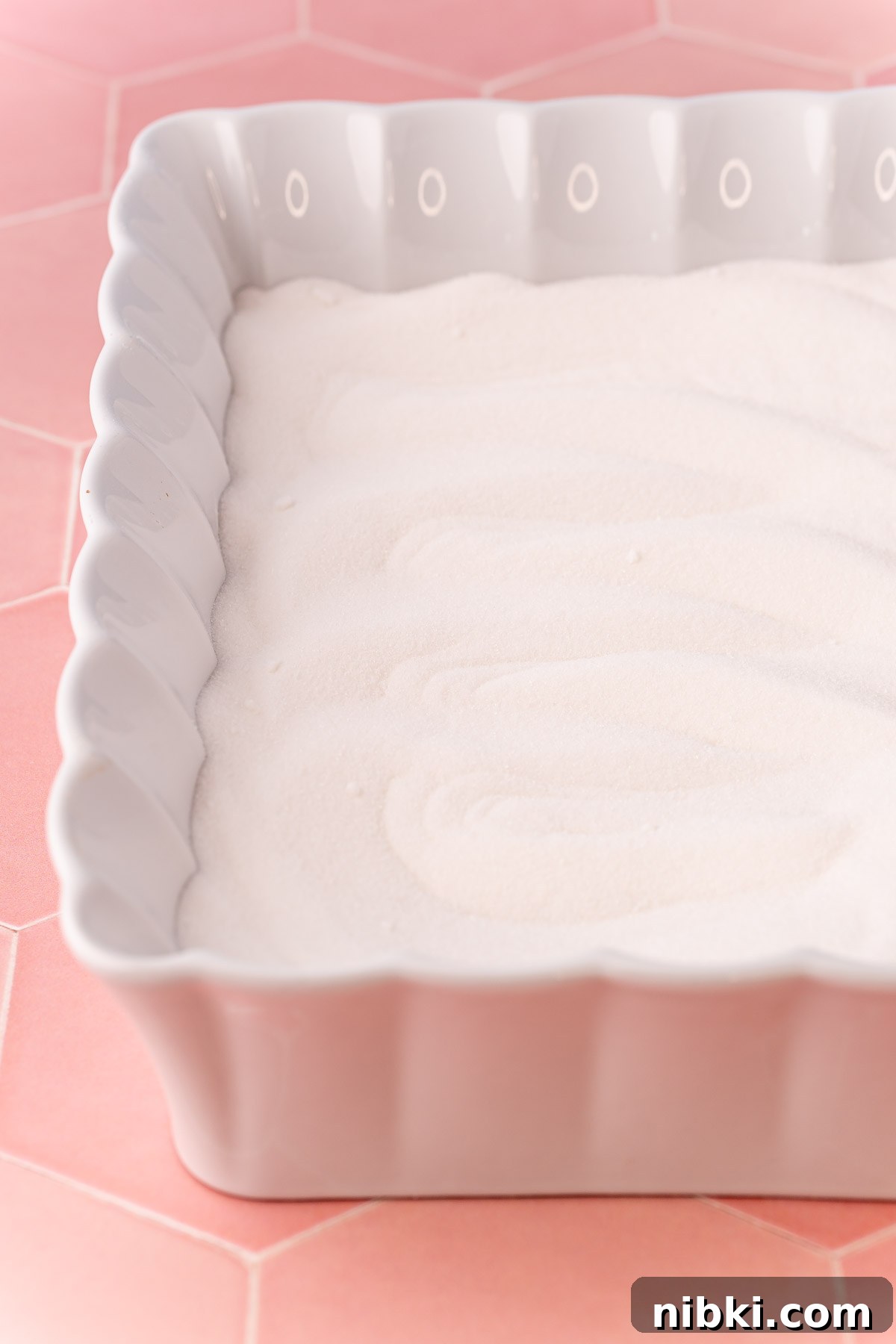
1. Divide the sugar evenly between two shallow glass or ceramic baking dishes and spread into a relatively even layer. Place on a middle rack in an oven preheated to 300°F.
2. Bake for 1 hour, then whisk or stir thoroughly, bringing sugar from the edges to the center and vice versa. Return to the oven and continue baking for two more hours, stirring every 30 minutes.
3. You can continue toasting for a fourth hour if you prefer a deeper flavor, but increase the frequency of stirring to every 15 minutes to avoid clumping or burning. We typically prefer sugar toasted for about 3 hours for a golden, balanced caramel note.
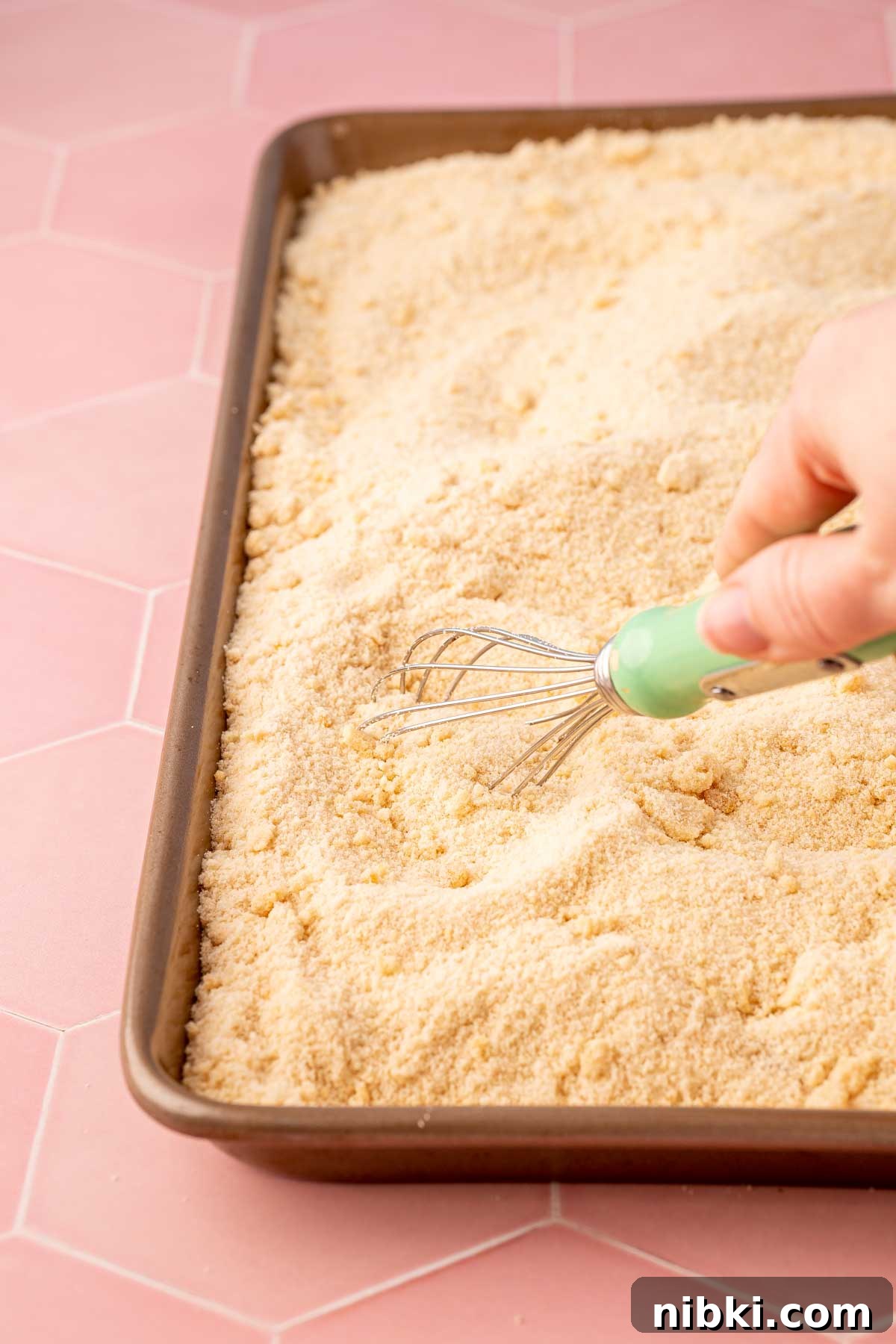
4. When the sugar reaches the desired color, spread it on a large rimmed sheet pan and stir occasionally to release steam and prevent clumps while it cools to room temperature. Once cool, sift the sugar into a bowl to break up any remaining small lumps.
After sieving, transfer the toasted sugar to an airtight container. Store at room temperature in a cool, dry place; properly stored toasted sugar will keep for several months and remain ready to use as a direct substitute for granulated sugar in most recipes.
Hour by hour
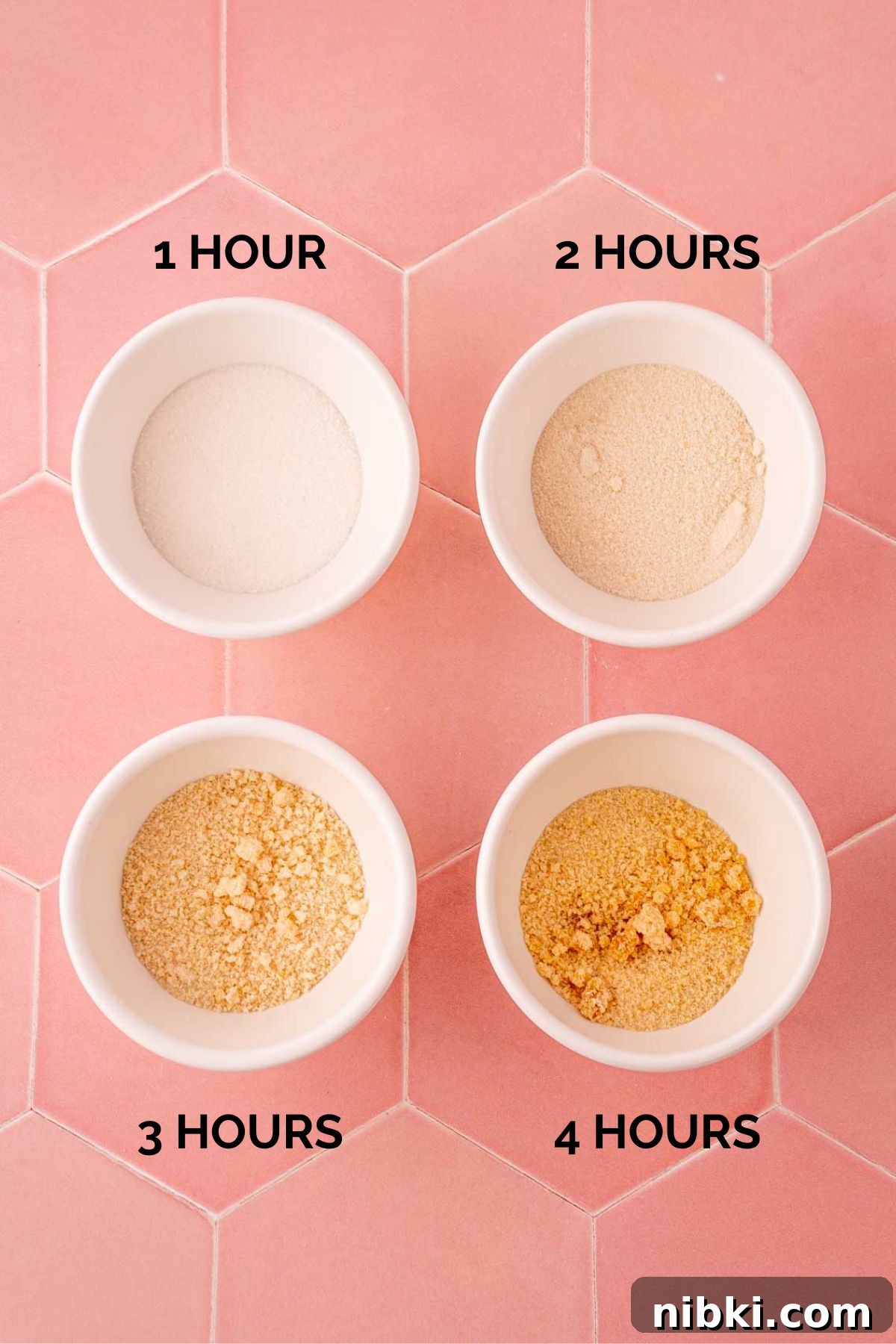
A quick view of what to expect during toasting:
- After 1 hour: color shifts away from stark white and the sugar begins to take on a subtle tint.
- After 2 hours: a light beige tone appears and flavor deepens toward toasted caramel.
- After 3 hours: a pleasant golden color and full caramel aroma — our preferred stage for most uses.
- After 4+ hours: a deeper amber develops; stirring must be more frequent to prevent clumping and scorching.
Tips for Success
- Stir regularly to release steam and prevent pockets of moisture that can cause clumping. Frequent stirring is the single most important step.
- Any remaining clumps that won’t pass through a sifter can be broken down in short pulses in a food processor.
- If sugar sticks to the bottom of the dish, pour the loose sugar onto the sheet pan to cool and leave the stuck sugar behind to be cleaned later once the dish is cool.
- Sticky patches often form where heat concentrates, especially in corners. Stir those areas frequently and remove what can be salvaged; clean the dish after it cools.
How To Store Toasted Sugar
Allow the toasted sugar to cool completely, then transfer it to an airtight container. Keep it at room temperature in a cool, dry place; it will maintain its flavor and texture for several months.
How to Use Toasted Granulated Sugar
This product is toasted granulated sugar, not brown sugar. Use it as a one-to-one substitute for granulated sugar when you want a caramel note. It will not replicate the moisture or acidity that brown sugar contributes, so avoid substituting it for brown sugar in recipes that rely on those properties.
Try it in cookie dough, sprinkled on top of cakes or muffins before baking, or stirred into hot beverages for a richer sweetness.
Learn More Kitchen Tricks and Hacks
- Brown Butter: Browning butter adds depth to cookies and many baked goods.
- Buttermilk Substitute: A quick way to create a tangy liquid when you don’t have buttermilk on hand.
- Heat-Treating Flour: Makes flour safe for edible dough recipes while preserving texture.
- Measure Flour Correctly: Proper measuring prevents dry or crumbly results in baking.
- Freeze Cookie Dough: Save dough for later baking and enjoy fresh cookies on demand.
How To Make Toasted Sugar
Equipment
- 2 large ceramic or glass baking dishes
- Whisk
- Sifter
- Rimmed half-sheet baking pan
Ingredients
- 4 pounds granulated sugar
Instructions
- Preheat the oven to 300°F. Divide the sugar evenly between two ceramic or glass baking dishes and spread it into an even layer.
- Bake for 1 hour. Remove and whisk thoroughly, scraping the edges and corners to redistribute the sugar.
- Return to the oven and bake for 2 more hours, whisking every 30 minutes. If you choose to continue toasting toward a deeper color, stir every 15 minutes to avoid clumping or burning.
- When the sugar reaches the desired golden color, transfer it to a large rimmed sheet pan and stir occasionally as it cools to room temperature to release steam and prevent clumps.
- Sift the cooled sugar into a bowl to remove any remaining lumps. Store in an airtight container in a cool, dry place.
Notes
- Use toasted sugar as a 1:1 replacement for granulated sugar when you want added caramel flavor.
- You may continue toasting up to 6–7 hours, but increase stirring frequency to prevent decomposition and clumping.
- If sugar sticks to the pan, pour the loose sugar onto the sheet pan to cool and leave the stuck sugar to be cleaned later once the pan is cool.
- Sticky or slightly melted patches can occur in hot spots. Stir well and salvage what you can; clean the dish after it cools.
- This toasted granulated sugar is not an exact substitute for brown sugar in recipes where moisture and acidity from brown sugar are required.