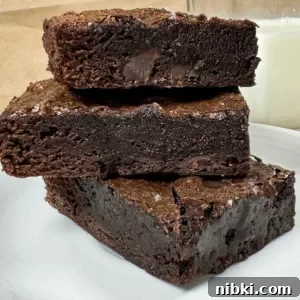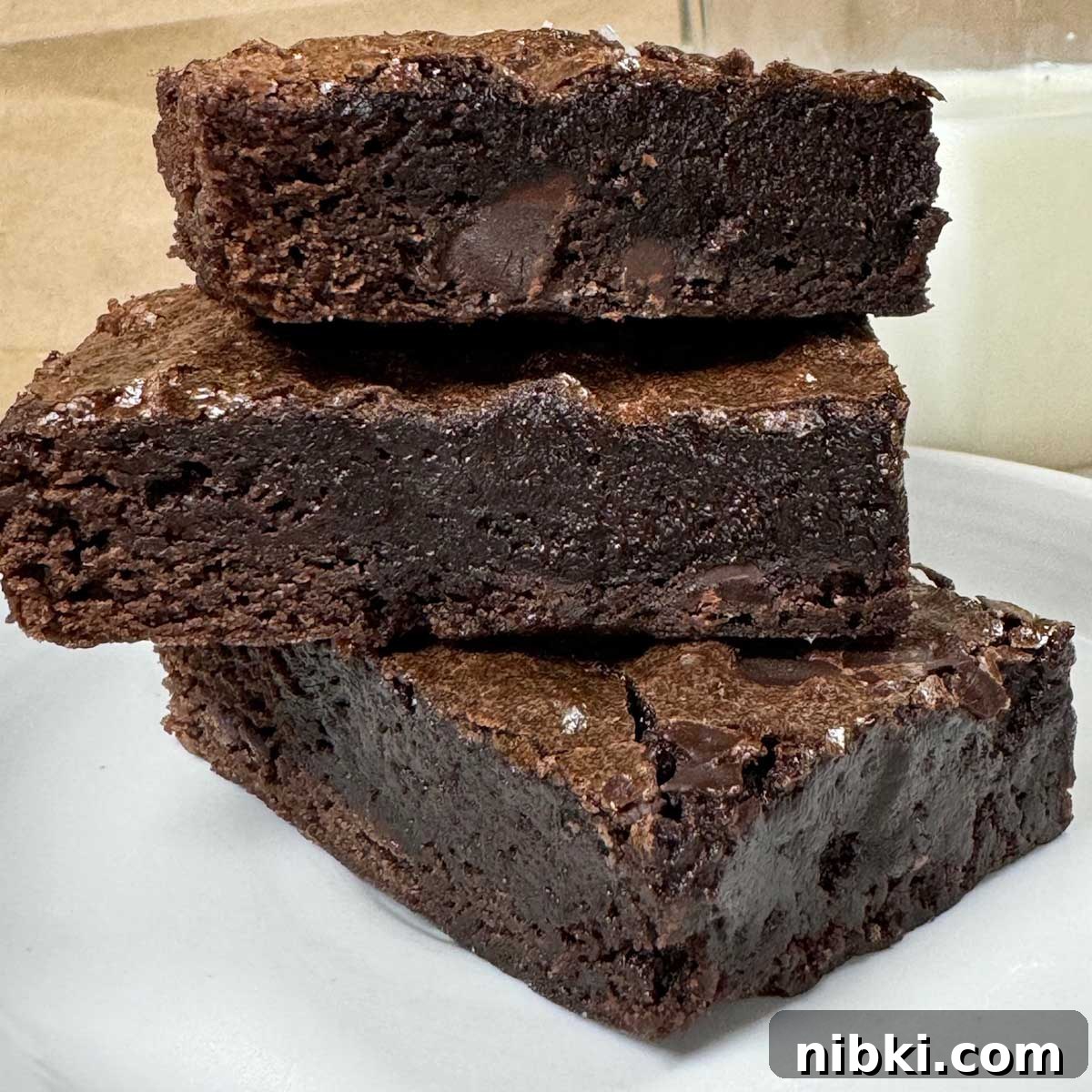
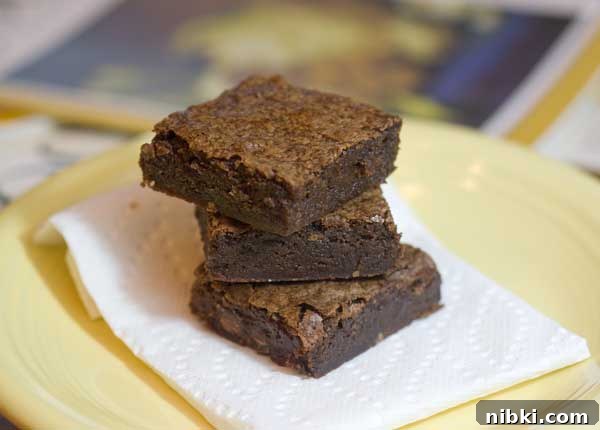
These chewy brownies are adapted from a Cook’s Illustrated recipe (March/April 2010). The original method emphasizes achieving the right balance of saturated to unsaturated fat to produce a dense, chewy texture similar to a classic “box brownie.” That texture comes from combining butter and oil, using unsweetened chocolate and adding extra egg yolks.
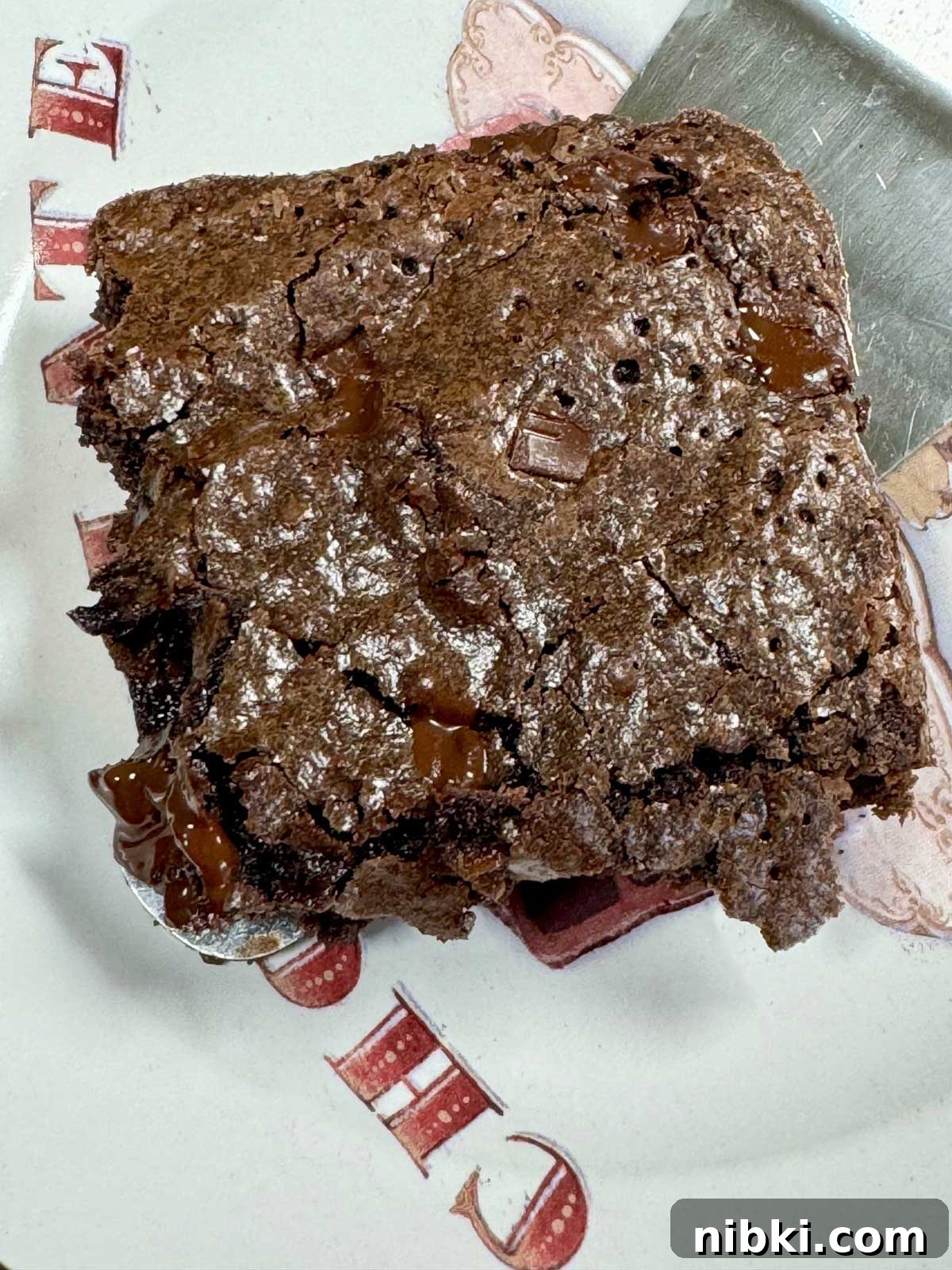
Oily Flavor in Brownies
When I first made this recipe, I noticed an oil-like flavor that I couldn’t reconcile with other testers’ notes. After some experimenting I stopped using canola and vegetable oil and switched to grapeseed oil — the result was much cleaner and more neutral in taste. I also tried coconut oil: it produced very good brownies, but it changed the mouthfeel. The point of the original recipe is the fat ratio: about 28% saturated to 71% unsaturated fat. Changing the type of fat alters that balance and can affect texture.
Thickness of Chewy Brownies and Bake Time
Brownie thickness can vary from batch to batch. Some of my attempts came out thinner than expected; other times they were just right. If you encounter thin results, check pan size, batter quantity, and how you measure flour and sugar. The original Cook’s Illustrated guidance recommends 30–35 minutes baking time. In a full 9×13-inch pan I find 30 minutes works well. For a half batch in an 8-inch square pan, check at 25 minutes; 28 minutes is often ideal for that smaller pan.
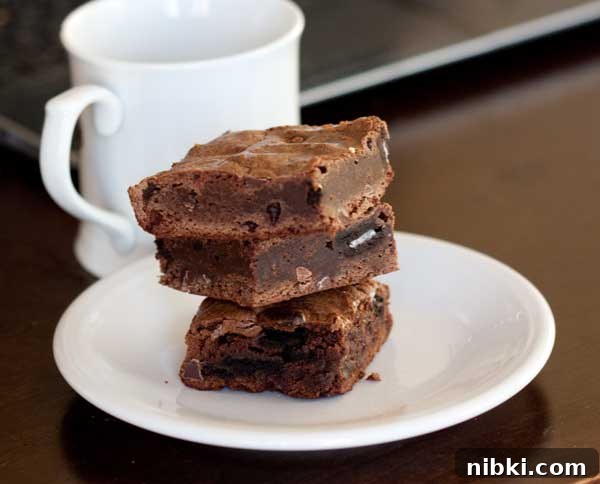
Use Good Cocoa Powder
The Cook’s Illustrated article that inspired this recipe includes helpful science and technique. For these brownies I used a higher-quality Dutch-processed cocoa, and the results were noticeably better — richer flavor and a deeper color. As an experiment I blended a bit of black cocoa with Dutch-processed cocoa and liked the intense, almost black appearance it produced. Good cocoa matters for both taste and appearance, so consider upgrading the cocoa if you want a stronger chocolate profile.
Pan Size
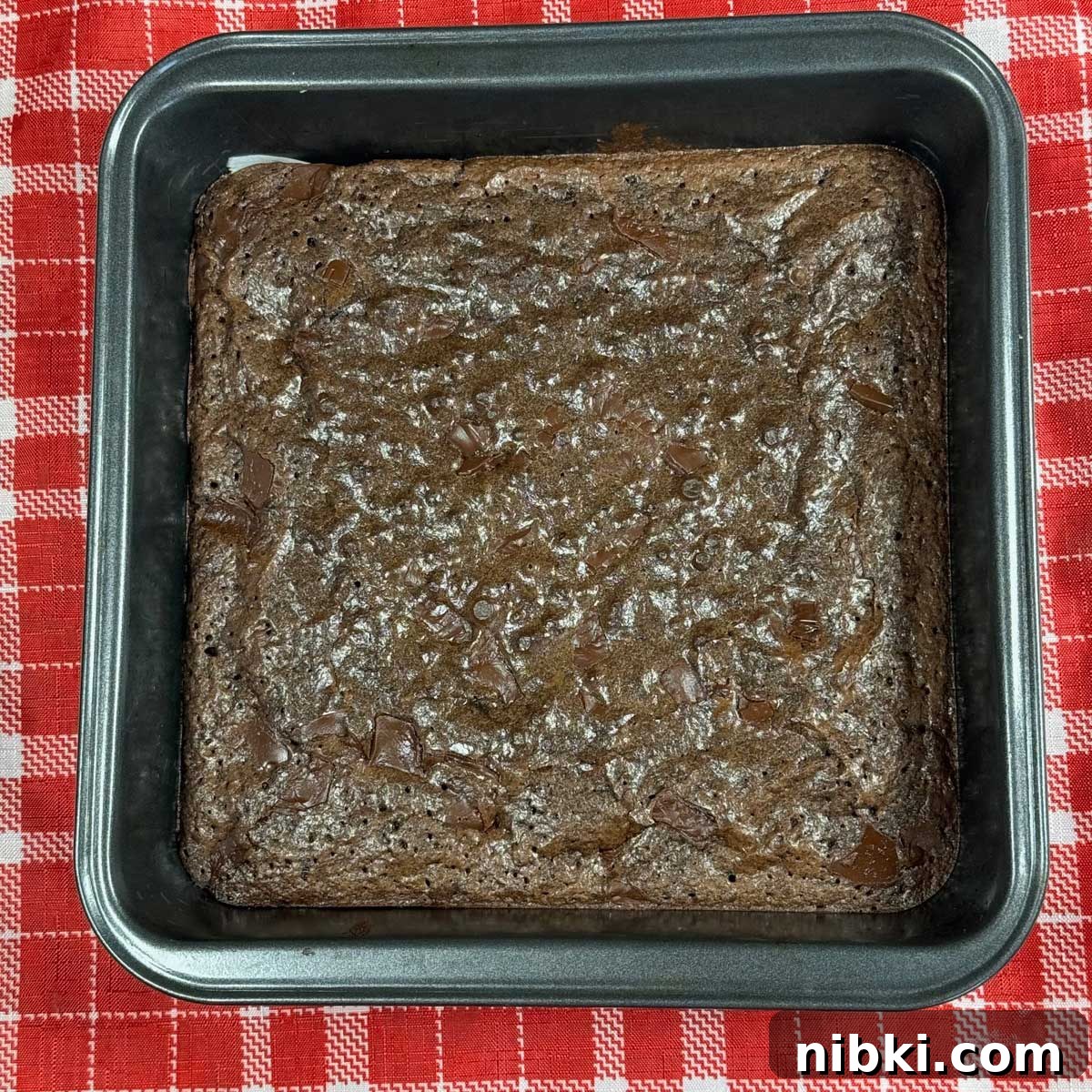
This recipe scales two ways: make the full recipe in a 9×13-inch pan, or halve it and bake in an 8-inch square pan. I often prefer the half-batch 8-inch size to avoid having too many brownies around, but both pan sizes produce the same chewy structure when baked to the correct time.
Recipe
Below is the smaller 8-inch version adapted from the Cook’s Illustrated method. The recipe yields rich, chewy brownies with a thin, slightly glossy top when baked correctly.
Ingredients
- 1/3 cup (28 g) Dutch-processed cocoa
- 1 1/2 teaspoons instant espresso powder
- 1/2 cup plus 2 tablespoons boiling water
- 2 ounces (56 g) unsweetened chocolate, chopped
- 1/2 cup plus 2 tablespoons (110 g) neutral oil (grapeseed recommended)
- 4 tablespoons (56 g) unsalted butter, melted
- 2 large eggs plus 2 large egg yolks
- 2 teaspoons vanilla extract
- 2 1/2 cups (500 g) sugar
- 1 3/4 cups (250 g) all-purpose flour
- 3/4 teaspoon salt
Instructions
- Preheat the oven to 350°F (175°C). Line a 9×13-inch metal pan with nonstick foil or parchment, or prepare an 8-inch square pan for a half batch.
- In a mixing bowl, whisk together the Dutch-processed cocoa, instant espresso powder, and the boiling water until smooth.
- Add the chopped unsweetened chocolate and stir until melted. Stir in the oil and melted butter; the mixture may appear slightly curdled at this point.
- Add the whole eggs, extra yolks, and vanilla. Whisk until the mixture is smooth and cohesive.
- Whisk in the sugar until fully incorporated.
- Add the flour and salt, then fold with a rubber spatula until just combined. If you like, fold in chocolate chips or chopped chocolate for extra pockets of melted chocolate.
- Scrape the batter into the prepared pan and smooth the top. Bake a full 9×13-inch pan for about 30 minutes. For a half batch in an 8-inch pan, begin checking at 25 minutes; 28 minutes is often ideal.
- Let the brownies cool in the pan for about 10 minutes, then lift them out using the foil or parchment. Cool completely on a wire rack before slicing for clean edges.
Notes and tips: switching to a neutral-flavored oil such as grapeseed reduces any unwanted oily taste. Using a combination of butter and oil helps create the chewy structure described by Cook’s Illustrated. If you change oils (for example, to coconut oil), expect a subtle change in texture because the overall saturated-to-unsaturated fat ratio will differ. For best results, use a measured approach to ingredients and keep an eye on bake time according to pan size.
If you try this recipe, pay attention to the oil you choose and the cocoa quality — those two elements make a big difference in flavor and appearance. Enjoy your chewy brownies!