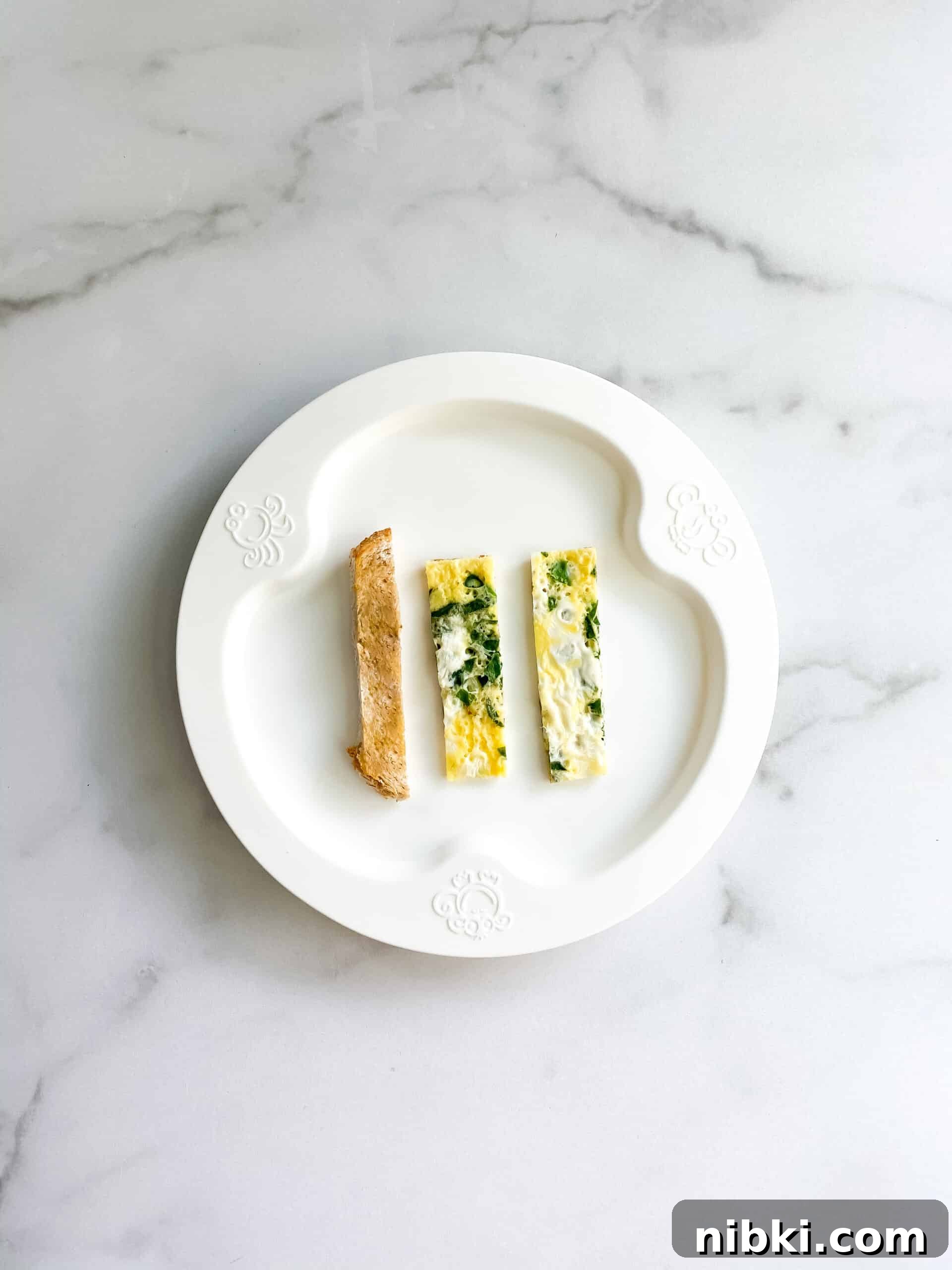
Learn about the best foods for an 8-month-old baby, including puree ideas and safe finger food options that support growth and development.
What should eight-month-old babies eat?

As babies grow, parents often search for clear guidance about feeding. Around six months most infants are ready to begin solids, and by eight months many are ready to expand the variety of tastes, textures, and self-feeding opportunities. There isn’t only one right approach—some families start with purees, others with baby-led styles—but the goal is the same: offer a variety of nutritious, safe foods while supporting learning and motor skills.
If you’re new to feeding solids, look for a simple guide or consult a pediatric dietitian for step-by-step support. The transition from purees to more textured foods should feel gradual and be tailored to your baby’s abilities and comfort.
Your 8-month-old to 10-month-old’s development
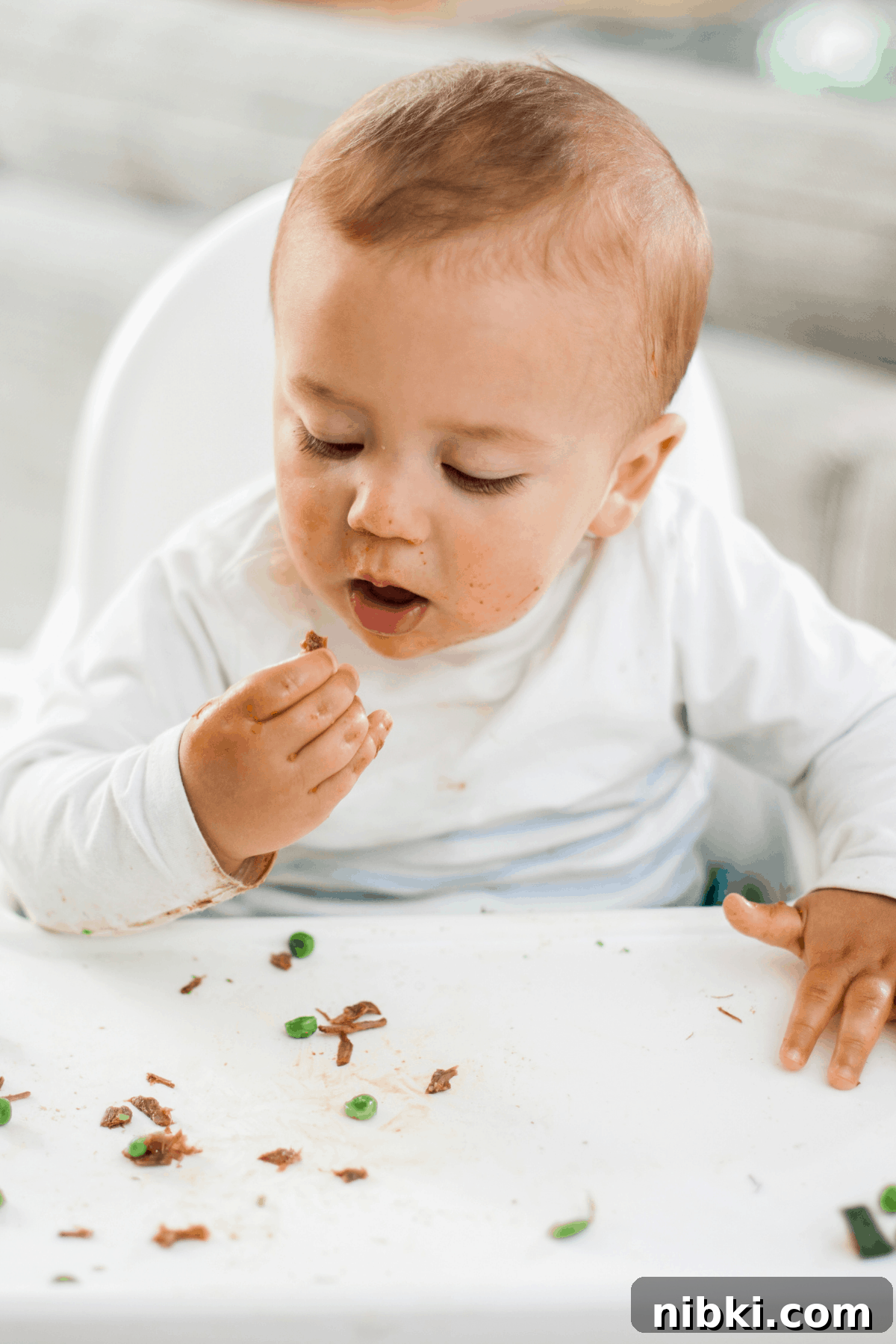
By eight months many babies can pick up and hold larger pieces of food—about the width of one to two adult fingers—and bring those pieces to their mouths. This stage is when self-feeding, chewing, and swallowing skills become more coordinated. Introducing a mix of spoon-fed and hand-held options helps refine these skills over time.
Here is a simple example of an age-appropriate finger food: a steamed white potato wedge lightly dressed with olive oil and a bit of pesto for flavor and fat.
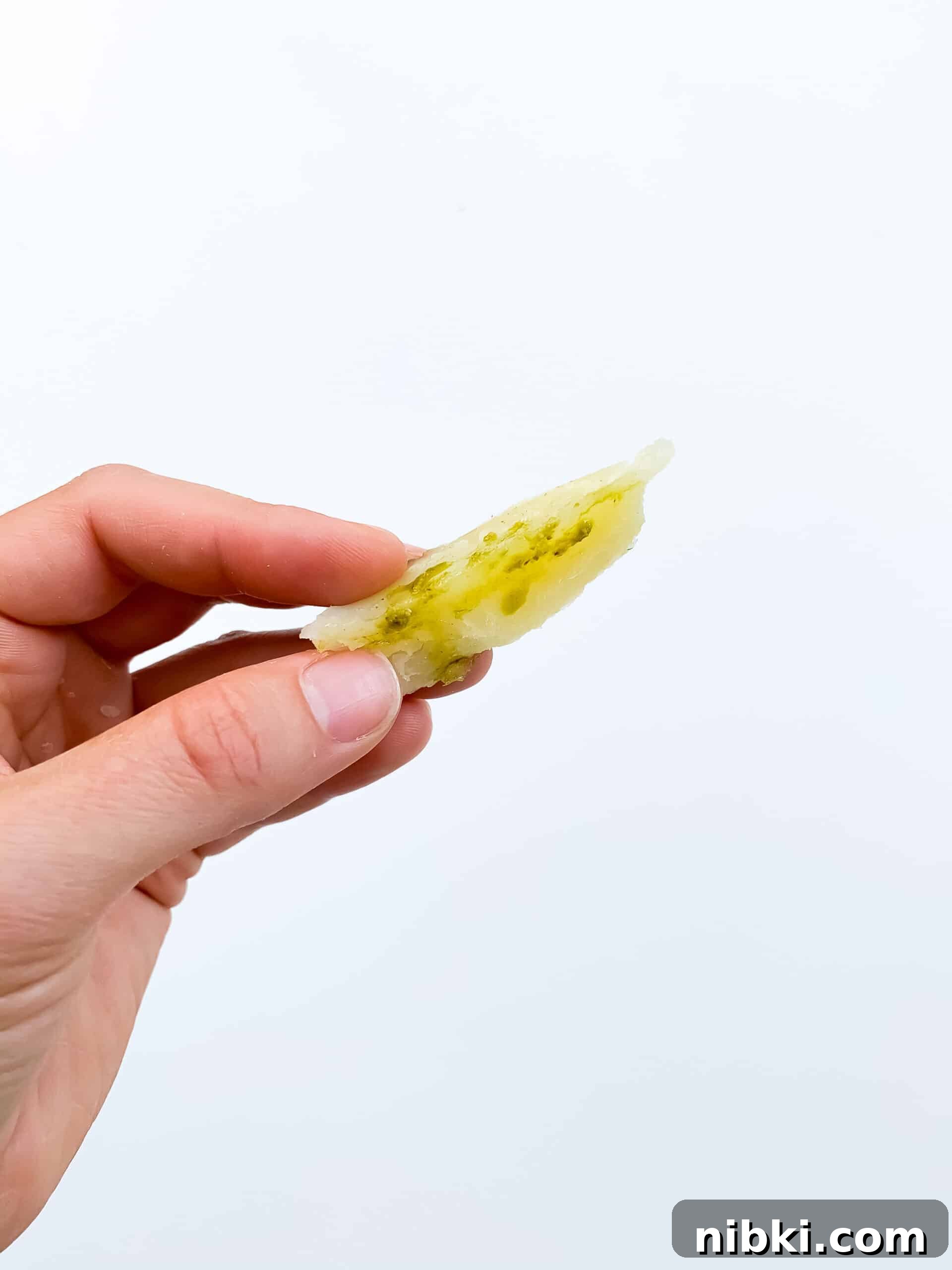
After a few months of practice, babies at this age become more confident with self-feeding and a wider range of textures. Small, soft pieces and wedge-shaped foods generally work well as they learn to manage chewing without molars.
Best foods for 8 month old baby
By eight months many babies are ready to move beyond exclusively smooth purees. They can handle mashed foods, soft cottage cheese, thicker porridges, and progressively more textured finger foods. If you started with purees, now is a good time to offer lumpier textures and safe pieces to encourage oral motor development.
The pincer grasp—used to pick up small objects—typically emerges around nine months but can appear slightly earlier or later. Once it’s present, you can introduce smaller pieces and shredded foods. Always be mindful of choking hazards (whole grapes, whole hot dogs, whole nuts, hard candies) and serve foods that are easily mashable between your thumb and forefinger.
Frequency and Quantity
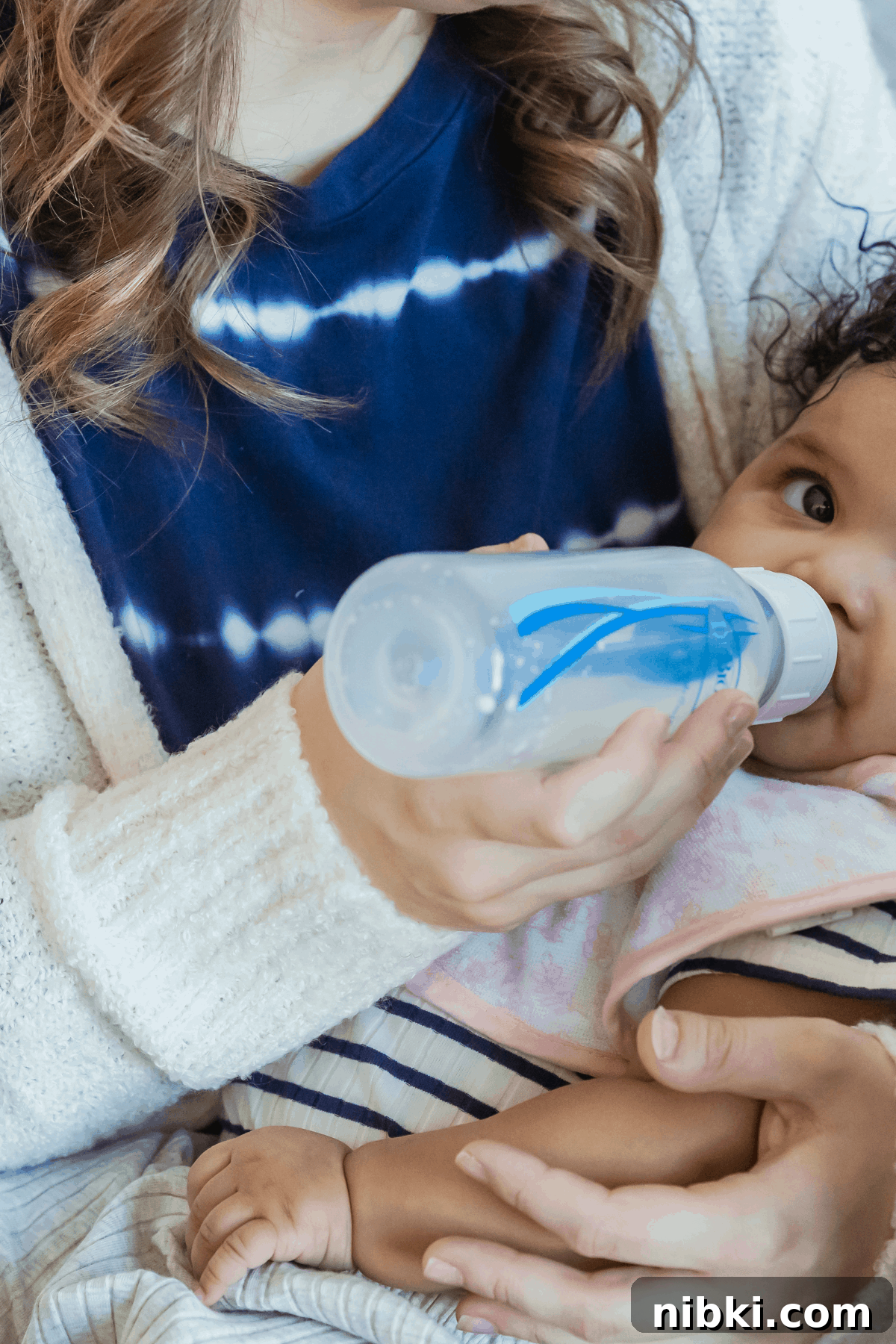
At around nine months many babies are having three meals a day in addition to breastmilk or formula. Milk remains a major source of calories and nutrients, so continue offering regular feeds. Appetite at this stage often varies from meal to meal—some days they’ll eat more, other days less. Offer small portions to start (about one tablespoon per food) and allow extra if your baby still shows hunger cues.
Should I feed them before their bottle or after?
Watch your baby’s hunger and interest. Aim to offer solids roughly 30–90 minutes after a milk feed so they are not too hungry or too full to practice self-feeding. The goal is a calm window where the baby can explore food without frustration.
A Note on Allergens
Introduce common allergens—like milk, eggs, soy, wheat, peanut, tree nuts (in safe forms), fish, and shellfish—into the diet early and repeatedly, unless your pediatrician advises otherwise. Early, regular exposure can reduce the risk of developing food allergies for many infants.
If your baby has severe eczema or a known food allergy, consult your pediatrician or an allergist before introducing allergens. Watch for signs of allergy after introducing a new food. Mild symptoms can include a few hives near the mouth or loose stools; more serious signs include extensive hives, vomiting, swelling of the face or tongue, difficulty breathing, or a sudden change in skin color or behavior. For mild reactions contact your pediatrician; for severe reactions seek emergency care right away.
Quick Tips for Feeding Your 8 month old, 9 month old, or 10 month old
Have your baby eat when you eat
Modeling mealtime helps babies learn to eat a variety of foods. Offer pre-loaded spoons for practice, provide safe finger foods, and include the baby at family meals so they can observe and copy your eating behaviors.
Prioritize foods with fat and iron
Healthy fats are important in the first two years. Include sources like olive oil, avocado, full-fat dairy, and nut butters (prepared in safe, spreadable forms). Iron is also essential because infants’ prenatal iron stores decline around this age. Offer iron-rich options such as meat, egg yolk, fish like salmon, beans, and lentils.
Limit baby’s intake of sodium for the first year
Season foods with herbs and spices but avoid adding salt to baby’s portions. Aim to keep daily sodium low—when cooking, remove the baby’s serving before salting the rest of the family’s food.
Avoid honey and added sugar
Do not give honey to babies under one year because of the risk of infant botulism. Also limit added sugars in the first two years to encourage a taste for nutrient-dense foods rather than sweet, low-nutrient snacks.
Use pouches, puffs, and teethers strategically
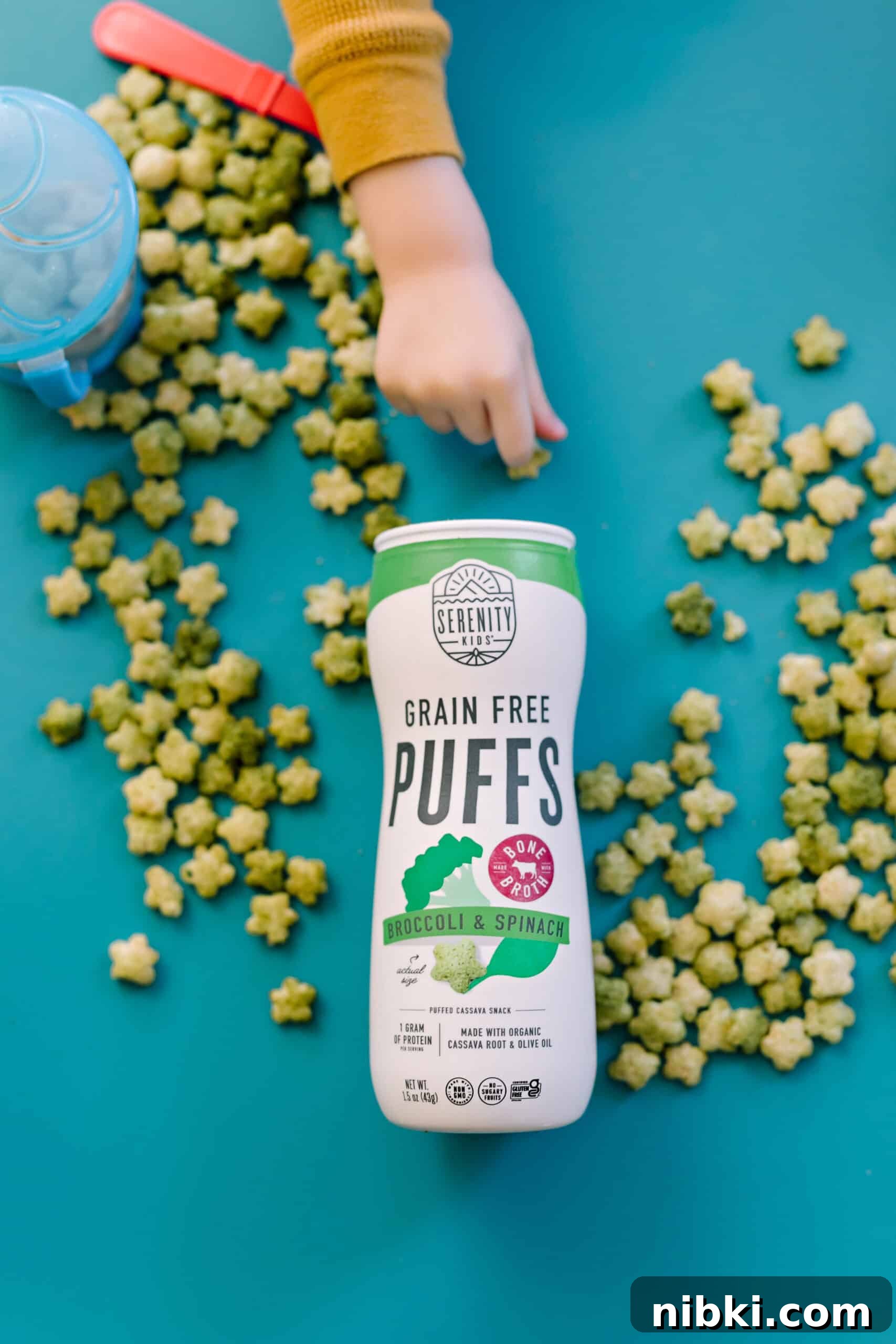
Convenience products can be useful occasionally, but relying on pouches for most feeds can limit oral motor development. Use them sparingly—such as for travel or short-term convenience—and choose nutrient-rich options when available. Puffs and meltable snacks can be helpful for practicing the pincer grasp but should not replace family foods.
Limit rice cereal and rice-based products
Rice can contain arsenic, so rice cereal is not necessary and rice-based infant products should be used sparingly. If you serve rice, limit it to a few times per week and vary grains to reduce exposure.
It’s okay, but not necessary, to offer water
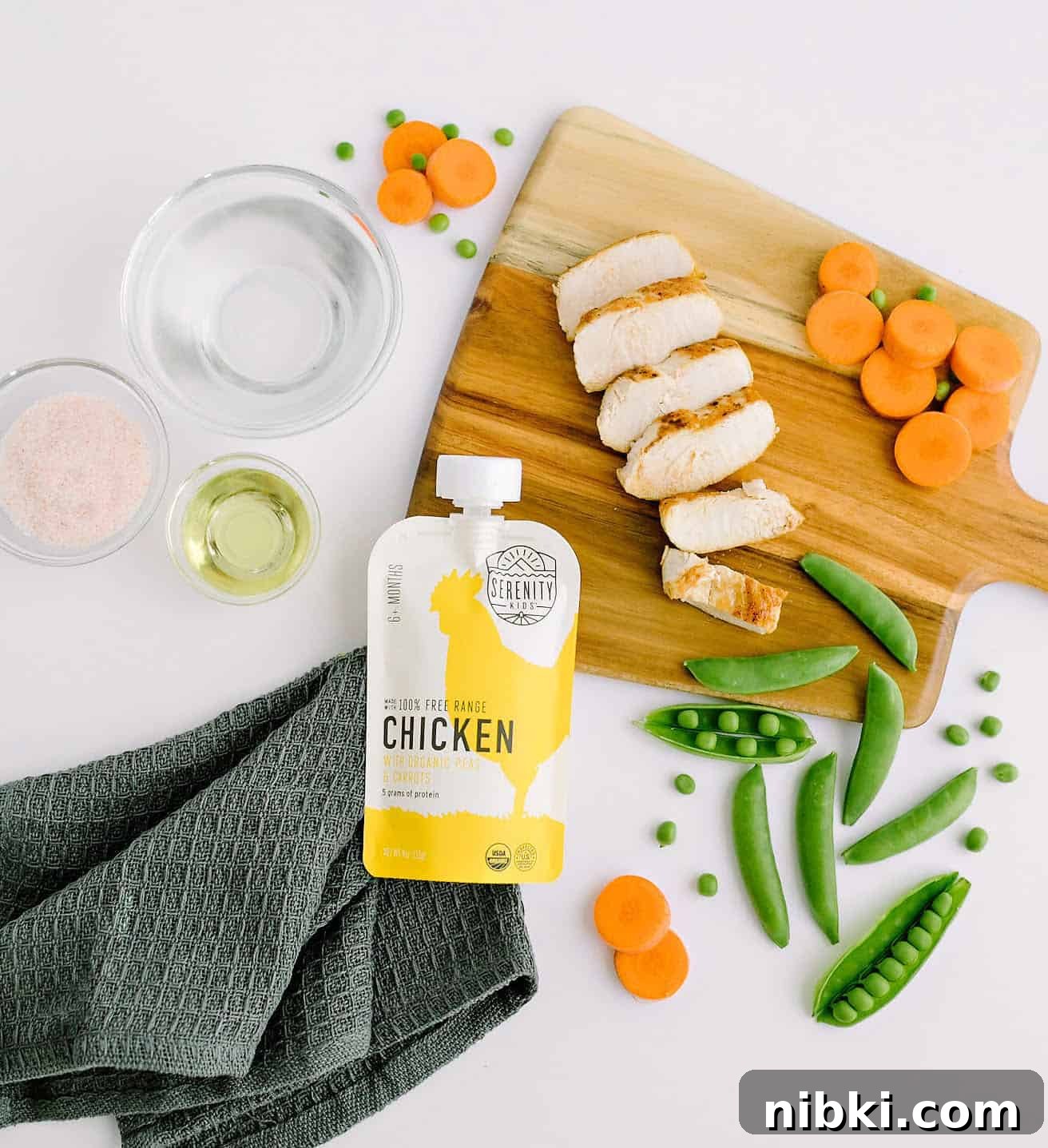
Breastmilk or formula provides adequate hydration. Small amounts of water (2–3 ounces) from an open cup or straw cup during meals can help practice drinking skills and oral motor development.
Practical food ideas
Pre-loaded spoons
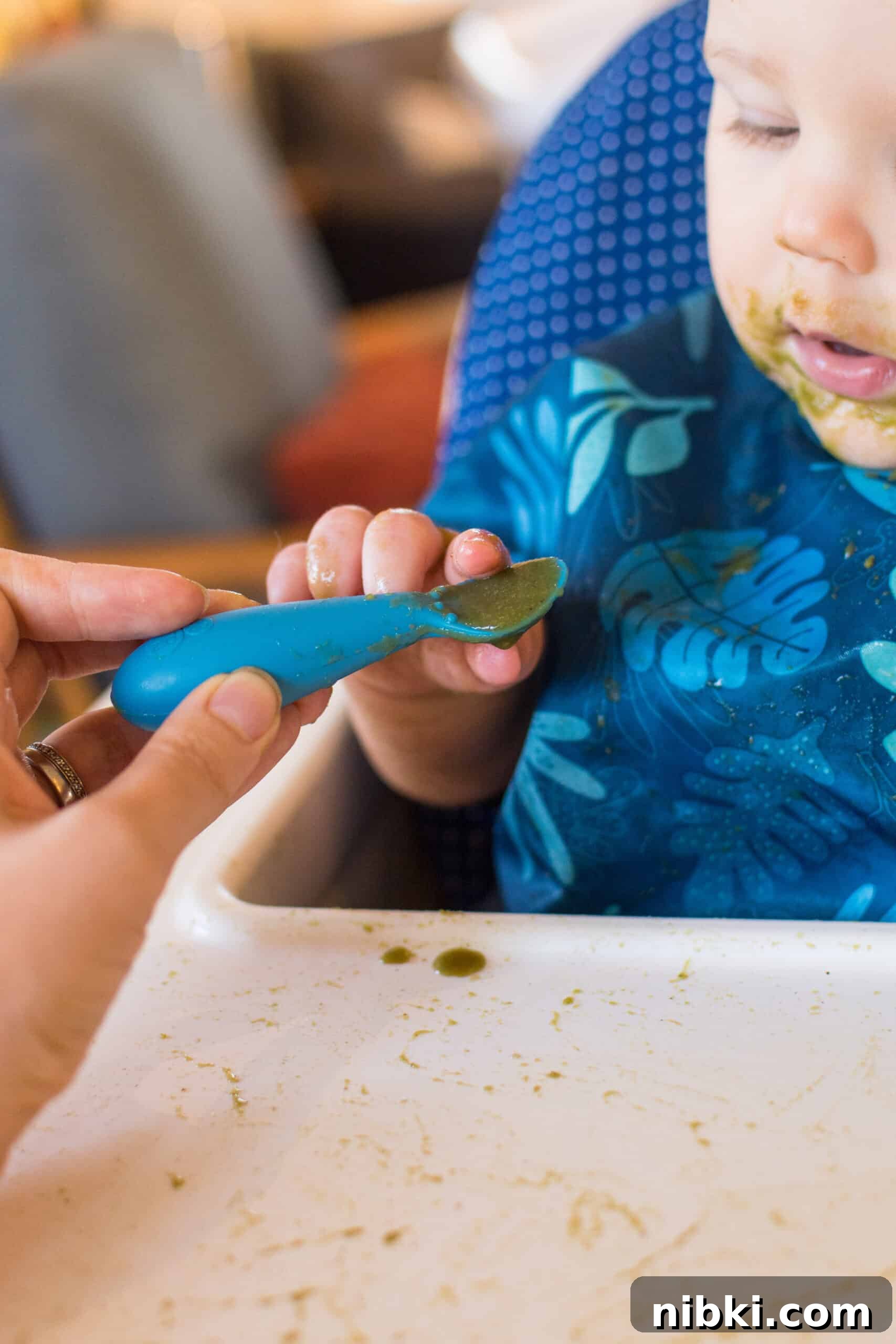
Pre-load spoons with foods your baby can hold and bring to their mouth. If needed, offer brief hand-over-hand assistance first, then encourage independent use. Use multiple spoons so your baby can switch hands and continue practicing.
- Sweet potato: mash or serve soft wedges; mix with milk to thin.
- Yogurt + mashed fruit: plain whole-milk yogurt with mashed banana or berries.
- Avocado mash: serve alone or mix with cooked grains or ricotta for extra calories.
- Hummus or white bean dip: blend with olive oil and soft greens for a smooth spread.
- Nut butters: thin with milk and mix into cereals or spread thinly on fruit.
- Cottage cheese: full-fat cottage cheese with soft fruit or tiny vegetable pieces.
Finger foods
- Roasted acorn squash wedges: soft and easy to grasp.
- Steamed broccoli florets: steam until very tender and season lightly.
- Eggs: scrambled or as an omelette cut into strips; egg yolk is nutrient-dense.
- Beans and lentils: well-cooked and mashed or lightly smashed for easier eating.
- Banana: serve halves or thick slices with a thin spread of nut butter and a sprinkle of ground seeds for added nutrients.
Finger food prep
Prepare finger foods in wedges or spears roughly the width of one or two adult fingers. If pieces are smaller, ensure they are very soft. Hard fruits and vegetables like apples or raw carrots should be steamed, roasted, or sautéed until soft enough to break apart between two fingers.
Laying a foundation
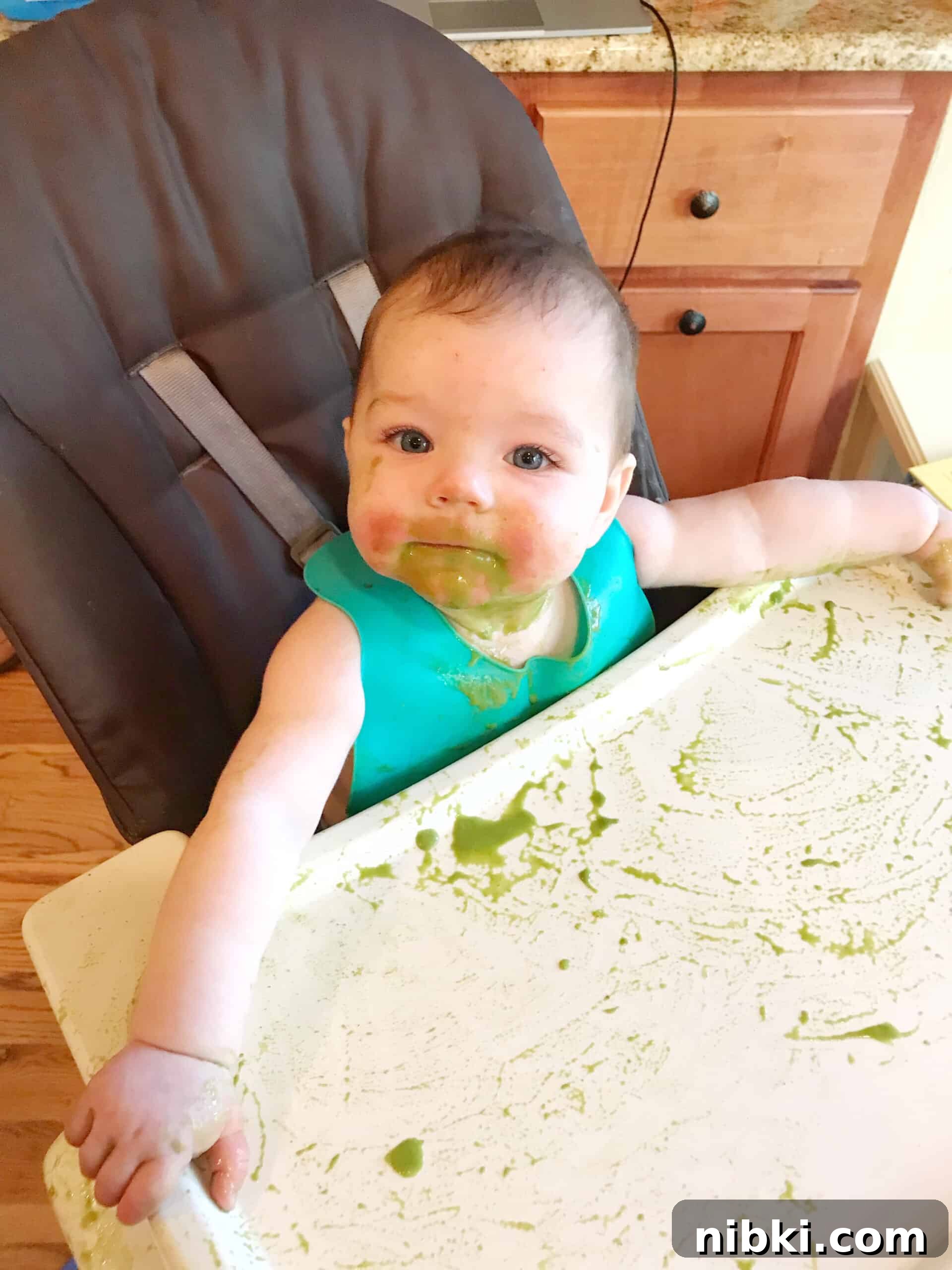
The skills your baby develops between eight and ten months—self-feeding, chewing, and listening to hunger and fullness—lay the groundwork for lifelong eating habits. Messy meals are part of learning; each practice feed helps your child gain independence and confidence with food.
Be patient and consistent. Offer varied, nutrient-dense foods and plenty of mealtime modeling. Over time, these habits will support a healthy relationship with food.

References
- Daniels L, Heath AL, Williams SM, et al. Baby-Led Introduction to Solids (BLISS) study: a randomized controlled trial of a baby-led approach to complementary feeding. BMC Pediatr. 2015;15:1–15.
- Caffarelli C., Di Mauro D., Mastrorilli C., et al. Solid Food Introduction and the Development of Food Allergies. Nutrients. 2018;10(11):1790.
- Strohm D., Bechthold A., Ellinger S., et al. Revised Reference Values for the Intake of Sodium and Chloride. Ann Nutr Metab. 2018;72(1):12–17.