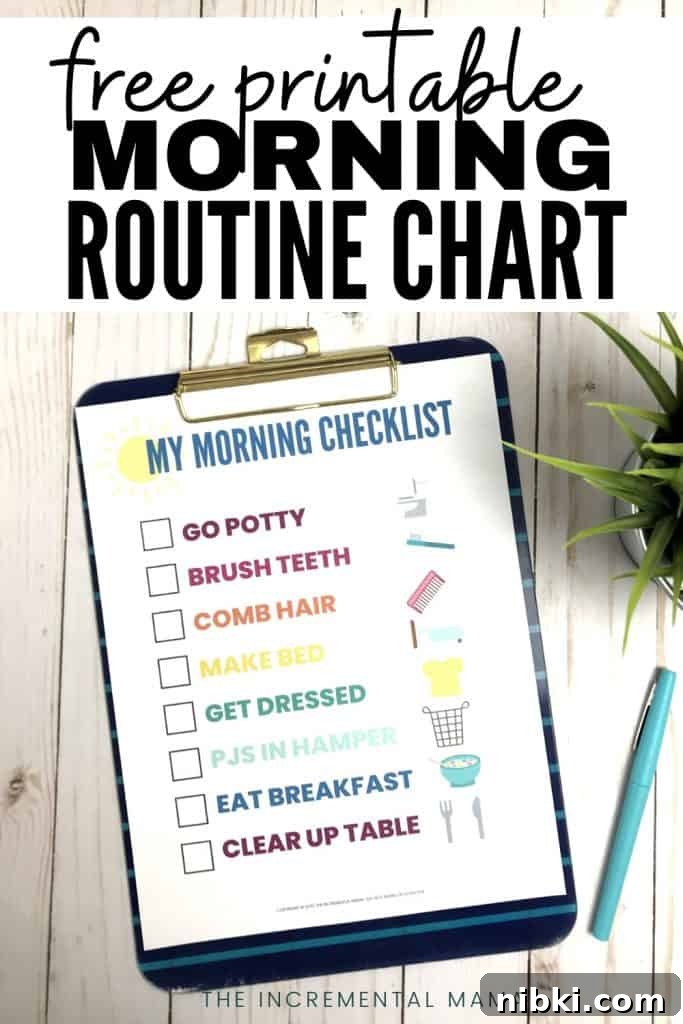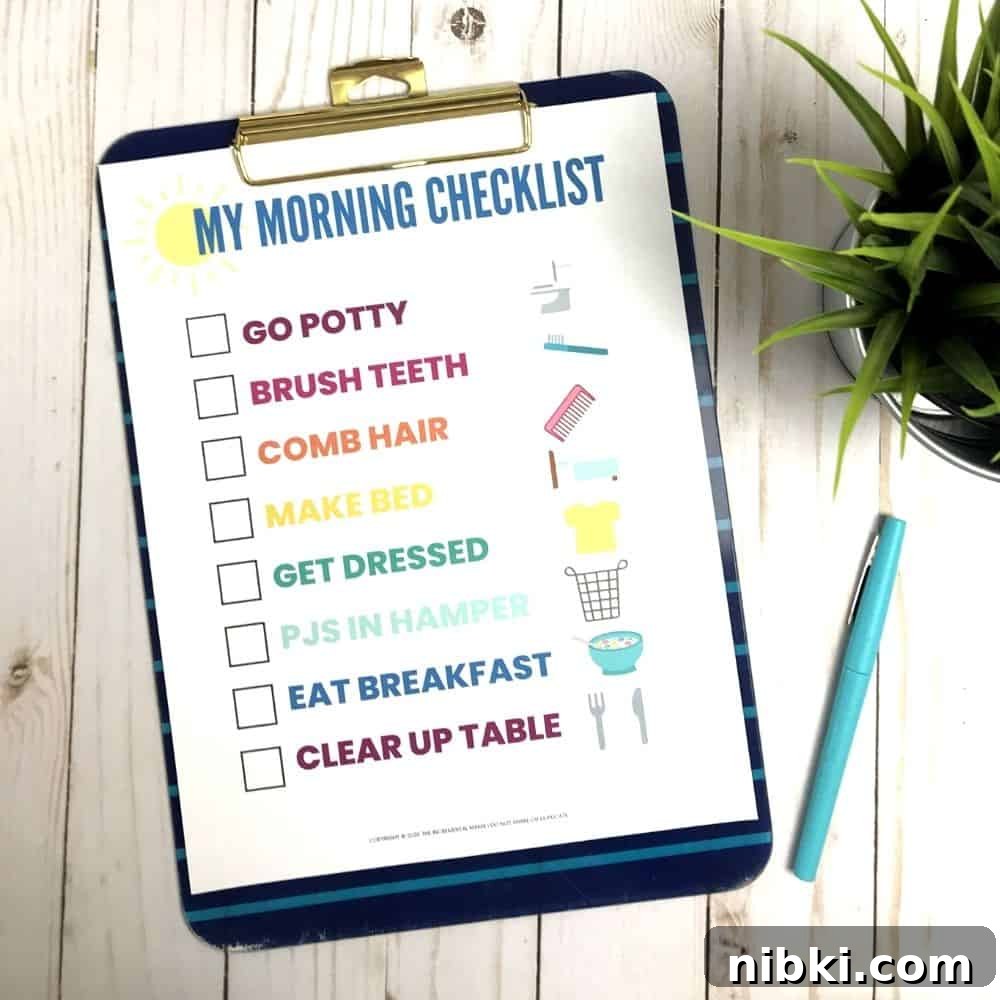
If you want a calmer, more organized start to your day, a consistent morning routine is essential. Using a morning routine chart for toddlers is a simple, effective way to help both you and your child begin the day smoothly and with less stress.
A visual checklist helps little ones learn responsibility while building healthy self-care habits like dressing, brushing teeth, and tidying up. The chart also reduces repeated reminders, which means fewer interruptions and a more predictable morning for everyone.
HOW TO USE YOUR MORNING ROUTINE CHART FOR TODDLERS
Routine charts work well because they provide clear visual prompts for tasks that young children may forget or find hard to sequence. Instead of repeating instructions, you can point to the chart and let your child follow the steps independently.
Many parents notice that once a child can see the steps, they begin to complete them with less prompting. The chart supports emerging independence while giving you predictable cues for the morning flow.
To get the most from a toddler routine chart, introduce it gently and use these practical steps to help your child succeed.
Tip: If you prefer a printable version you can use repeatedly, consider printing and laminating the chart so it stays durable and reusable.
1. Download or Print the Morning Routine Chart
Start by obtaining a printable version of the morning routine chart. Keep a copy handy so you can laminate it or place it in a protective sleeve. A reusable chart makes it easy for your child to mark tasks with a dry-erase marker and start fresh each morning.
2. Laminate or Protect the Chart
Laminating the chart or sliding it into a clear sleeve protects it from spills and wear. It also allows your toddler to mark completed items with a dry-erase marker and erase them later, which saves paper and keeps the chart looking neat.
A single laminated copy is often all you need; it’s more convenient than printing multiple sheets and encourages repeated use.
3. Place the Chart in a Visible, Accessible Spot
Put the chart where your child can see and reach it easily—near the bedroom door, by the bathroom, or on a low wall in the hallway. The goal is for the chart to be part of the environment so your child sees it naturally as they move through their morning routine.
When it’s in a public, accessible spot, toddlers are more likely to check off tasks themselves, which builds confidence and independence.
4. Teach Skills and Encourage Independence
At first, your toddler will need help completing some tasks. Demonstrate steps, guide hands when necessary, and provide gentle reminders. Over time, step back and let your child try on their own. For example, let them attempt to put on clothes or brush their teeth while you supervise and provide finishing help if needed.
Allowing small tasks to become practice opportunities builds competence and self-esteem. Praise effort and celebrate small wins to reinforce success.
5. Be Consistent
Consistency is the key to making any routine stick. Use the chart every morning so tasks become habits. Expect some resistance at first, but with repetition the steps will become automatic for your toddler.
Keep your expectations realistic and be patient during the transition period. Reinforce the routine with calm reminders and gentle encouragement rather than frustration.
WHAT TO INCLUDE ON A TODDLER MORNING ROUTINE CHART
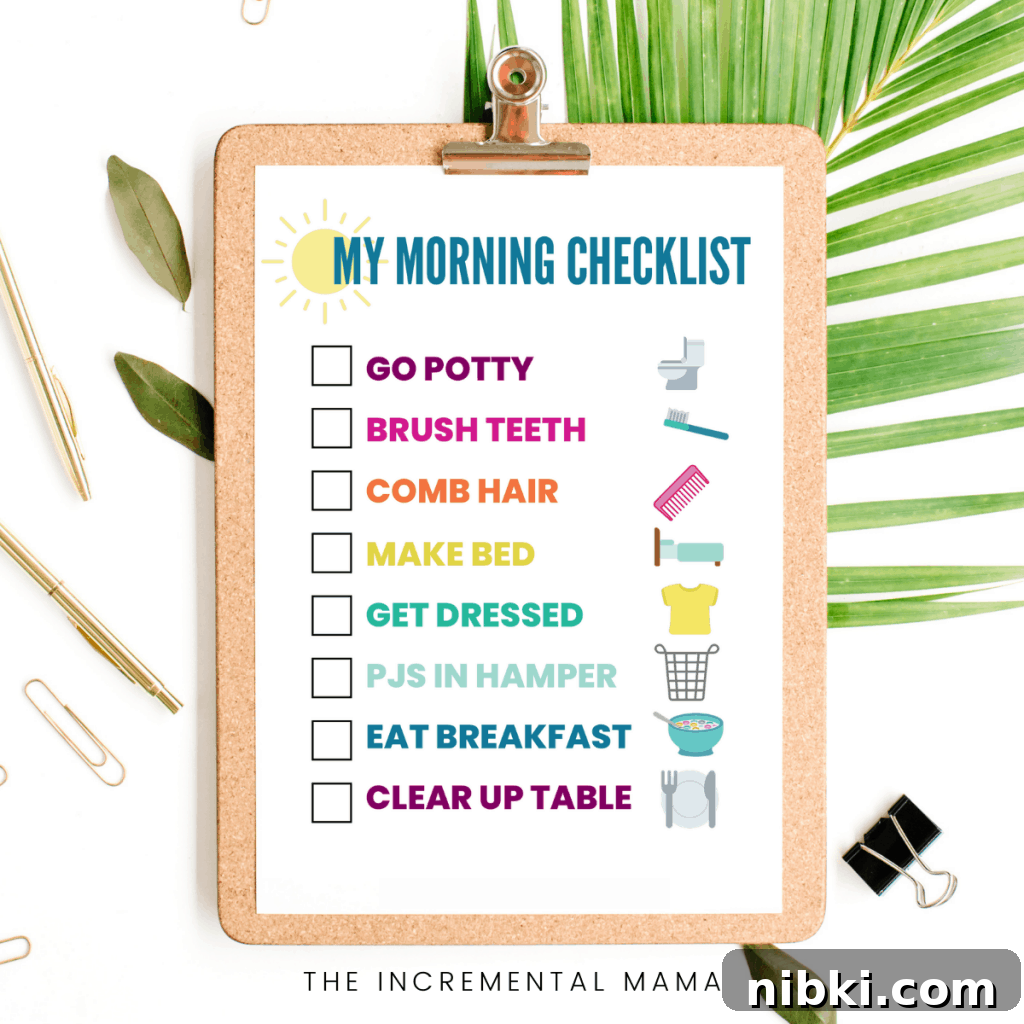
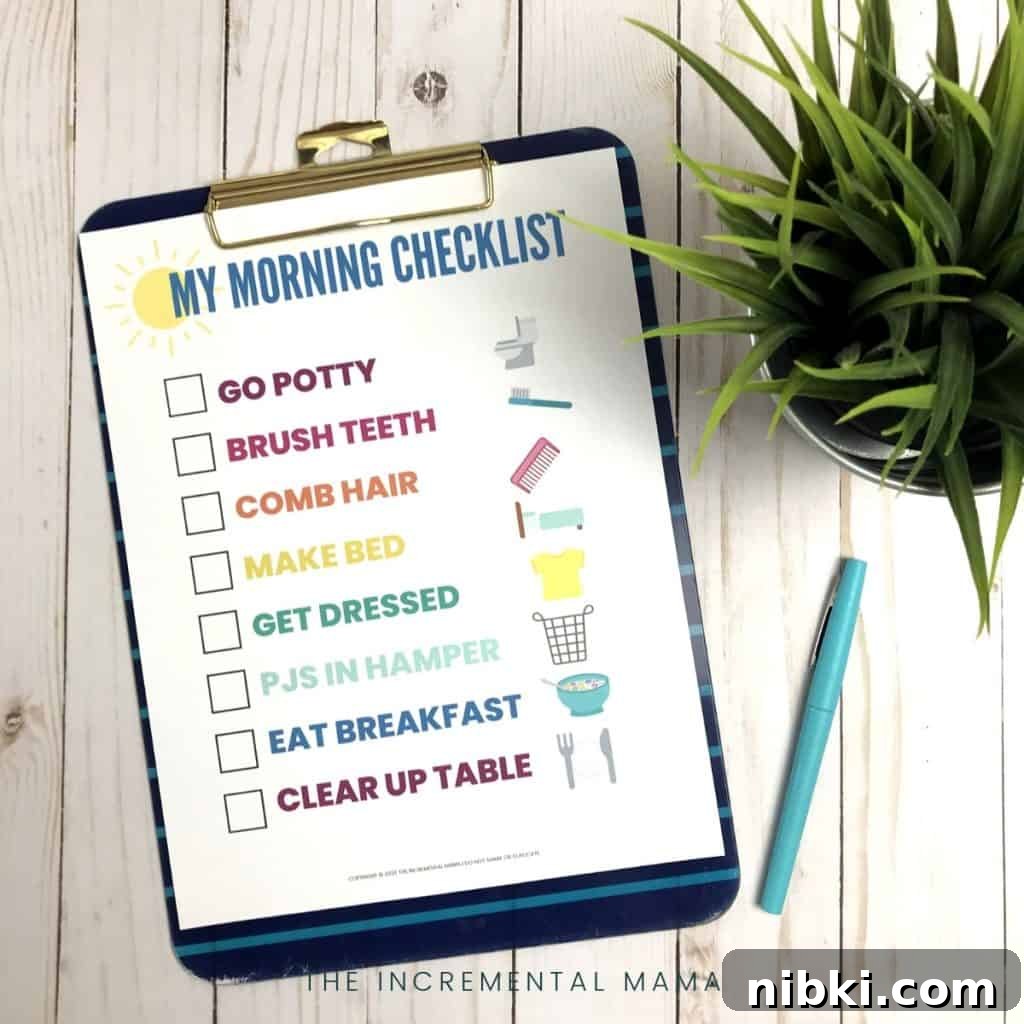
A simple, clear chart works best. Include 5–8 basic steps such as:
- Wake up and get out of bed
- Use the potty (if applicable)
- Brush teeth
- Get dressed
- Eat breakfast
- Comb hair or put on shoes
- Pack bag or bring favorite item
Use pictures or simple icons alongside words to help pre-readers understand the sequence. Keep the layout uncluttered so each step is easy to follow.
DOWNLOAD THE MORNING ROUTINE CHART FOR KIDS
When you’re ready to create a smoother morning, a printable toddler routine chart can make a big difference. Laminate it, place it where your child can see it, and use it consistently to build good habits and independence.
You’ve got this—small, steady steps and a clear visual routine can transform hectic mornings into calm ones.
YOU MAY ALSO LIKE:
Age-Appropriate Chores for Kids
20+ No-Prep Activities for Toddlers