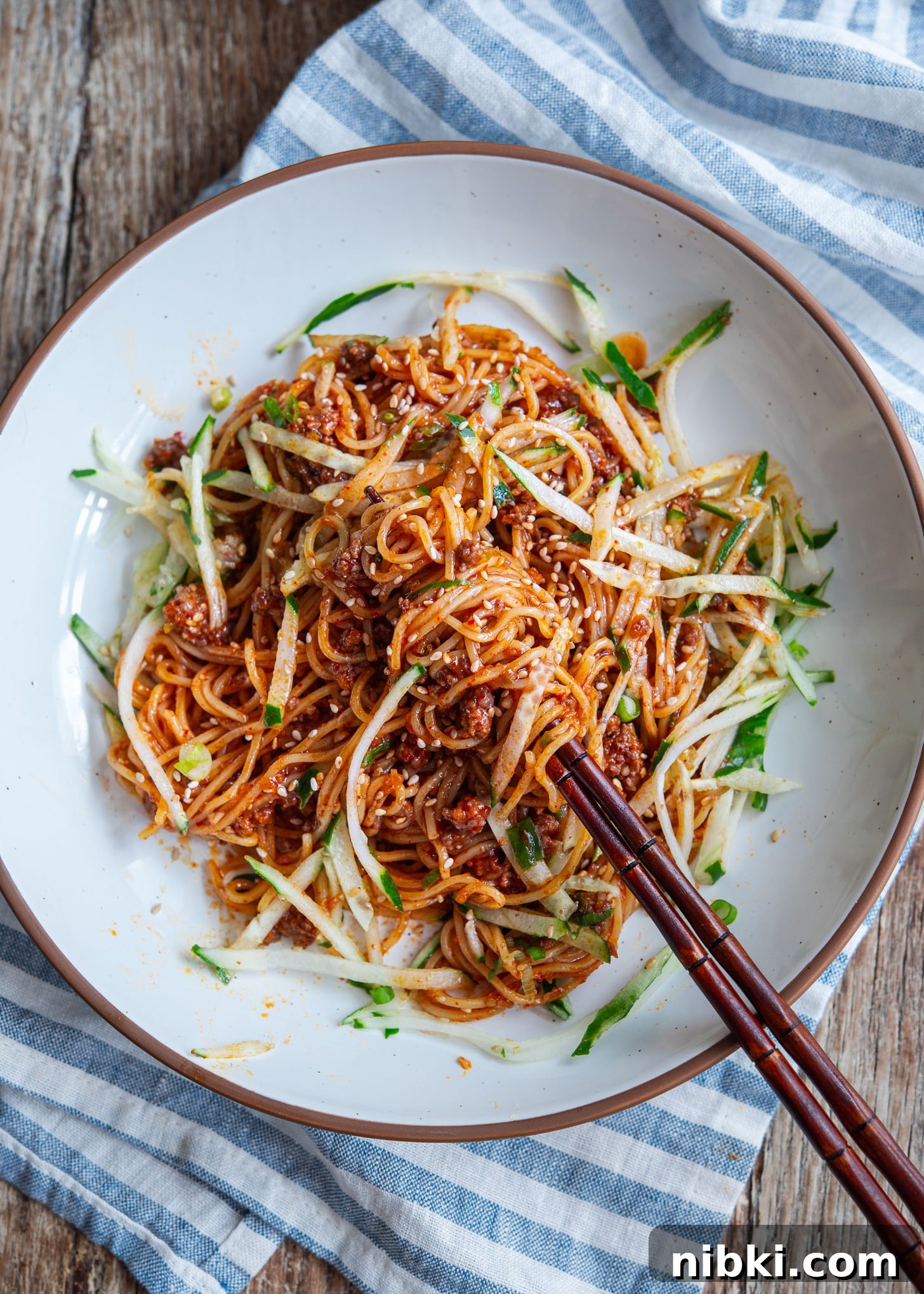
Make flavorful gochujang noodles in under 20 minutes. This Korean-inspired, one-bowl meal mixes savory ground beef with spicy gochujang chili paste, a touch of sweetness from grated apple, and simple pantry staples. It’s quick to prepare, easy to customize, and perfect for a weeknight dinner when you want bold flavor without fuss.
Craving noodles? These beef gochujang noodles deliver heat, sweetness, and a satisfying umami finish. Use leftover ground beef or cook fresh—either way the sauce comes together fast and clings to whatever noodles you have on hand.
The recipe is forgiving: adjust the gochujang to control the spice level, swap proteins, or add vegetables to bulk it up. With a short ingredient list and minimal prep, this dish is both practical and delicious.
Why You’ll Love This Recipe
- Bright, balanced sauce that uses everyday pantry ingredients.
- A complete, one-bowl meal with protein, carbs, and flavor.
- Very adaptable — swap the beef for tofu, chicken, or a plant-based substitute.
- Fast and simple — ready in about 20 minutes from start to finish.
Ingredients You’ll Need
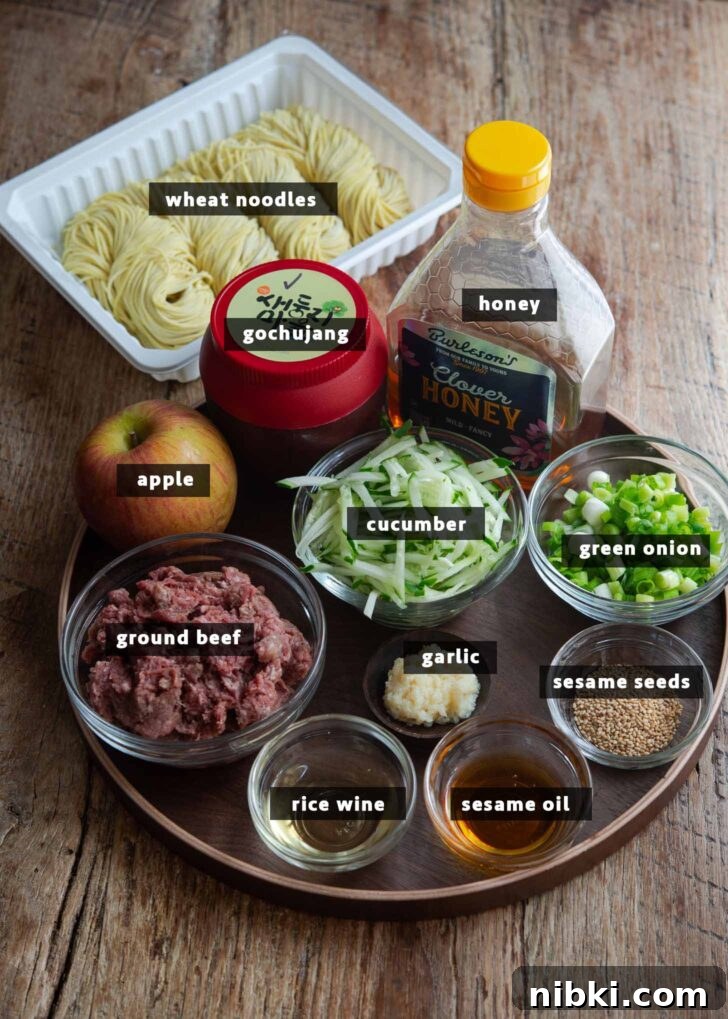
Gather some lean ground beef, gochujang paste, rice wine (or rice vinegar), sesame oil, honey, and toasted sesame seeds. For the brightness and subtle sweetness, a small sweet apple is grated into the sauce. Any noodles will work—fresh or dried; choose udon, ramen, egg noodles, rice noodles, or even spaghetti in a pinch.
If you prefer less heat, reduce the gochujang and add a splash of soy sauce for seasoning. For a vegetarian version, replace the ground beef with a plant-based protein or firm tofu and proceed the same way.
How to Make Beef Gochujang Noodles
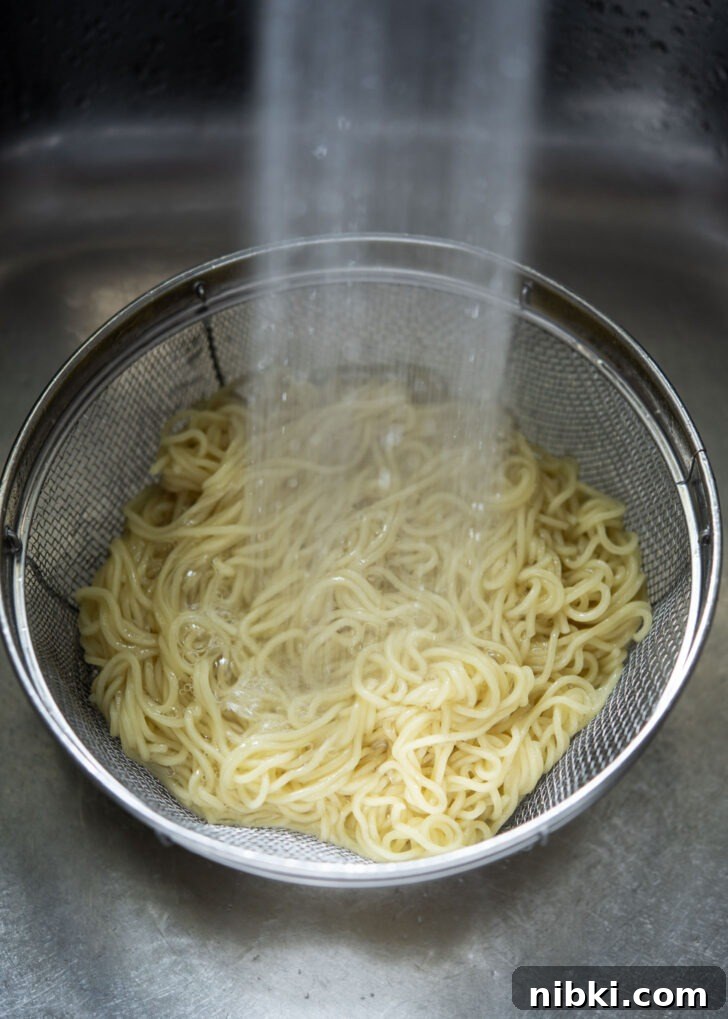
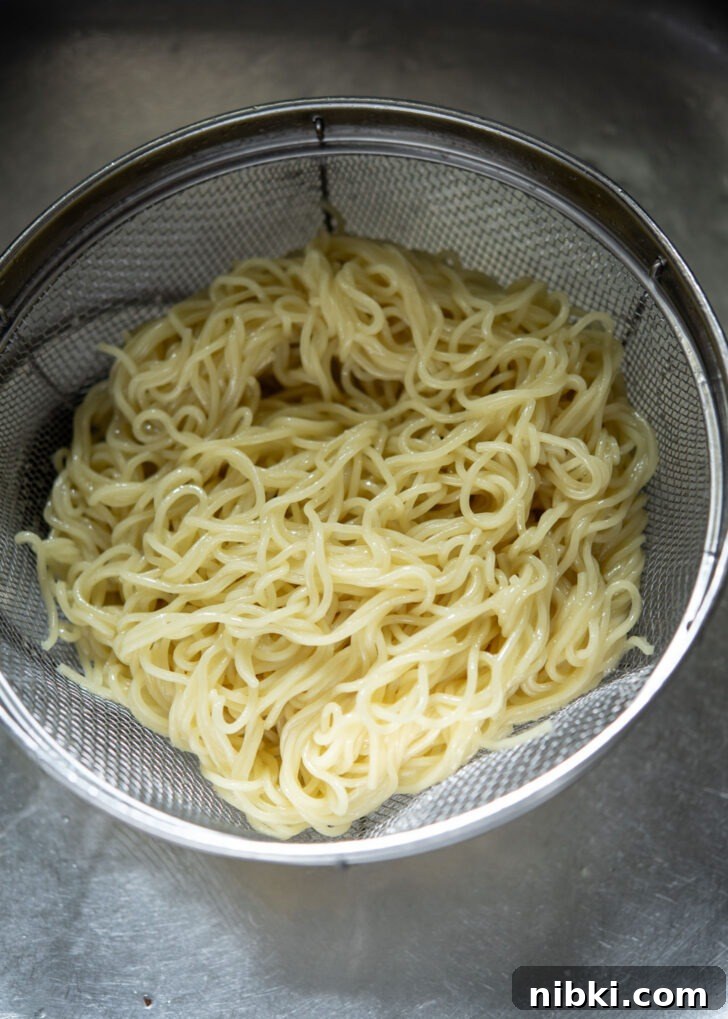
1. Prepare the noodles: Cook the noodles according to package instructions. Drain well. If you’re using fresh wheat noodles, rinse briefly under cool water to remove excess starch and toss with a little oil to prevent sticking.
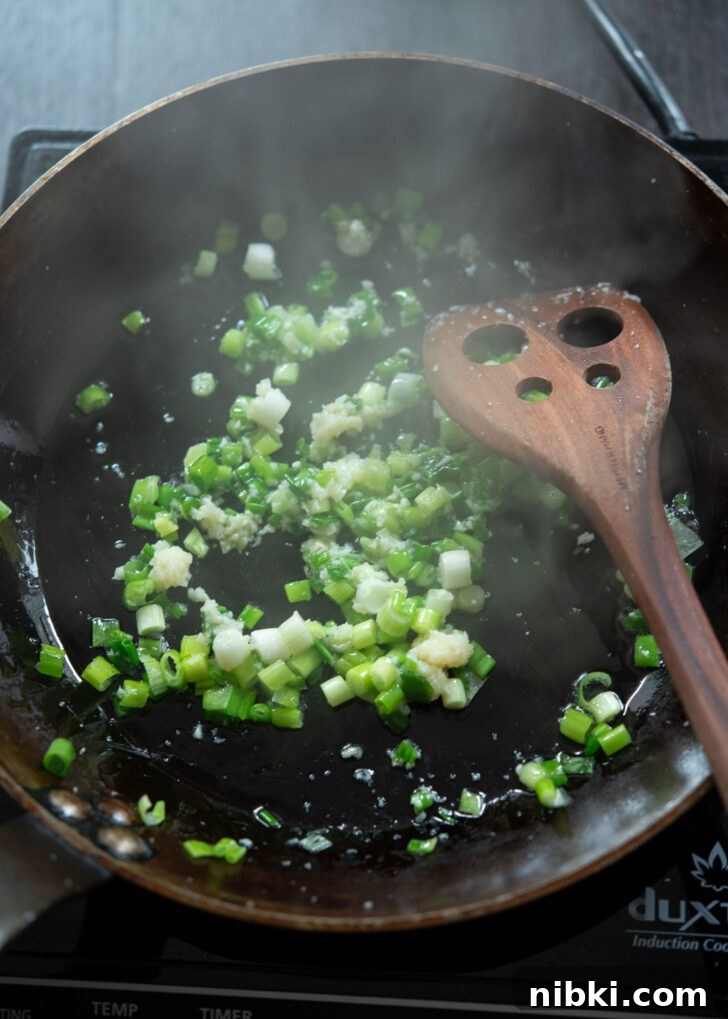
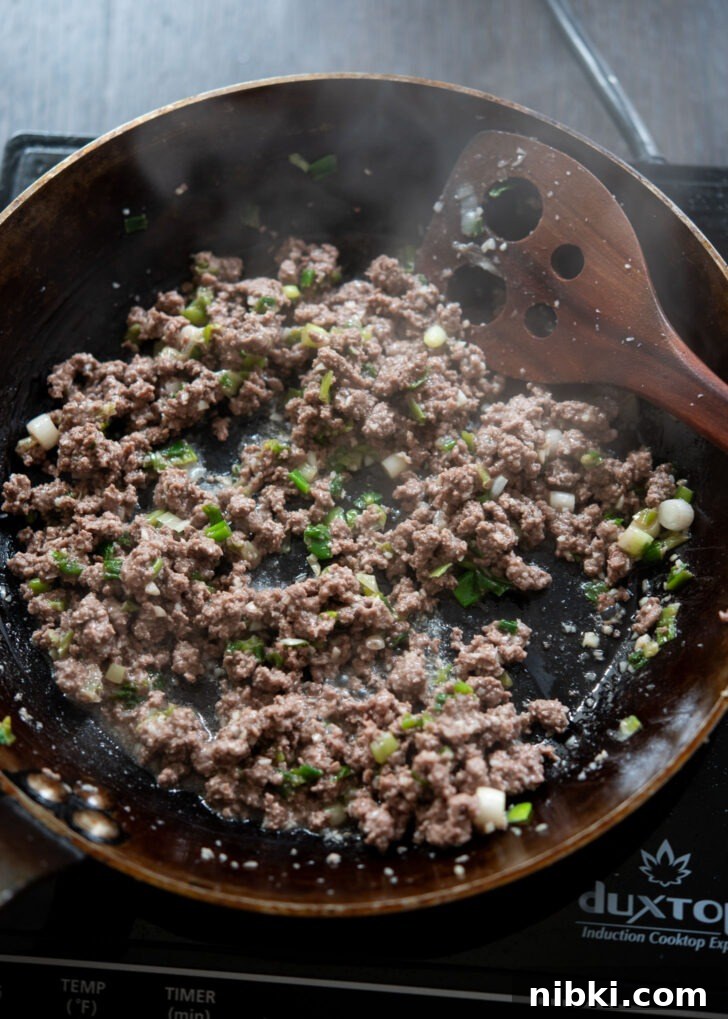
2. Cook the beef: Heat a tablespoon of oil in a large skillet over medium heat. Stir-fry chopped green onion and minced garlic for about 30 seconds, then add the ground beef. Cook until no pink remains and the beef is nicely browned, breaking it into small pieces as it cooks.
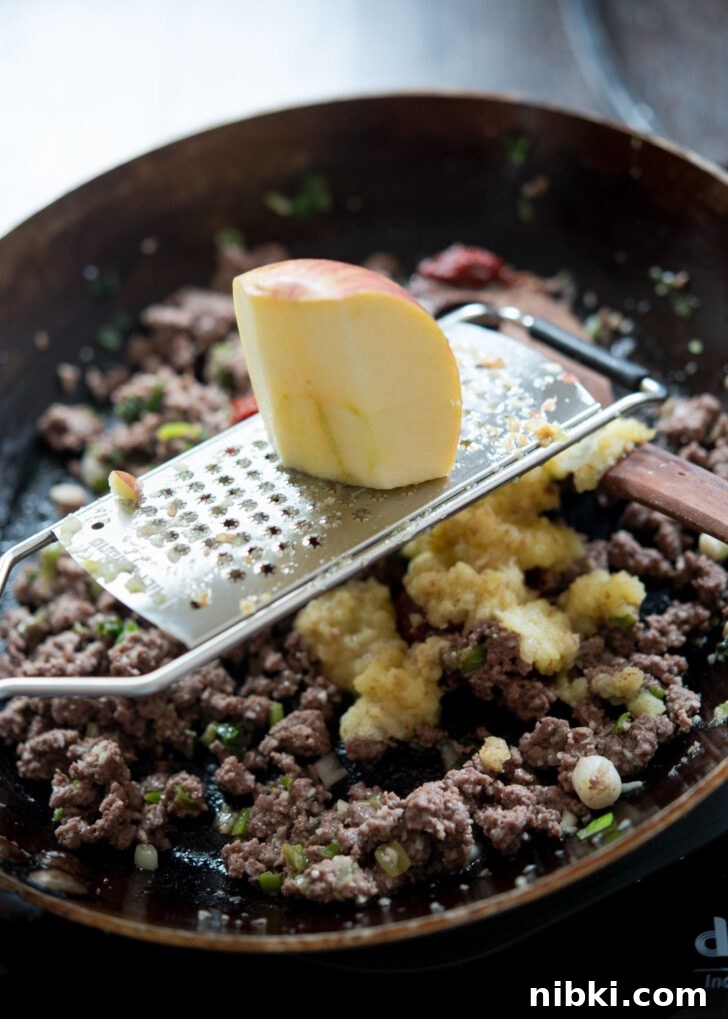
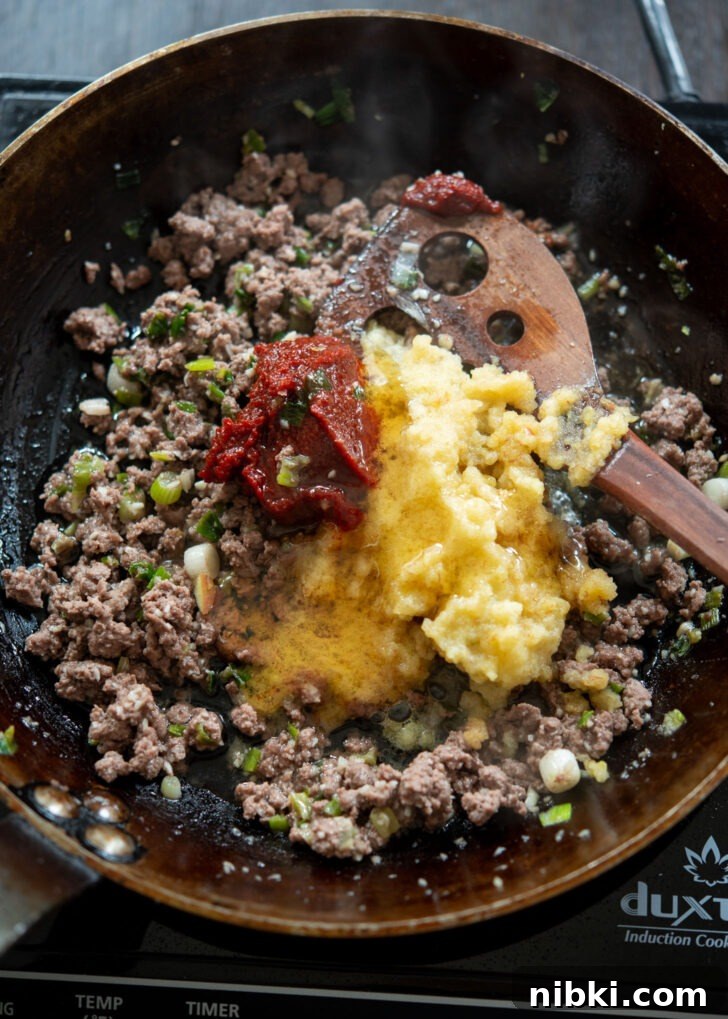
3. Add the apple and seasonings: Turn off the heat briefly and grate about half a small sweet apple directly over the skillet. Return to medium heat, add 2–3 tablespoons gochujang (adjust to taste), 1 tablespoon honey, and 2 tablespoons rice wine or a tablespoon of rice vinegar. Stir and cook until the sauce thickens slightly, about 2–3 minutes.
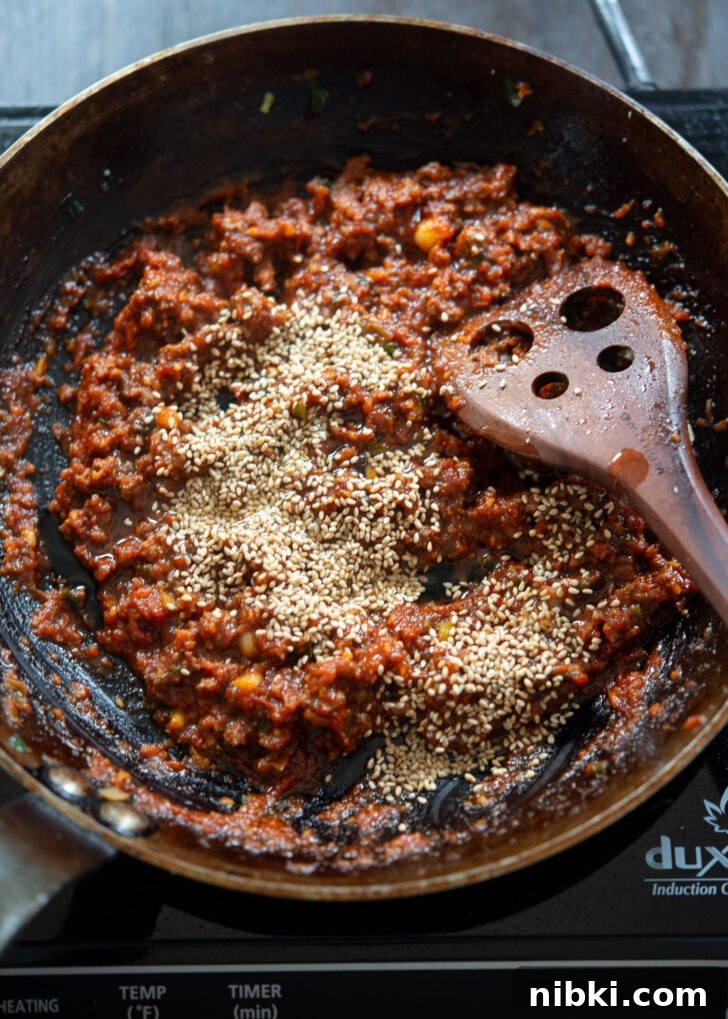
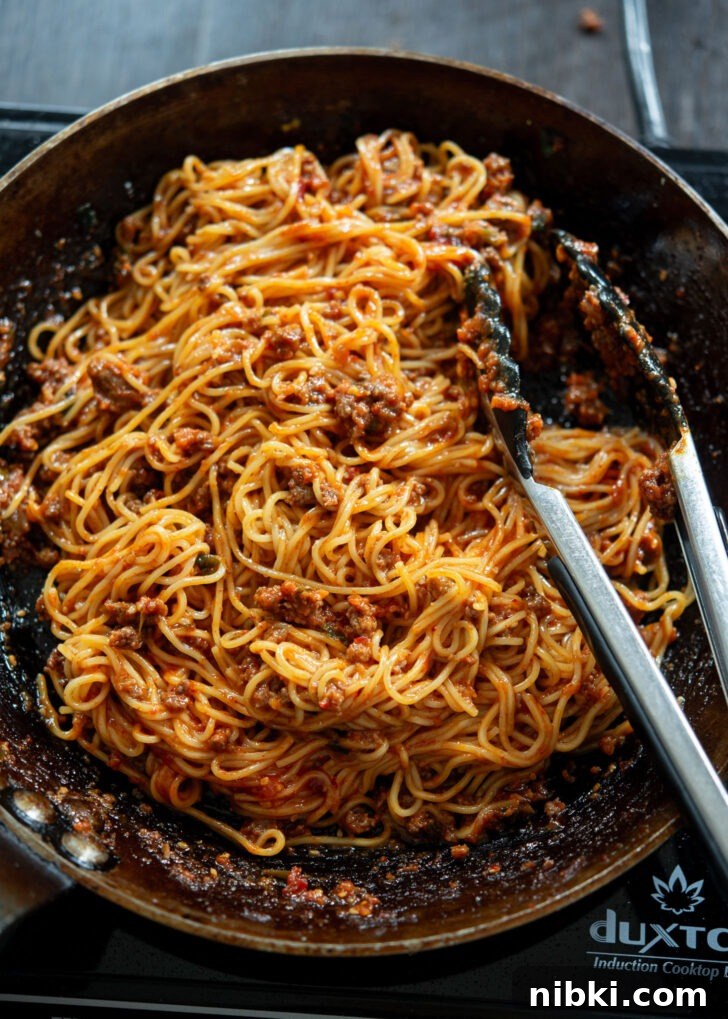
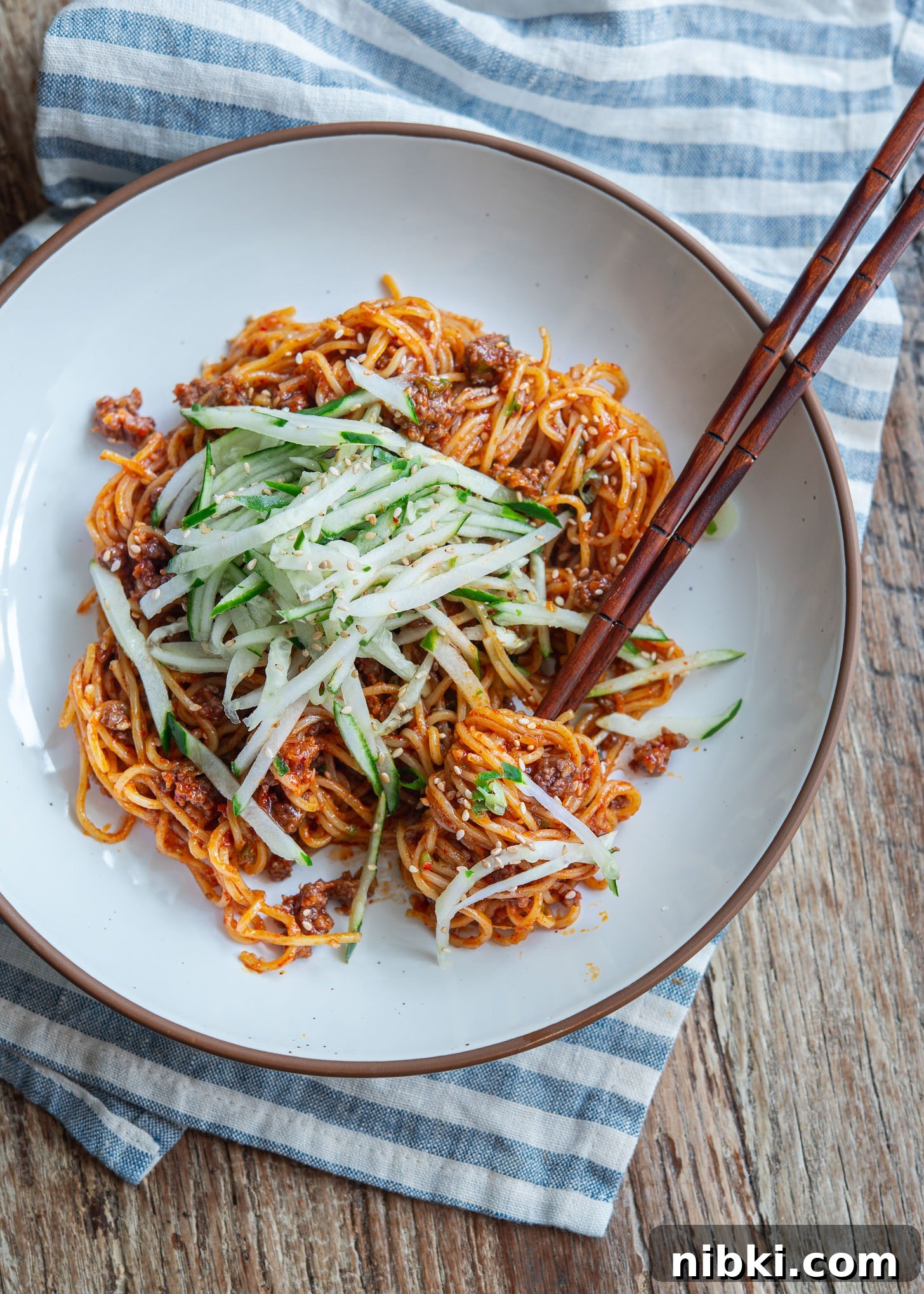
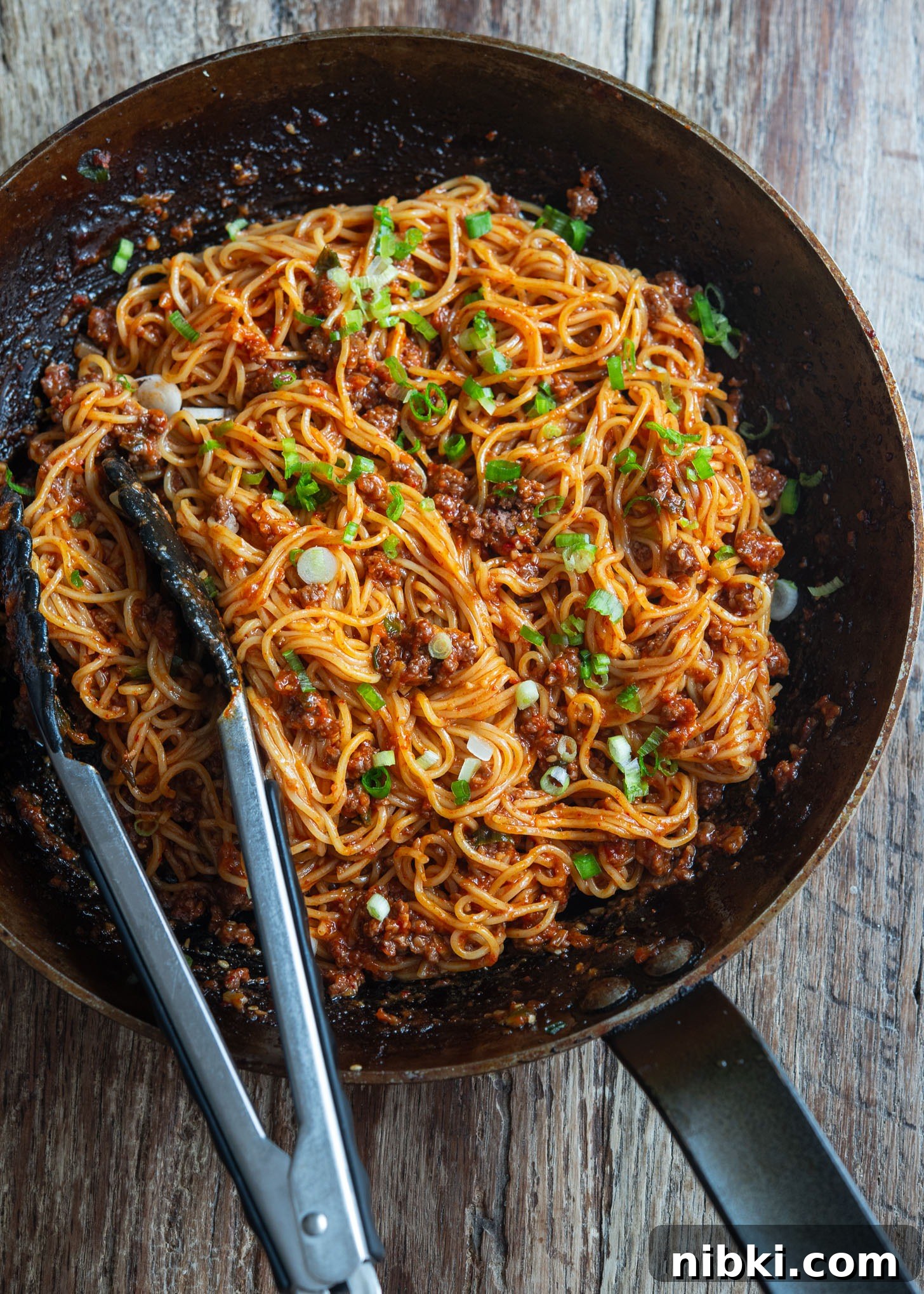
4. Finish and serve: Turn off the heat, drizzle about 1 tablespoon sesame oil and sprinkle toasted sesame seeds over the beef. Add the cooked noodles to the skillet and toss thoroughly so every strand is coated in the sauce. Serve immediately with shredded cucumber on top for freshness and crunch.
Serving Suggestions
Serve these gochujang noodles hot. A simple garnish of shredded cucumber or thinly sliced scallions adds color and a cooling contrast to the spice. You can also offer extra gochujang or toasted sesame seeds at the table so each person can adjust the heat and texture.
Love this recipe? Leave a comment below to share how it turned out. If you post a photo on social media, tag the recipe author so they can see your version.
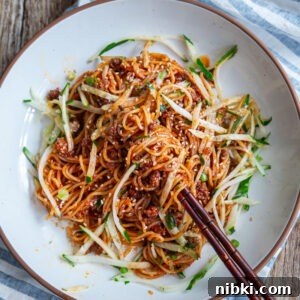
20-Minute Beef Gochujang Noodles
Ingredients
- 4 servings fresh udon noodles or egg noodles (or your preferred noodles)
- 1 tbsp oil
- 3–4 green onions, chopped
- 1 tbsp minced garlic
- 1/2 lb ground beef (about 90% lean)
- 1/2 small sweet apple, seeded and grated
- 2–3 tbsp gochujang paste (adjust to taste)
- 1 tbsp honey
- 2 tbsp rice wine (or 1 tbsp rice vinegar)
- 1 tbsp sesame oil
- 1 tbsp toasted sesame seeds
- 1 English cucumber, shredded for garnish
Instructions
- Prepare the noodles: Cook according to package directions, drain, and set aside. Rinse fresh wheat noodles to remove excess starch and toss with a little oil to prevent sticking.
- Cook the aromatics and beef: Heat oil in a large skillet over medium heat. Stir-fry green onion and garlic for 30 seconds. Add ground beef and cook until browned and cooked through.
- Add apple and seasonings: Turn off the heat and grate the apple over the beef. Return heat to medium, then add gochujang, honey, and rice wine. Stir and cook until the sauce thickens, about 2–3 minutes.
- Toss with noodles: Remove from heat, drizzle sesame oil and sprinkle sesame seeds. Add the noodles and toss until evenly coated with the sauce.
- Serve: Divide into bowls, top with shredded cucumber, and serve hot.
Notes
- Noodle options: Fresh udon, ramen, or egg noodles work best. Dried spaghetti can be used in a pinch; avoid very thin noodles that break while tossing.
- Less heat: If you reduce gochujang, add 1–2 tbsp soy sauce to balance the seasoning.
- Apple substitute: Replace grated apple with 1/4 cup apple juice or pineapple juice if you prefer.
- Vegetarian option: Swap ground beef for a plant-based protein or firm tofu and follow the same method.
Carbs: 42 g,
Protein: 16 g,
Fat: 26 g
Share a photo or leave a comment — the author loves to see your versions.