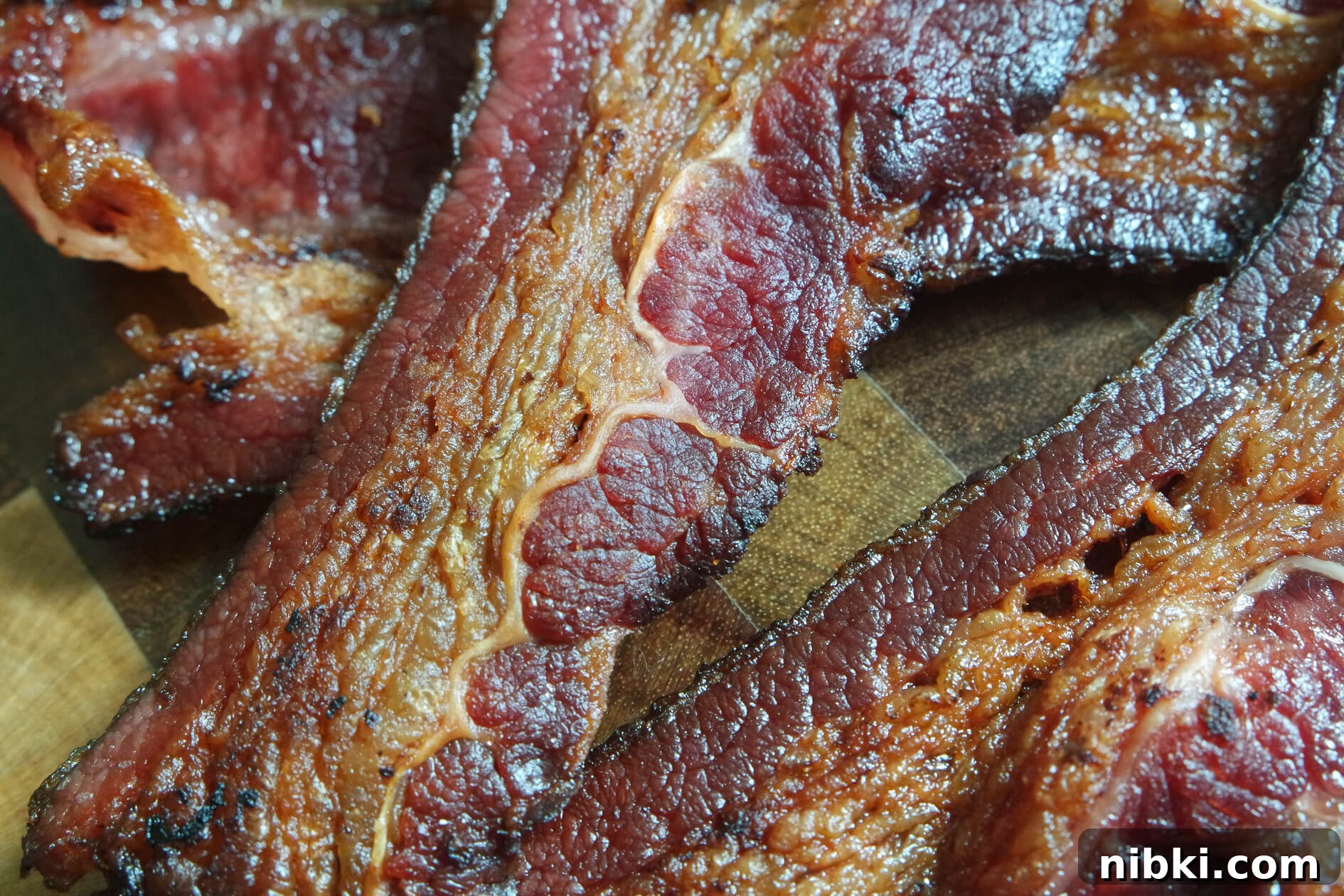
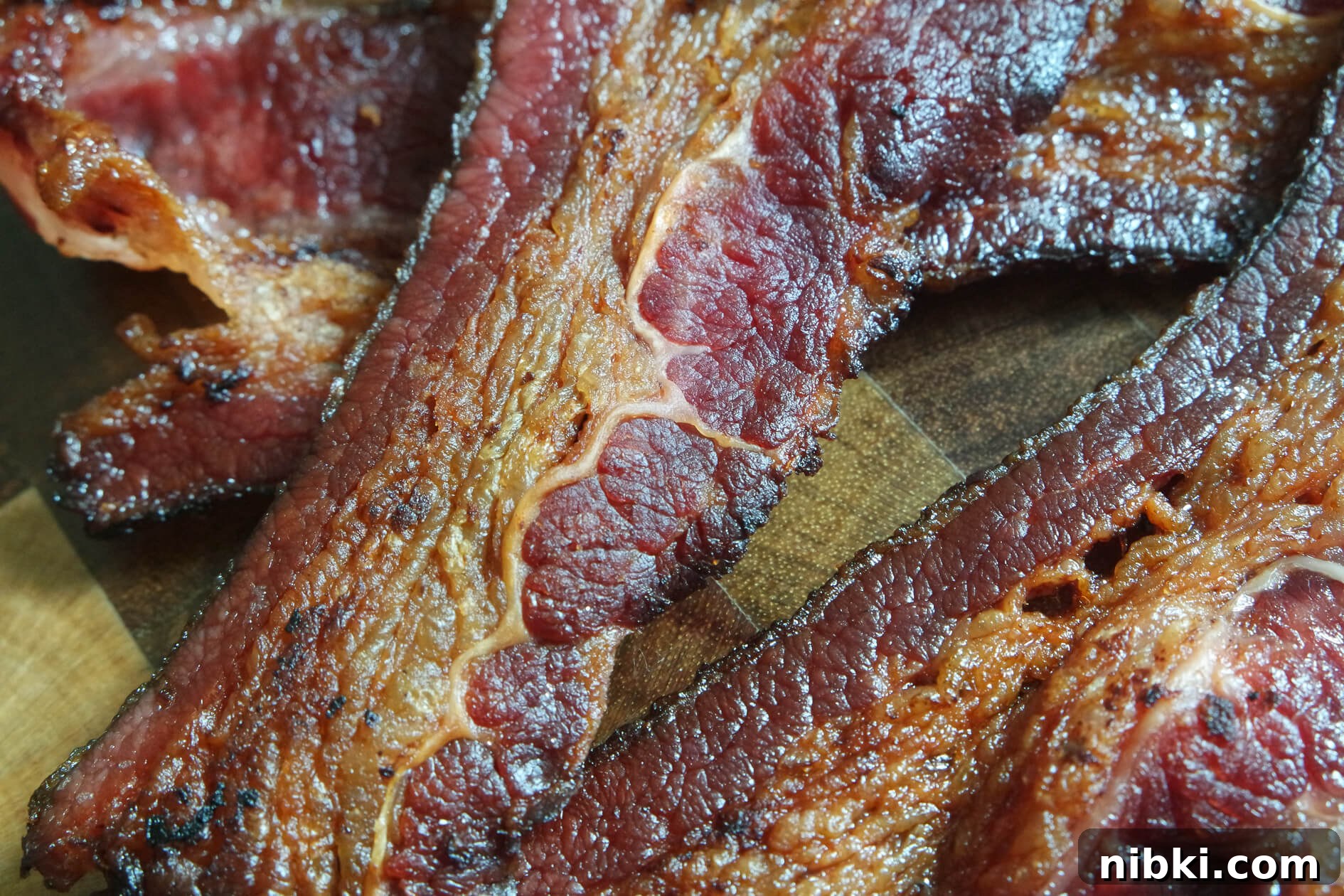
If you thought regular bacon was delicious, wait until you taste the crispy golden goodness of beef bacon.
Bacon in its most common form is cured and smoked pork belly. In some regions, like Canada, the UK and Australia, cooks sometimes use parts of the loin, but the fat‑rippled pork belly is famous for delivering a crisp, flavorful finished product. That same idea applies to beef: the belly of a steer, known in the meat trade as the navel, contains layers of fat and meat that render into rich, golden ribbons when treated like bacon.
What does beef bacon taste like? On first bite it often feels familiar, then distinctive. Many people notice a deep, beefy richness that calls to mind fries cooked in beef tallow — a classic flavor memory for those who grew up on that method. Beef bacon concentrates that beef fat flavor while crisping and caramelizing the meat, producing a savory bite that’s different from pork bacon but just as addictive.
Beef bacon is created in three steps – curing the belly, smoking the meat, and cooking to beefy perfection.
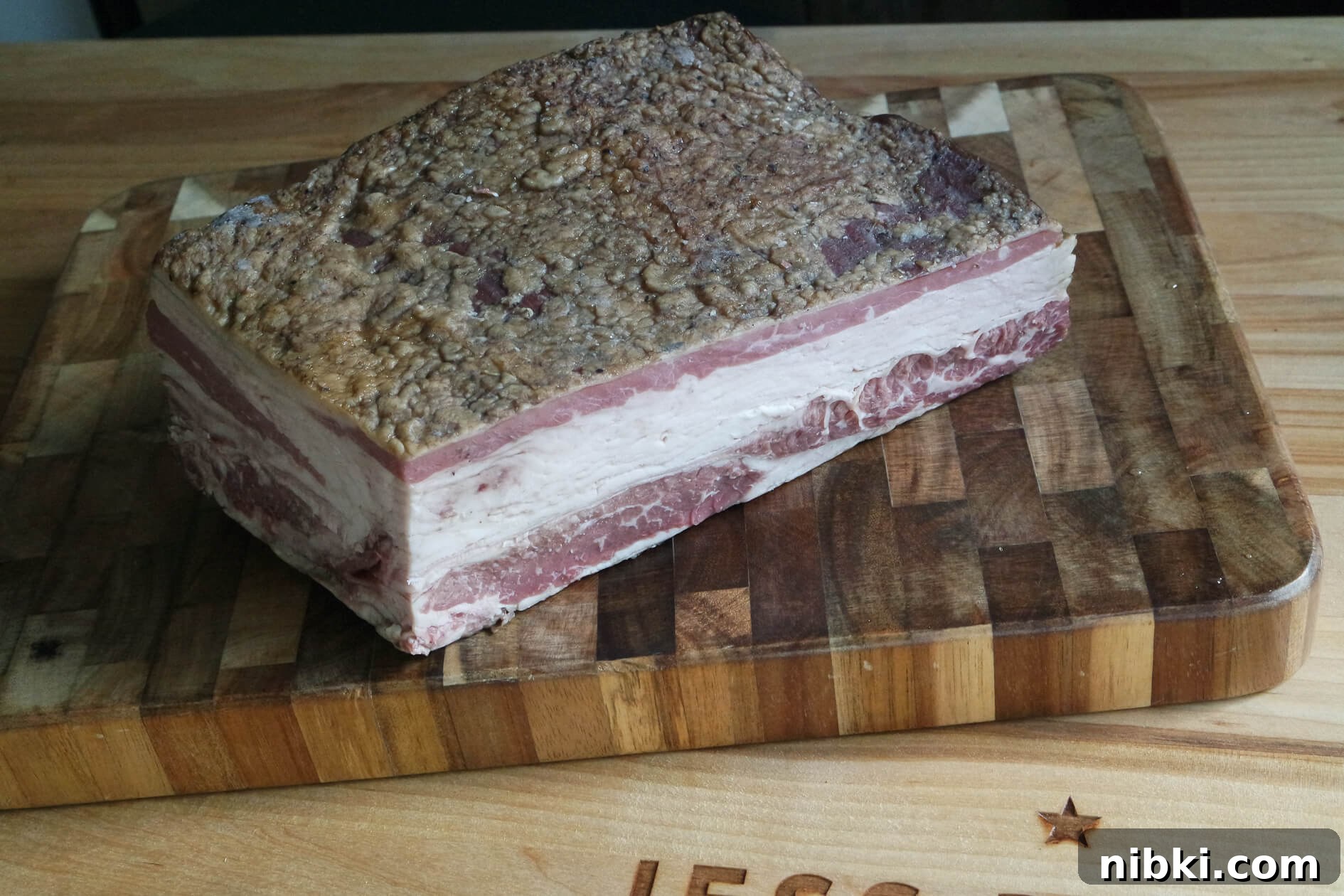
Turning beef navel into bacon is straightforward, but it requires patience for the cure and careful smoking. The biggest hurdle is often sourcing the raw navel. Ask your local butcher or meat market to special‑order a beef navel if they don’t normally stock it; navels are large, so you can cure half and freeze the rest for a future batch.
For the curing step you’ll need pink curing salt (often sold as Prague Powder #1). Prague Powder #1 is designed for short cures and for meats you will cook and eat shortly after curing; Prague Powder #2 is used for long cures like country hams and is not appropriate for quick bacons. Pink curing salt is available from specialty grocers and reputable online retailers. You’ll also find an instant‑read thermometer very useful during smoking to monitor internal temperature accurately.
Below is a concise recipe and method. Follow it, but trust your senses: check texture and aroma as you go, and adjust cook times to suit your smoker and stove.
How to make (really delicious) beef bacon
4.9 from 8 reviews
- Author: Jess Pryles
Ingredients
3–4 lb beef navel
3 tablespoons kosher salt
1/3 cup white sugar
2 tablespoons freshly cracked black pepper
2 teaspoons smoked or sweet paprika
1 teaspoon pink curing salt (Prague Powder #1)
Instructions
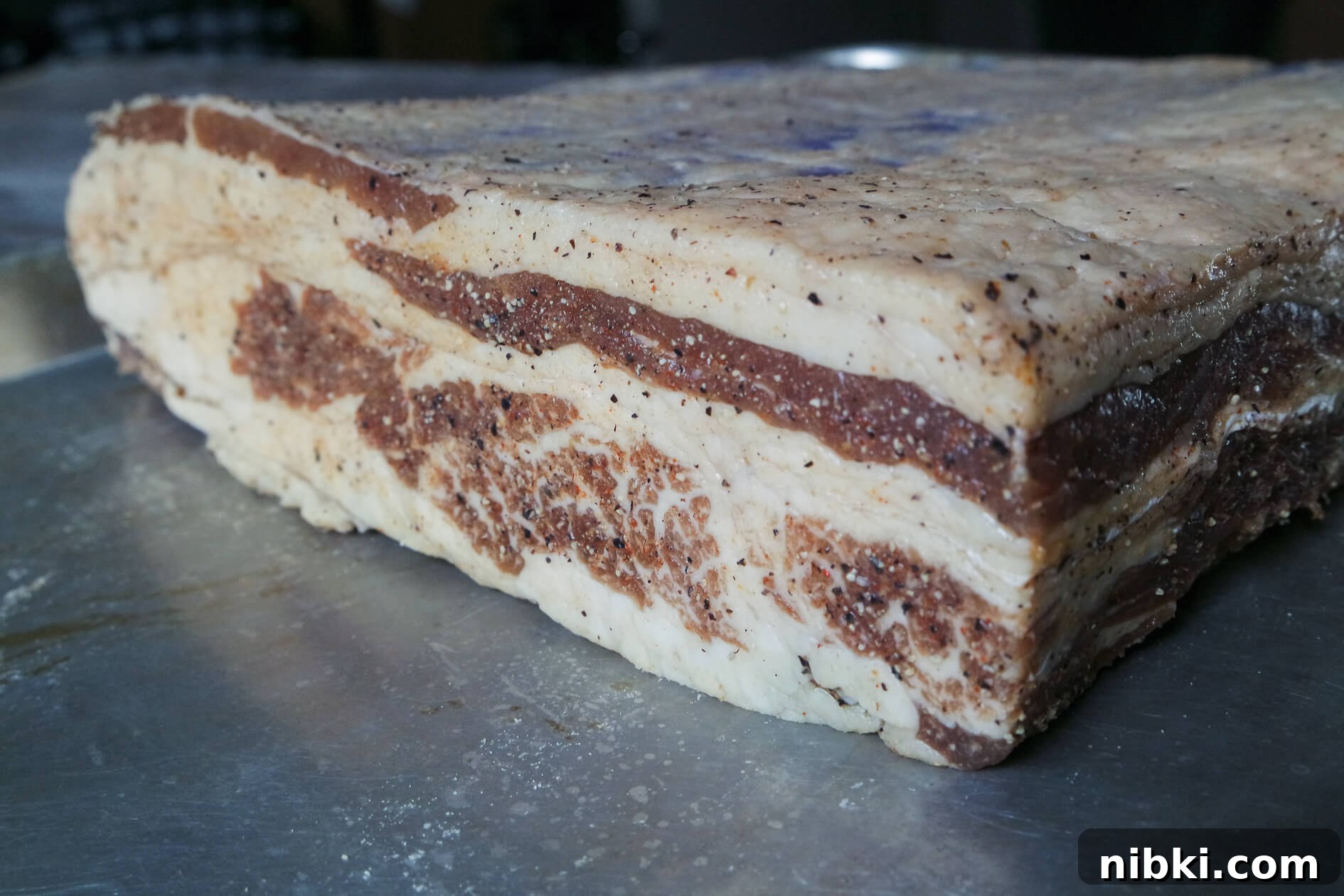
- CURE: Combine the kosher salt, white sugar, black pepper, paprika and pink curing salt in a bowl to make an even dry rub. Press the rub into every surface of the beef navel, pressing it into the crevices so the cure adheres well. Place the coated belly into a large zip‑top bag or a covered non‑reactive container. Refrigerate for 3–5 days, turning and massaging the meat once per day so the curing liquid redistributes. The meat will feel firmer as it cures.
- RINSE & DRY: After the cure period, remove the navel and rinse thoroughly under cold water to remove excess salt and sugar. Pat it dry with paper towels. For best results, place the rinsed belly, uncovered, back in the refrigerator and let the surface air‑dry for several hours or overnight; this forms a tacky pellicle that helps smoke adhere and develop better flavor. If time is tight you can proceed without the extended dry, but the flavor and smoke penetration are improved by that step.
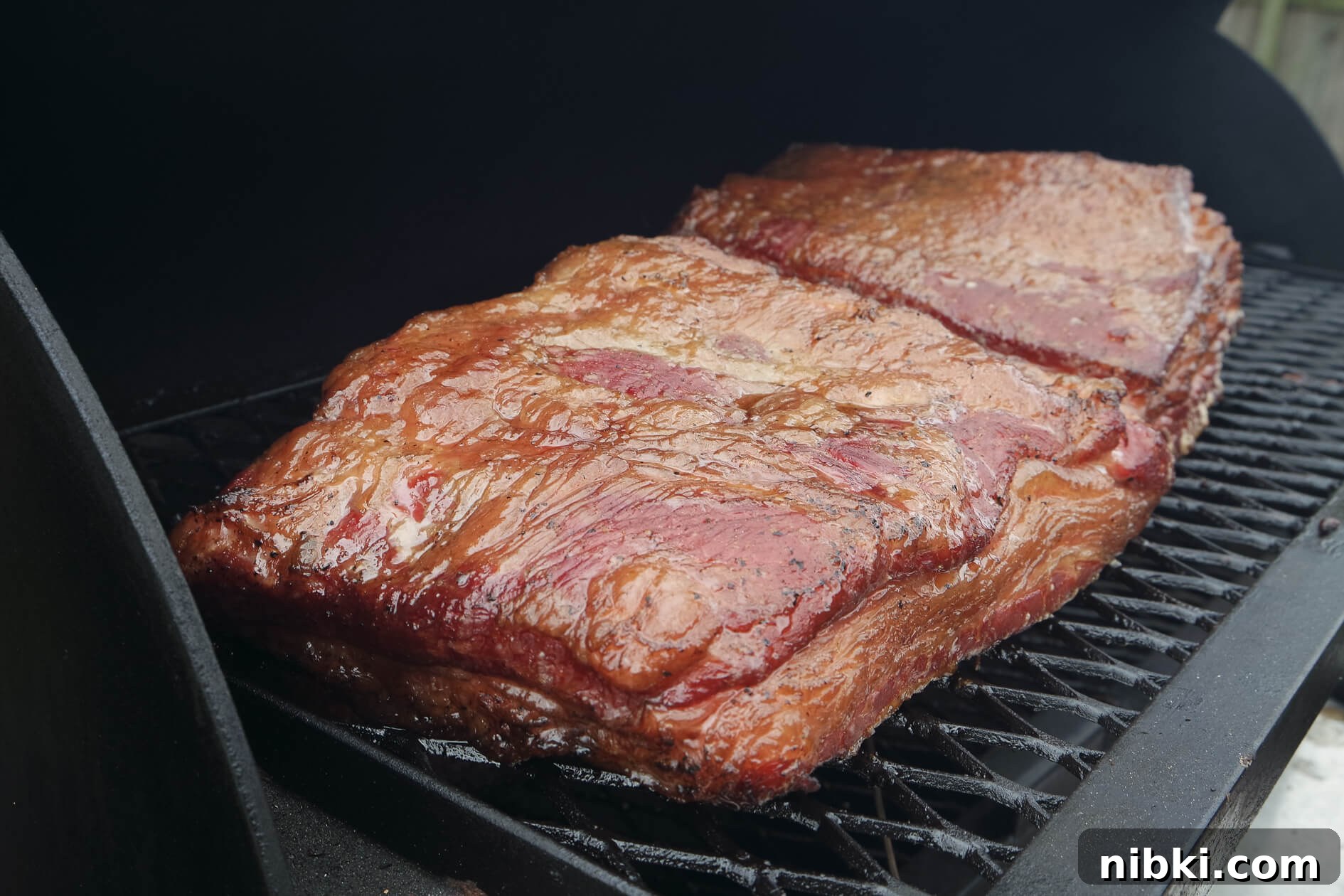
- SMOKE: Preheat your smoker to a steady 200–215°F (95–102°C). Use a mild hardwood smoke such as oak or hickory for a balanced beefy flavor; fruitwoods are also fine if you prefer a sweeter note. Place the belly fat‑side up and smoke until the internal temperature reaches about 150°F (65°C). Smoke time will vary with thickness; expect several hours. Once it reaches the target, remove the belly and cool it thoroughly, then refrigerate until cold to make slicing easier.
- SLICE & COOK: For serving, slice the smoked navel thinly across the grain—beef bacon is best when cut thin. Cook slices in a medium‑low skillet, rendering the fat slowly and crisping the edges. Because beef fat renders differently from pork, low, steady heat gives a better texture and prevents burning. Store unsliced smoked belly wrapped in the refrigerator for up to two weeks; slice as needed. Alternatively, freeze portions for longer storage.
Tips: Use an instant‑read thermometer when smoking to ensure you hit the target internal temperature without overcooking. When slicing, chill the meat so you get uniform thin slices. Adjust the paprika and pepper to taste—smoked paprika adds a deeper smoke note while sweet paprika keeps the flavor milder.