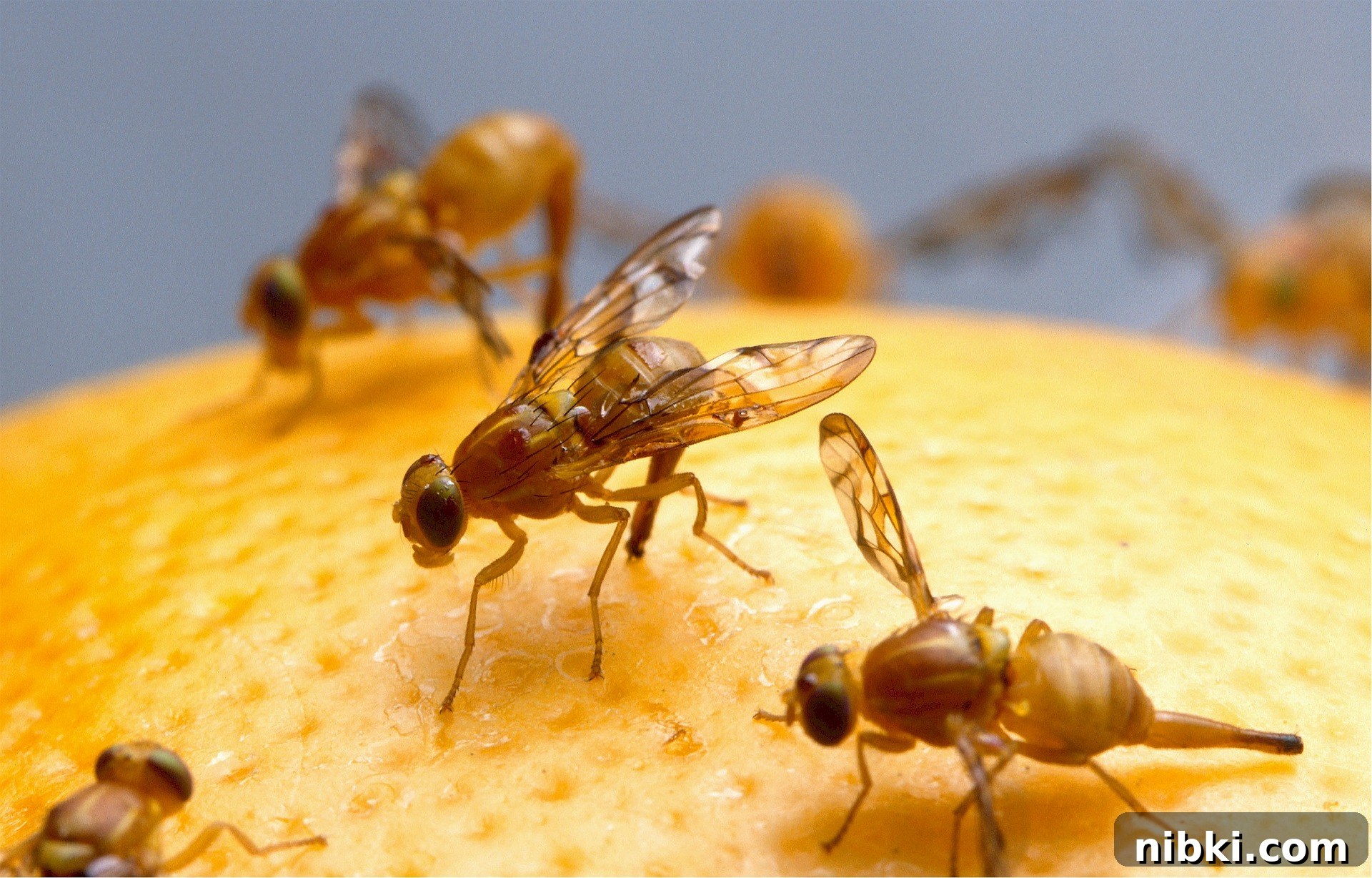
For anyone who keeps fresh produce in the kitchen through the summer, fruit flies can be a constant annoyance. They seem to appear out of nowhere, hovering over bowls of fruit and emerging from drains. Even when you think the problem is solved, previously laid eggs can hatch and the infestation returns.
The situation can feel hopeless, but you can get the upper hand. Below are practical, tested strategies to eliminate fruit flies and keep them from coming back.
Set Fruit Fly Traps
Simple homemade traps are highly effective and inexpensive. Here are three proven methods; pick the one that best fits your preferences.
#1: Banana in a Bag
Place an overripe piece of banana or other ripe fruit in a clear plastic bag. Seal the bag most of the way but leave a small opening so flies can enter. They’ll be attracted to the fruit and become trapped. This method is low-tech and works well when you prefer not to use insecticides.
#2: Jar and Paper Funnel
Put a small amount of fruit vinegar or fruit juice in a jar, then insert a paper funnel (narrow end down) into the jar mouth. Fruit flies enter through the funnel and have difficulty finding their way back out. This classic DIY trap is easy to build and can be very effective.
#3: Vinegar and Dish Soap
Pour a small amount of apple cider vinegar or other fruit-based vinegar into a shallow dish and add a drop or two of dish soap. The vinegar attracts the flies and the soap breaks the surface tension so the flies can’t escape. This is a quick, no-fuss solution I often use in the kitchen.
Place traps wherever you notice the most activity—near fruit bowls, compost buckets, or drains. Check and refresh traps every few days until no flies remain.
Maintain Your Drains
Drains, especially sink and floor drains, are common breeding sites for fruit flies. Moist, organic residue in pipes provides a perfect place for eggs and larvae. If ignored, a few eggs can become a larger infestation within about two weeks.
Regularly clean all drainage pipes in the kitchen, utility room, and bathrooms. Routine flushing with hot water and an occasional cleaning using natural cleaners like vinegar and baking soda helps remove residue and reduce breeding sites.
Cover or Refrigerate Food
Fruit flies will lay eggs on many types of produce and exposed foods. Store potatoes, garlic, onions, and other items in sealed containers. Refrigerate fruits, vegetables, and berries you’re not planning to eat right away. If produce needs to ripen, keep it in a ventilated container away from the kitchen if possible.
Any food left out on counters—bread, spreads, fruit—should be covered to prevent flies from landing and laying eggs.
Keep a Clean Kitchen
Maintaining a tidy kitchen is one of the best defenses against fruit flies. Wash dishes promptly, wipe counters and tables, sweep or vacuum crumbs, and empty the sink trap or filter regularly to remove trapped food particles. A clean sink and countertop removes the food sources that attract adult flies.
Manage Your Garbage and Compost
Fruit flies are tiny and can easily access food scraps if your garbage can doesn’t have a snug lid. Keep kitchen waste sealed and consider taking food scraps directly to an outdoor compost pile when practical. If you keep a kitchen compost bucket, choose one with a tight-fitting lid and empty it frequently.
If you store compost outside, place the compost bin at least several feet from doors and windows so you’re not inviting flies into the house each time you empty the bucket.
Using a combination of traps, regular cleaning, and proper food storage typically eliminates fruit fly problems. Be persistent: it may take a week or two to break the life cycle completely. Once you’ve cleared an infestation, keep up the preventive measures to avoid a recurrence.
Do you have a favorite method that works in your home? Share what’s worked for you and help others keep their kitchens fruit-fly free.